

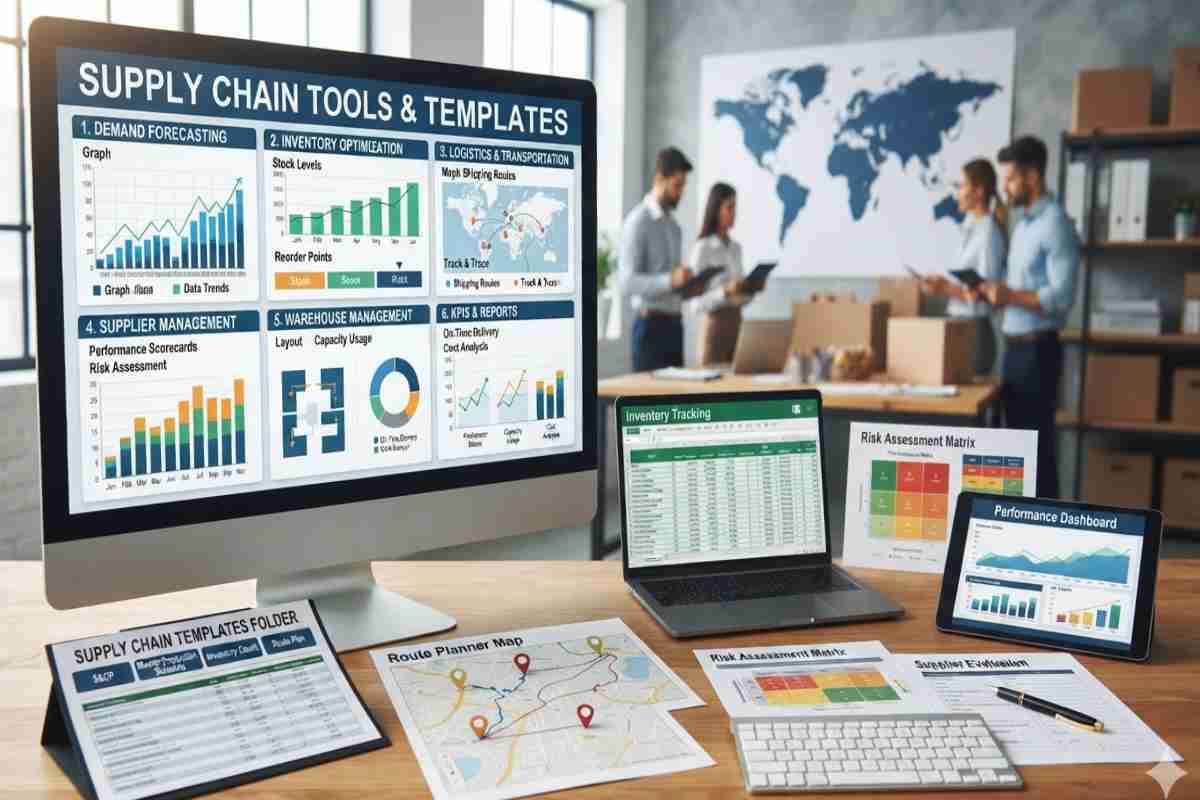
Tools and Templates for Supply Chain: A Useful Guide to Better Business Performance
A supply chain consists of various smaller tasks which should be properly organized. A business must be able to control its inventory, communicate with its suppliers, make purchases, arrange delivery and transportation of goods, and keep track of expenditures.
However, there is no need to spend money on the sophisticated software to manage all these processes. With the help of simple supply chain tools and templates, one can better organize information, communicate with others, and make day-to-day decisions. If needed, these basic tools can be easily substituted with more sophisticated supply chain software when the business grows.
This guide provides some examples of useful tools and templates for supply chain management.
What are supply chain tools and templates?
The term “supply chain tool” refers to a system or application that is employed to control certain segments of the supply chain. “Template” is a pre-formatted document which enables workers to store and manage important data.
The spreadsheet will do for the tracking of products and suppliers for a smaller company. But a larger company might need inventory, warehouse management, procurement, and ERP systems.
Common supply chain tools include:
- Inventory trackers
- Supplier management sheets
- Purchase order templates
- Demand forecasting tools
- Warehouse checklists
- Delivery trackers
- Production planning sheets
- KPI dashboards
- Risk assessment templates
Right tool depends on the type and requirements of the company.
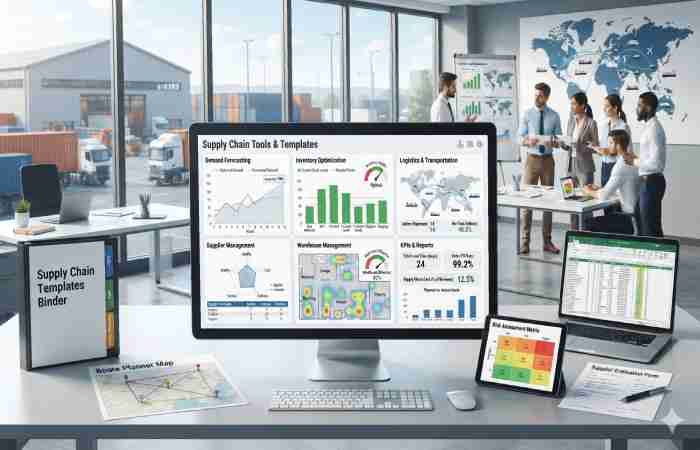
Supplier Management Template
Supplier can have a considerable impact on the performance of the business. The supplier who is always delivering the goods late or supplying low-quality material can cause serious issues within the supply chain.
Supplier management template will help business to keep the crucial information organized. Supplier management template can contain the name of the supplier, contact details, supplies provided by the supplier, prices, lead time, payment terms, and delivery performance.
The companies can evaluate the supplier on the basis of its performance with regard to quality, pricing, communication, and reliability.
Purchase Order Template
Purchase Order (PO) gives precise information about the purchases made by the company.
Purchase order template should contain following information:
- Purchase order number
- Supplier details
- Product description
- Quantity
- Unit price
- Total amount
- Delivery address
- Expected delivery date
- Payment terms
Using a standard format helps avoid confusion. Instead of sending a supplier an informal message asking for a certain number of products, the company can provide complete purchasing information in one document.
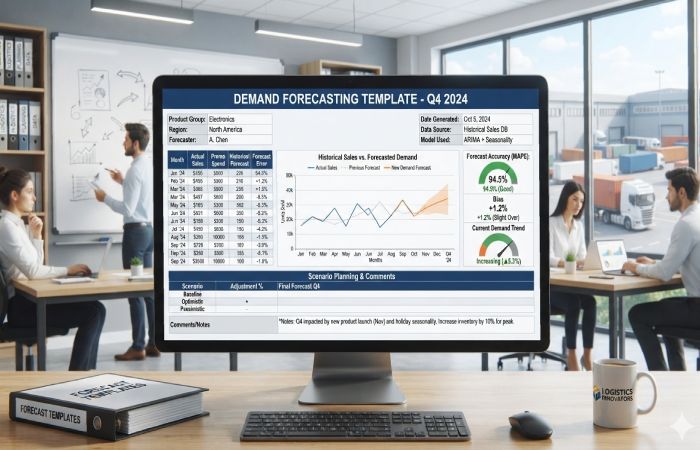
Demand Forecasting Template
Before a company makes any purchases or produces its product, it needs to forecast its future demand. The use of a demand forecasting template will help the firm to analyze its historical sales and future demands.
This will entail the analysis of sales per month, customer orders, seasonal effects, marketing programs, and projected future demands.
For example, an organization selling school supplies will be able to see that sales will be increasing before the school season commences. This will give them an opportunity to plan their orders before the increase in demand.
Demand forecasting should not be regarded as a prediction of the future.
Warehouse Management Tools
Managing a warehouse may become tough when there is a lot of merchandise, staff, and orders. The tools used in the warehouse help to receive goods, verify the quantity, allocate space for the items, pick orders, pack the merchandise, and ship it.
Checklists and spreadsheets may prove useful to small companies
warehouse checklist:
- Confirm incoming shipment
- Check product quantity
- Inspect damaged goods
- Record received stock
- Assign storage location
- Update inventory
- Pick customer orders
- Check picked items
- Pack products
- Record dispatch
Simple steps like these can reduce avoidable mistakes.
Shipping Movement Tracker Template
When products move out from the warehouse, then businesses require knowledge regarding shipment location as well as the expected arrival time for these shipments.
Such tracking template may consist of order numbers, carrier, tracking numbers, dispatch date, expected arrival date, and current status of shipment.
Such a template is especially useful when customers inquire about delayed orders.
In bigger businesses, shipping management systems may be used for automatic tracking of shipments and comparison of carriers’ performance.
Template for Supply Chain Risk Assessment
There can be several causes behind supply chain problems like late deliveries from suppliers, transportation problems, equipment failures, shortages, and unexpected fluctuations in demand.
The following risk assessment template can assist the organization in identifying:
- Risk possibility
- Probability
- Impact of the risk
- Priority
- Prevention measures
- Contingency plans
In case, if an organization relies on a single supplier for its components, it can take another supplier as a contingency plan.
It is not the matter of covering all possible scenarios, but the aim should be on those risks that might have a significant impact on business operations.
Production Planning Template
A manufacturing firm can make use of the production planning template when preparing for future production activities.
This may include the product, required number, date of production, available material, equipment required, workforce, completion date, and present status.
Through this, the management will be able to notice any problems that might arise before production begins.
Whereby if there is no material or machine, it can be fixed before it becomes a problem.
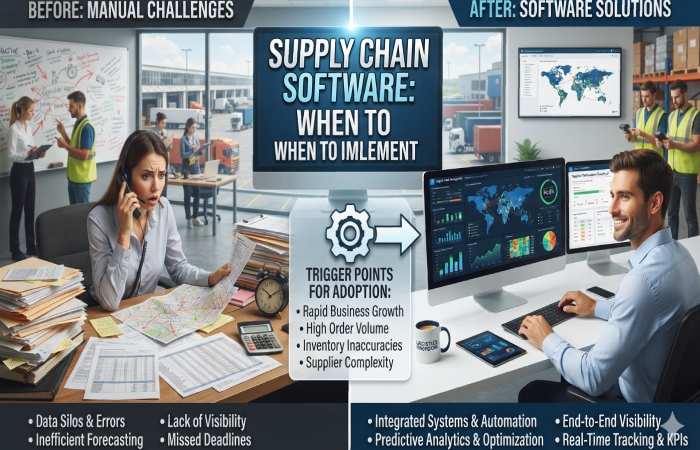
When Should a Business Use Supply Chain Software?
Spreadsheets and templates will serve most small companies very well. But they will start becoming hard to manage once there are thousands of products, several warehouses, suppliers, and even orders per day.
This is where the use of software would become beneficial.
A business could look at the following:
- Software for inventory management
- Warehouse management systems
- Transportation management systems
- Procurement software
- ERP Systems
The use of expensive software should be considered depending on the needs of the business. The expensive software does not automatically mean that it is better just because it offers more functionality than the employees need.
Conclusion
There are supply chain tools and templates that will assist companies in organizing their work and streamlining their processes. A basic inventory template, supplier tracking document, purchase order, and delivery checklist can do wonders when implemented properly.
With growth, there comes a need for more advanced technologies to be utilized by companies. Nevertheless, the principle stays the same: know your inventory, work with good suppliers, organize your inventory properly, deliver products timely and inform customers.
When choosing the best supply chain tool, it should not be overly sophisticated but rather solve some problems, save time, eliminate errors, and make employees’ decision-making easier.