

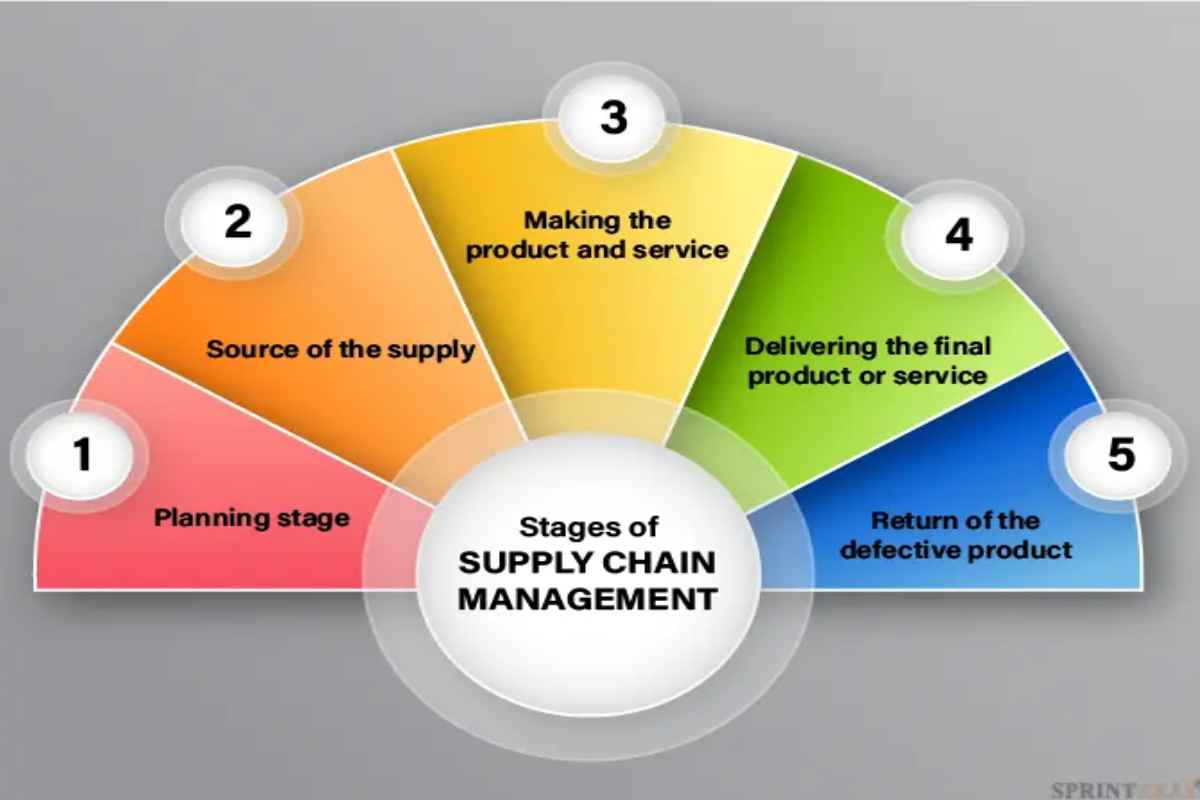
Supply chain management gets much harder as the size of the firm increases. The smallest company could possibly manage its suppliers, stock, and shipments through spreadsheets and by using phone calls. But as the number of products, suppliers, warehouses, and customers grows, it can become difficult to manage this process.
Modern supply chain management is not limited to the acquisition and transportation of goods. It includes the relationships between various business processes, risk management, data utilization, and decision-making and how they affect the costs, services, and growth of the business.
It is not only fast, but it has to be reliable, flexible, cost-efficient, and responsive to changes.
Understanding the Advanced Supply Chain
Advanced supply chain management means coordinating several interlinked areas simultaneously.
These might include:
- Demand planning
- Procurement
- Supplier management
- Manufacturing
- Inventory
- Warehousing
- Transportation
- Distribution
- Customer fulfilment
- Returns
- Risk management
- Data and technology
The most crucial aspect of this is that these sections should not be run in isolation from one another.
For instance, a procurement department may wish to purchase items in bulk in order to gain better prices. While this seems to make sense, if there is insufficient capacity in the warehouse or if the demand is uncertain, this will lead to surplus stock.
Advanced supply chain management involves understanding the impact of these decisions in the bigger picture.
Advanced Demand Planning
As companies become involved with more complex product lines and evolving consumer behaviour, demand planning is increasingly becoming a necessity.
While historical demand figures offer helpful insights, these should not be relied upon exclusively for forecasting purposes. Additionally, firms can look at other factors such as seasonality, promotions, changes in the marketing environment, customers’ orders, and inventories. For instance, a company may sell 5,000 units of its products each month. When it makes plans for a big promotion, relying on the regular sales number will cause underestimating future demands.
A comprehensive forecast uses diverse data sources to present a more realistic view of future demands.
It is necessary to review forecasts regularly. The forecast that was done several months ago could be out-of-date.
Diversification of Suppliers
Too much dependence on a single supplier puts the company at unnecessary risk.
In case something goes wrong with the supplier, like closure of the factory, failure to deliver, financial problems, and even being unable to honour their commitments, then it will leave the customer in a difficult position. Diversification of suppliers can help here. The business could qualify another supplier for a particular material, whether it uses him or not.
But there are negative sides to relying on several suppliers as well. Split orders can mean decreased purchasing power.
It depends on the importance of the material and the consequences of its lack.
Optimizing the Warehouse
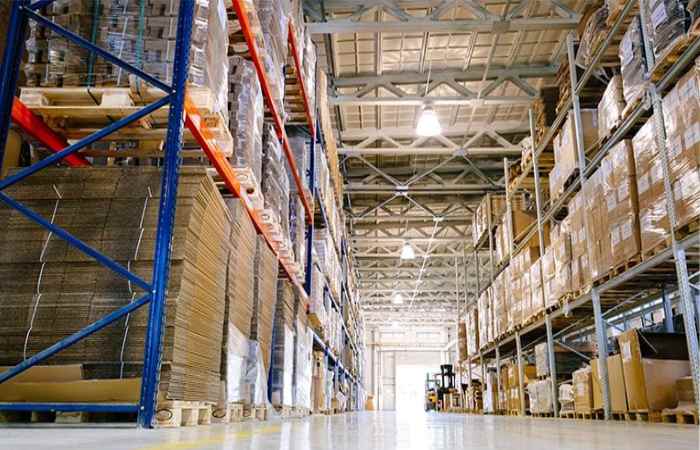
The warehouse may turn into a huge generator of costs due to poor planning of logistics and processes within the facility.
The concept of warehouse optimization refers to the analysis of the flow of goods from entering the facility to leaving it.
Companies may take into account the following factors:
- Storage places for products
- Routes for picking orders
- Storage capacity
- Receiving process
- Packing process
- Delivery area
- Movement of employees
- Accuracy of inventory
Products that have high order frequency can be placed near the packing area, whereas products that have lower order frequency may be stored somewhere else.
Optimization of Transportation
Transportation might contribute a large amount to the cost of a supply chain.
Modern transportation management involves much more than just choosing a carrier. Companies might evaluate transportation routes, size of shipments, type of transportation, fuel expenses, schedule of deliveries, and even performance of carriers.
In this respect, it is cheaper to send multiple shipments together rather than separately.
On the other hand, delays of all the shipments to decrease costs of transportation might adversely impact customer service.
Visibility in Supply Chain and Data
Modern supply chains are highly dependent on good data.
Managers must be able to see data related to inventory, orders from suppliers, production plans, shipments, and demand from customers.
The lack of accurate data may cause people to take decisions based on incorrect data.
For instance, when the inventory control system shows that there are 1,000 pieces in stock in reality, there are only 600 pieces, the firm takes orders which cannot be fulfilled.
Supply Chain Technology
Technology can link various supply chain components and enhance information accessibility.
Organizations can adopt enterprise resource planning software, warehouse management system, transportation management system, inventory management systems, and analytics solutions.
Technology can also automate repetitive activities like scanning, sorting, picking, and updating inventory.
Nonetheless, technology must be used to facilitate a good process but not substitute a proper process.
When the process is not well thought out, technology might make the problem even more difficult to comprehend.
Reverse Logistics and Returns
The logistics process does not necessarily end when the product reaches the customer.
Returns can cause considerable labor, especially among retailers and online firms.
An efficient reverse logistics process may add value and minimize wastage.
It can also enhance the customer experience with ease of return management.
Common Errors in Advanced Supply Chain Management
Even the most experienced companies can make mistakes.
A common error is that of being overly concerned with costs. The least expensive choice can sometimes lead to quality issues.
Another is gathering a lot of data but failing to make it useful.
Another error is implementing automation technologies without fully knowing their processes.
A final one is not differentiating between suppliers, products, and customers. This is because advanced supply chain management often involves prioritizing.

Conclusion
A complex supply chain is much more than just a big simple supply chain. As organizations evolve, there will be more decisions to make, more risks to manage, and more connections that need to be established.
There will be a need for better forecasting, better relationships with suppliers, improved inventory management information, efficient warehouses, reliable logistics, and sound risk management strategies.
While technology may play a key role in the process, the success of managing a supply chain will always depend greatly on making decisions and communicating effectively.
The best way to go about this is to take a holistic view of the process, rather than trying to optimize separate departments. The purchasing decision will influence inventory. The inventory decision will influence warehousing. The production decision will influence logistics. The delivery decision will influence customer satisfaction.