

Metrics Glossary: A Complete Guide to Essential Business Performance Metrics
Measuring how a business is doing is really important. Metrics aid in decision-making and bring enhancement to various activities. Metrics serve as indicators of progress towards attaining a goal If you have a business or a big company you need to know the important metrics. This helps you find out what you are good at and what you need to work on. You can also make decisions based on facts.
Business metrics are used in every part of a company, like money, marketing, sales, customer service, operations, and the people who work there. If you keep an eye on the things like key performance indicators, you can see how productive you are, how much money you are making, if your customers are happy, and if your business is growing.
This glossary explains business metrics in a way that’s easy to understand. It is helpful for people who start their businesses, managers, students and professionals who work with business performance metrics and business metrics. Business metrics are important for everyone to know so they can use them to make their business performance better.
What Are Business Metrics?
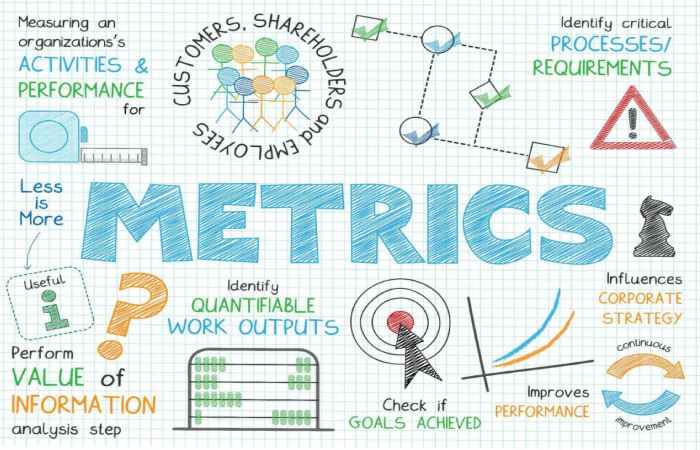
Business metrics are quantifiable factors used for evaluating how well a company, its division, project or process is performing. They allow organizations to evaluate their progress and efficiency and determine whether they are achieving the objectives they set for themselves.
Business metrics differ from opinions as they rely on measurable data.
Why Are Business Metrics Important?
Tracking business metrics produces valuable insights for achieving continuous improvement.
Advantages of Measuring Business Performance
- Control progress towards business goals
- Make better decisions
- Increase efficiency
- Recognize strengths and weaknesses
- Measure productivity of company employees
- Enhance customer satisfaction
- Eliminate unnecessary expenses
- Facilitate the process of sustainable business growth
Financial Metrics
Within the corporate universe, financial metrics play an essential role as they allow business clients to determine the degree of their profitability, availability of cash, and see the overall state of their health.
Revenue
Revenue refers to the total income of a firm generated by the sale of goods and services before costs are deducted.
Gross profit
Gross Profit is what is left over after a business subtracts the costs of making its products or delivering its services from its revenue.
Net profit
Net profit is what remains after a business pays all of its bills, including taxes and other expenses from its revenue.
Gross profit Margin
Gross profit margin shows what percentage of revenue is left over after a business pays for the things it needs to make its products or deliver its services.
Net profit Margin
Net profit margin tells us how profit a business makes from each dollar it earns after it pays all of its expenses.
Conversion Rate
Conversion rate is the percentage of visitors who become clients.
Average Deal Size
Average deal size shows the average income made from the deals.
Customer Acquisition Cost (CAC)
Customer acquisition cost shows the price paid for acquiring one client.
Fundamentals of Measuring Metrics
Companies should keep an eye on metrics regularly to optimize operations.
Fundamentals
- Clarify business objectives.
- Track necessary KPIs consistently.
- Use trustworthy information sources.
- Study documents often.
- Get to know the difference between the present and the past.
- Concentrate on indirect repercussions.
- Use automated data collection when possible.
- Provide performance dashboards to teams.
- Work on improving measuring systems every time.
- Use metrics to justify strategic decisions.
Common Errors in Measuring Results
Avoid these errors when applying metrics in business:
- Overusing the quantity of metrics to be measured
- Neglecting the goal of the business
- Applying unprecise and old information
- Measuring only the outcomes of the process
- Not checking trends
- Ignoring customer opinions
- Not using the opportunities for revising received data
- Commuting dissimilar metrics and making comparisons
Asked Questions
What are business metrics?
Business metrics are things that we can measure to see how well a company is doing. They help organizations figure out how they are performing see how they are progressing and make decisions based on facts.
What is the difference between a metric and a KPI?
A metric is something that measures what is happening in a business. On the hand a Key Performance Indicator or KPI is a special kind of metric that is directly connected to the main goals of the business.
Why are performance metrics important?
Performance metrics are important because they help businesses work better see how they are growing find out if customers are spot areas where they can improve.
Which business metrics should every company track?
Most companies should keep an eye on things like how money they are making how much profit they are getting how much cash they have, how fast they are selling things how much it costs to get new customers how many customers they are keeping how many people are buying from them and how productive their employees are.
How often should businesses review their metrics?
It depends on what kind of metric it’s. Some metrics, like the ones that have to do with operations might need to be looked at every day or every week.. Metrics that have to do with money or big plans might only need to be reviewed every month or every few months.
In Conclusion
Business metrics are really important for organizations because they give them the information they need to see how well they are doing. They help organizations improve and make decisions. When organizations keep track of things like money, sales, marketing, customer service, how things run, people, and projects, they get an idea of what they are good at and what they need to work on. This way organizations do not have to guess; they can use numbers to make things better, work smarter, make customers happy, and grow in a way that will last.
Using the business metrics and looking at them all the time helps organizations deal with changes in the market and make sure what they do every day matches what they want to achieve in the long run. Having a plan for measuring things makes organizations more responsible and helps them come up with new ideas get better all the time and have long-term business success with business metrics.