


Business Concepts, Economics and Management Glossary: A Complete Guide to Essential Business Terms
Business Concepts, Economics, and Management Glossary – Understanding what business terms mean is really important for people who start their businesses, students, people who work in businesses, and business owners. If you are starting a company running a company that is getting bigger or studying how businesses work, knowing what key business concepts mean helps you make good choices and talk to people more effectively.
Business, economics, and management are all connected.
This glossary explains business, economics and management terms in a simple way. It is for people who start their businesses, small businesses, students, and people who work in businesses and want to know more, about business and make better choices.
What Are Business Concepts?
Business concepts are the ideas that explain how companies work, how they make value how they handle resources how they make money and how they grow. These ideas help with business planning, marketing, finance running the business helping customers and leading people.
Knowing about business concepts helps companies work better change when needed handle risks and create success.
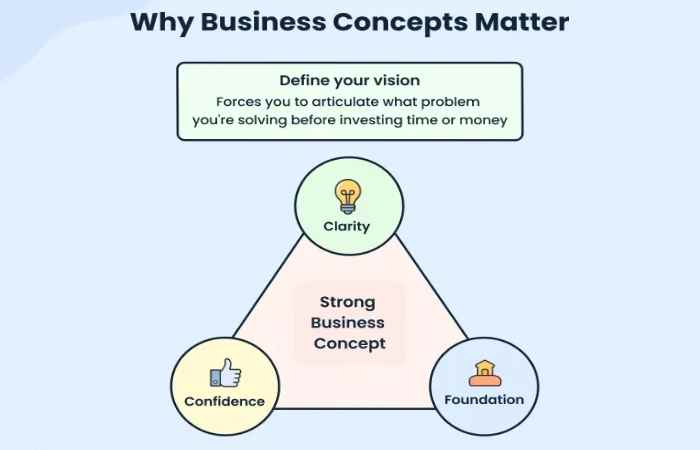
Why Business Terminology Is Knowing business terms has many benefits.
Improves Communication
The break- point is the point where total revenue is the same as total expenses, which means there is no profit and no loss.
Return on Investment (ROI)
ROI shows how good an investment is by looking at the money made compared to the cost of the investment.
Value Proposition
A value proposition tells customers why they should pick a company’s products or services of others.
Competitive Advantage
Competitive advantage is the qualities a business has that help it do better than other businesses.
Market Research
Market research is when a business gathers and looks at information about customers, other businesses and trends in the industry.
Target Market
A target market is the group of customers a business wants to sell its products or services to.
Customer Segmentation
Customer segmentation is when companies split their customers into groups based on customer age, where the customers live what the customers like, how money the customers make or how the customers buy things.
Branding
Branding is when a company creates a company identity using things like company logos, company messages, company values and the way the customers feel when the customers interact with the company.
Management Glossary
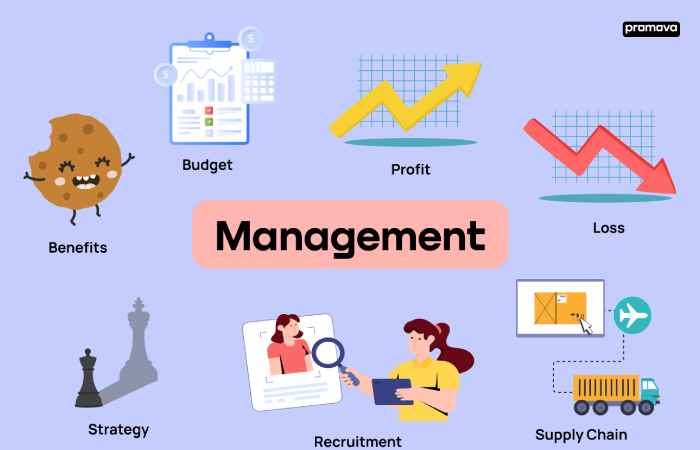
Management is the process of planning organizing, leading and controlling company resources to achieve business goals of the company.
Planning
Planning involves setting company objectives and determining the actions required to achieve the company objectives.
Organizing
Organizing is the process of arranging company resources, company responsibilities and company workflows to improve company efficiency.
Leadership
Leadership is the ability to motivate the company employees guide the company employees and inspire the company employees toward achieving company objectives.
Decision-Making
Decision-making involves evaluating company alternatives and selecting the course of action for the company.
Strategic Management
Strategic management focuses on developing long-term company plans that help the company achieve an advantage over other companies.
Operations Management
Operations management oversees the production of company goods and services while maximizing company efficiency and company quality.
Project Management
Project management is about planning company projects executing the company projects and finishing the company projects on time and, within the company budget. This means the companies have to make sure they do what the companies say they will do and the companies have to do it without spending much of the company money.
Business Ethics
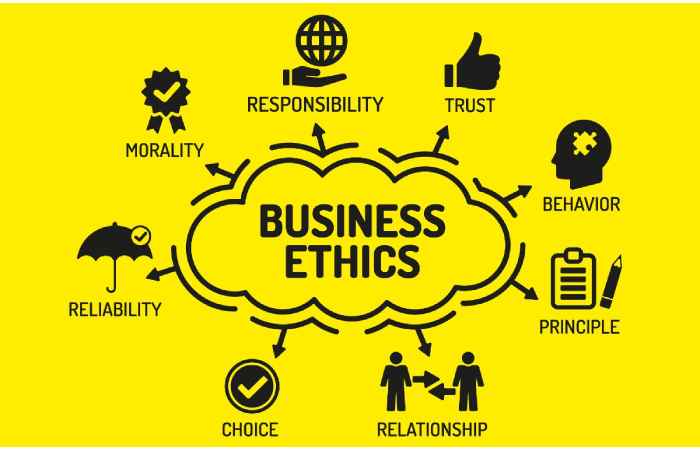
Business ethics is really about doing the thing. Companies have to follow some rules to be good. Doing business means that companies must operate in an ethical manner. This involves being honest, businesslike and open about their operations. It is important for corporations to understand social responsibility as well as the impact of their actions on the people including customers, workers, suppliers and partners in business. Companies that care about doing the thing usually get more trust from people have customers who keep coming back and have a good reputation.
Following these standards also helps companies avoid getting into trouble makes workers happy about their jobs and helps the business grow in an lasting way.
Social Responsibility
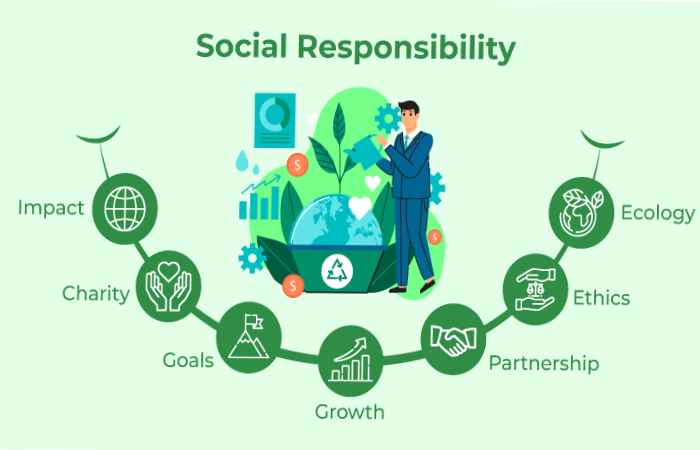
The concept of Social Responsibility is beneficial both for society and for nature. Nevertheless, companies must be aware that their Social Responsibility initiatives may come at a cost and weigh them properly. Therefore, companies should analyze the advantages and disadvantages of Social Responsibility initiatives before implementing them.
One of the possible drawbacks of such initiatives concerning Social Responsibility is that some people may interpret them as merely an additional cost to cover. However, Social Responsibility initiatives can also present benefits for companies in terms of profits. In fact, companies implementing Corporate Social Responsibility initiatives can manufacture good products, build up a good reputation, and improve their image.
Companies that do well with innovation encourage their people to think outside the box try things and make it easy for employees to share their ideas, about innovation. This helps companies come up with innovation and stay ahead of the game with innovation.
Business Strategy
A good business strategy usually includes things, like:
- The companys vision and mission
- How we want to be seen in the market
- Looking at what our competitorsre doing
- How we will get new customers
- What we want to achieve financially
We should look at our business strategy regularly. Update it so we can adapt to what is happening in the market.
Financial management
Financial management is about taking care of the money that a business has. This means planning what to do with the money organizing how to use it controlling how it is spent and keeping an eye on it to make sure everything is okay. The people in charge of management have a lot of important jobs to do including:
- Making a budget for the company
- Keeping track of how much money’s being spent
- Trying to figure out how money the company will make
- Deciding how to invest the companys money
- Making sure the company has cash to pay its bills
- Creating reports about how the company is doing financially
- Looking for problems that could affect the companys money
- Analyzing how profitable the company is
Good financial management helps businesses stay stable grow and make decisions about how to use their money.
Business communication is important for working with others and managing a company. It means sharing information in an professional way with the people you work with the customers, the people who supply you with things and the people who have a stake in your business. You can communicate with these people in different ways, such as:
- Sending emails
- Having meetings
- Writing reports
- Giving presentations
- Having video conferences
- Sending messages
- Creating business proposals
- Talking to customers
When you communicate clearly you avoid confusion work better with your team and build relationships, with the people you work with.
Decision-making Models
In making any business decision, it is important that you think things out before making any decision. It is all too easy to say something is a good idea. Look at the facts and figures before you make up your mind.
There are a few ways that people make decisions in business. These include:
Decision Making
This is when you gather all the information you can look at all your options think about what might happen and then pick the best choice.
Business Risk
Every business has things that might go wrong. Business risk is when something happens that can hurt the company make it less profitable or damage its reputation.
There are things that can be a risk, to a business. Some of these include:
Economic downturns
- Cybersecurity threats
- Supply chain disruptions
- Regulatory changes
- Market competition
- Operational failures
- Financial instability
- Natural disasters
Businesses can reduce their risk by planning ahead getting insurance having a backup plan and always keeping an eye on things.
Digital transformation
Examples:
- Cloud computing
- Artificial intelligence
- Business analytics
- Automation
- E-commerce platforms
- Mobile applications
- Digital payment systems
- Customer relationship management software
Digital transformation enables organizations to remain competitive in rapidly evolving markets.
Knowledge Management
Knowledge management consists of noting, classifying, disseminating and retaining significant organizational knowledge.
The digital transformation supports enterprises in meeting the challenge of adapting to fast changing business environments.
- Store company documentation
- Share best practices
- Train employees
- Improve collaboration
- Preserve institutional knowledge
- Support continuous learning
The use of effective knowledge management allows minimizing double efforts, boosts output, and improves organizational effectiveness.
Business Sustainability
Business sustainability involves achieving lasting success by ensuring a proper balance of economic performance with social and environmental impact.
Sustainable organizations ensure responsibility in resource consumption.
- Energy efficiency
- Waste reduction
- Ethical sourcing
- Employee well-being
- Community engagement
The FAQs section
What is the objective of a business glossary?
A business glossary serves to define useful business terms. It makes it easier for many individuals, especially students and new entrepreneurs, to understand wider concepts. A business glossary is of great help to people wishing to get acquainted with the areas of business, economics, and management.
Why is it necessary to understand business terms?
Grasping business terms is important in order to communicate effectively. Moreover, understanding business terms helps people to make decisions and enhance their knowing of financial issues. It even helps people who work in companies understand how things work there. Business terminology is very important for business owners and professionals.
Who can benefit from learning business concepts?
There are people who can benefit from learning business concepts. These people include business owners, people who start their businesses, managers, students, people who invest money, consultants and professionals who work in different industries. Business concepts are relevant to practically everybody interested in learning about business.
What is the difference between business, economics and management, respectively?
Business deals with production and selling of goods or services. Economics analyzes the use of resources and working of markets. Management is about planning and organizing things in a company. It also involves leading and controlling people who work in the company. Business, economics and management are all related to each other.
Conclusion
Learning about business, economics and management is crucial, as it helps in decision-making and solving problems. concept, economics and management have connection with each other. Each aspect of business is affected by these concepts such as finance, marketing, leadership and customer relations.
Ability to analyse business, economics and management is basically of significant assistance in making the right choice. Apart from that, it helps you think in advance and be in charge of your company’s successful growth without bringing it to a disadvantageous situation. If you keep learning about business concepts, economics and management you will be ready for situations. You will find chances to succeed and help your company do well in a world where there is a lot of competition. Business concepts, economics and management are key, to doing a job.