


What Is a Business Model? A Practical Guide with Types, Examples & Real Use Cases (2026)
If you’ve ever wondered how companies actually make money—not just what they sell, but how everything works behind the scenes—you’re really asking about one thing: the business model.
Many people think it’s just a plan or a document.
But the truth is, there is a lot more to it. It’s the reasoning behind the way in which the company remains viable, develops, and makes money. To understand this concept fully, it also helps to start with the basic question of what a business is and how it creates value for customers.
This guide offers a practical breakdown of the concept, so that you could finally grasp it and use it. For readers who want a more detailed explanation of business concepts, longer educational resources can also provide useful context, such as a guide covering a topic in 1,500 words.
What Is a Business Model? (Simple Definition)
The business model is the fundamental principle of the company’s value creation, delivery, and profits generation.
In practice, it helps answer the following questions:
When explaining a business model online, naturally using related terms can also support co-occurrence in SEO by helping provide clearer context around the main topic.
What is it that you sell?
Who is it that you sell it to?
How do you make money from it?
Contrary to the business plan, which is a document, the business model is rather a blueprint of a company.
Why Business Models Matter More Than You Think
A strong business model is not optional—it’s the foundation of every successful company.
Putting that model into practice also requires effective business administration to coordinate people, resources, finances, and daily operations.
A clear business model is also useful when evaluating financial opportunities and investment-related businesses such as ACFOX.
Without it:
- Revenue becomes unpredictable
- Costs go unmanaged
- Growth becomes difficult
With it:
- You understand how money flows
- You identify opportunities to scale
- You attract investors and customers
In simple terms, it tells the story of how your business works and why it will succeed.
How a Business Model Works in Real Life
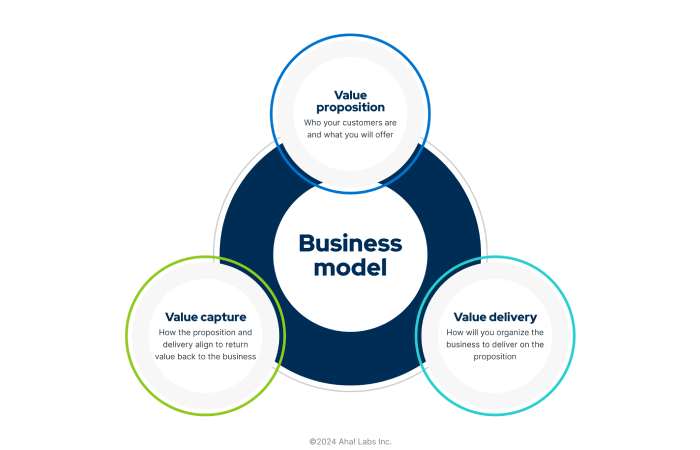
Let’s make it practical.
Example: Online Clothing Store
A clothing brand selling online operates like this:
- Buys or manufactures clothes
- Lists products on a website
- Customers place orders
- Company earns profit from each sale
That entire system—from sourcing to selling—is the business model.
Key Components of a Business Model
Every successful business model includes a few essential elements.
1. Value Proposition
This is what makes your product or service valuable.
Example:
- Faster delivery
- Lower price
- Better quality
2. Target Customers
Who are you selling to?
- Students
- Businesses
- Families
Understanding your audience is critical.
3. Revenue Streams
How does the business earn money?
- Product sales
- Subscriptions
- Advertising
4. Cost Structure
What does it cost to run the business?
- Production
- Marketing
- Operations
5. Delivery Channels
How do customers receive your product or service?
- Online store
- Physical shop
- Mobile app
Real Case Study: Why Business Models Matter
Situation
A startup launched a great product but struggled to make money.
Problems:
- Pricing was too low
- Costs were too high
- No clear revenue strategy
What They Changed
They redesigned their business model:
- Introduced subscription pricing
- Reduced operational costs
- Targeted a specific audience
Results
- Increased revenue
- Improved profit margins
- Better scalability
The product didn’t change—the model did.
Types of Business Models (Common Examples)
Different businesses use different approaches depending on their goals.
1. Product-Based Model
Companies sell physical goods.
Example:
- Electronics brands
- Clothing companies
2. Service-Based Model
Businesses sell services instead of products.
Example:
- Consulting firms
- Agencies
3. Subscription Model
Customers pay regularly (monthly or yearly).
Example:
- Streaming platforms
- SaaS tools
4. E-commerce Model
Products are sold online.
Example:
- Online marketplaces
5. Freemium Model
Basic services are free, premium features are paid.
Example:
- Apps and software platforms
6. Advertising Model
Revenue comes from ads.
Example:
- Social media platforms
These models can also be combined depending on business needs.
When You Should Rethink Your Model
You should review your approach when:
Reviewing these areas consistently can help business owners notice problems early and make changes before they become more difficult to manage.
- Revenue is inconsistent
- Growth has stalled
- Costs are increasing
- Competition is rising
Adapting your model is often the key to survival. Business owners may also need to adapt when they face adversity, such as unexpected costs, changing customer needs, or difficult market conditions.
Future Trends (2026 and Beyond)
Business models are evolving quickly.
Key Trends
- Subscription-based growth
- Digital-first businesses
- Platform-based ecosystems
- Monetization using AI
Organizations that change and adapt quickly have an advantage.
Key Points
The business model describes how an organization captures and generates value
It involves the customers, revenue, costs, and operations
- It is the foundation of every successful business
- Different models suit different industries
- A strong model improves growth, profit, and sustainability
Final Thoughts
Understanding what a business model is goes beyond theory—it’s about understanding how businesses actually work.
It’s the difference between:
- Having an idea
- And turning that idea into a profitable system
When done right, a business model doesn’t just support a company—it drives its success.