

Manufacturing and Logistics Advanced Guide
As a company expands, manufacturing and logistics will become more complicated. A small company might be able to handle their manufacturing process, inventory, and logistics through spreadsheets and communication. On the other hand, a large company would have to coordinate many factors, such as their factory, warehouse, suppliers, transportation companies, lines of products, and markets.
At an advanced stage, the focus should not be on manufacturing more products or speeding up the movement of goods. What the focus should be on is creating an operation that is efficient, dependable, flexible, cost-efficient, and adaptable.
In this guide, the important aspects to understand for improved manufacturing and logistics operations are described.
The Relationship between Manufacturing and Logistics
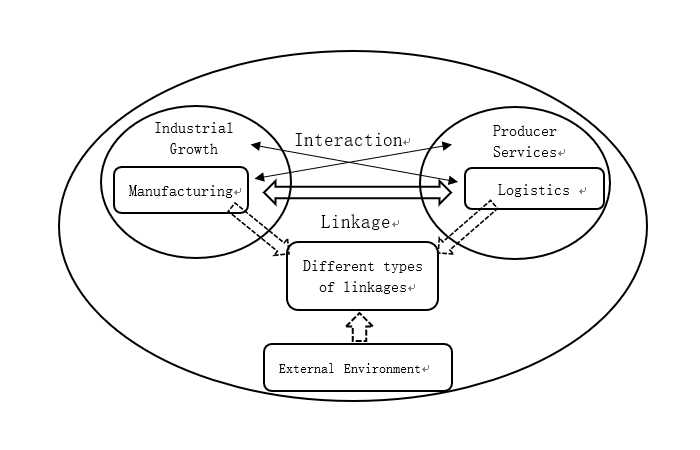
Manufacturing and logistics are two processes that cannot be viewed as entirely independent.
Manufacturing requires logistics to deliver the materials. Logistics requires manufacturing to know the precise time when the goods will be ready for delivery.
For instance, if the manufacturing process was altered, but no one informed the warehouse, there may not be enough space in the warehouse for the produced goods. Another case would be that a shipment from the supplier is late, and the manufacturing is unaware of it.
Advanced operations therefore depend heavily on coordination.
Advanced Production Planning
Planning of production gets complicated when an organization deals with different types of products, machines, suppliers, and customers.
Planning of production has to take into consideration:
- Customer demand
- Available materials
- Machine capacity
- Employee availability
- Production time
- Maintenance schedules
- Order priorities
- Delivery deadlines
One such example is to create a production schedule which appears feasible when written on paper but cannot be accomplished due to lack of an important machine or component.
It becomes necessary that advanced planning must take into consideration the true capacity available rather than assume endless capacity.
Capacity Management
The capacity of a factory, warehouse, or logistics system refers to the capability of these systems.
Even if a manufacturing system has ten machines, all ten cannot always be available. Machines need to be serviced, employees will need training, and the production speed varies between products.
Capacity planning allows managers to recognize any potential constraints before they impact the customers.
For instance, when the demand is expected to increase by 30%, the business should find out whether it can increase its production capacity with its existing equipment and labor.
Producing more than required
- Waiting for materials or equipment
- Unnecessary movement
- Excess inventory
- Defects
- Rework
- Unnecessary transportation
- Overcomplicated processes
Quality Management
Quality is even more critical as production volume increases.
A low percentage of defects can lead to thousands of defective products due to high volume production.
Quality management that is advanced ensures prevention of defects instead of just detection.
Inspections, process monitoring, statistics, root cause analysis, and continual improvement may be done by companies.
If there is a defect, the critical question should not just be, “Which product is defective?”
It should also be, “How did this occur, and how do I ensure it does not reoccur?”
Preventive Maintenance
Breakdowns can result in halting the manufacturing process as well as the delivery.
The preventive maintenance is the inspection and servicing of equipment before its major breakdown.
Schedules can be developed by manufacturers based on the number of working hours, production cycles, manufacturer’s recommendations, and the state of equipment itself.
Also, some modern factories implement such type of maintenance as the predictive one. The sensors and machine information can assist in detecting the signs of potential problems before the equipment fails.
Warehouse Optimization
It is not enough just to store products within the warehouse.
Such aspects as the layout of warehouse, technologies used, actions of workers, methods of storage and picking can also have an impact on performance.
Optimization of warehouse includes:
- Slotting according to product demand
- The improvement of picking routes
- The use of barcodes or scanning
- Automation of routine actions
- Capacity management
- The reduction of movements
- Receiving and dispatch processes optimization
Fast moving products can be located in such place where it is convenient for workers to reach them.
But warehouse layout needs to be reconsidered from time to time since demands change.
Transportation Optimization
Logistics costs and customer service are two areas that could be significantly affected by transportation decisions.
Firms may be required to make choices regarding different transportation companies, transportation paths, shipment sizes, and transportation modes.
While a cheaper alternative may not necessarily be the most appropriate one, an expensive one may cause delays.
Advanced transportation planning considers the complete cost and service impact.
Route optimization can also help reduce unnecessary distance, fuel consumption, and vehicle usage.
Supply Chain Visibility
Visibility means having reliable information about what is happening across the operation.
Managers may want to know:
- Where materials are located
- Which supplier orders are late
- How much inventory is available
- Which production orders are in progress
- Where shipments are
- Customer orders that are at risk
Integration of all the systems will help one integrate information from procurement, production, warehousing, distribution, and sales for better understanding.
Continuous Improvement
Advanced manufacturing and logistics will never be considered completed projects.
Demands of customers evolve. Technology evolves. Suppliers evolve. The cost increases or decreases. Risks emerge.
The idea implies constant evaluation of the processes and their safety, efficiency, ease of use, and reliability. Staff members who deal with production and logistics processes first-hand will have useful suggestions because they are able to see the issues which the management may not.
Encouraging a problem reporting and improvement-suggestion culture among employees can help with operational performance in the long run.
Conclusion
Efficient manufacturing and logistics are not just about efficiency of machines and rapid transportation. There is a need for coordination among people, material, information, machines, suppliers, warehouses, and customers.
The best practices focus on the whole system rather than focusing on one part of it while ignoring other parts.
Technology, automation, analysis, and artificial intelligence may help to achieve those goals, but they have to be implemented with purpose in mind.
In essence, advanced manufacturing and logistics should create a system capable of delivering a proper product in proper quantity, at proper time and at proper cost, while being adaptable to changes.