


Common Mistakes in the Legal Field of Business: What Every Business Needs to Avoid
Operating a business means that apart from sales, employees, clients, and accounting processes, there are also legal issues involved. The bad thing about it is that many business owners think about the law only when there is a legal issue.
Overdue date, badly drafted contract, improper paperwork for employees, and lack of business information protection all mean additional expenses for you. But the good thing is that there are lots of legal mistakes in the business field that can easily be avoided through basic planning and proper recordkeeping.
Here are some common mistakes in the business legal field and how to avoid them.
1. Making Mistakes Before Knowing Your Legal Responsibilities While Starting a Business
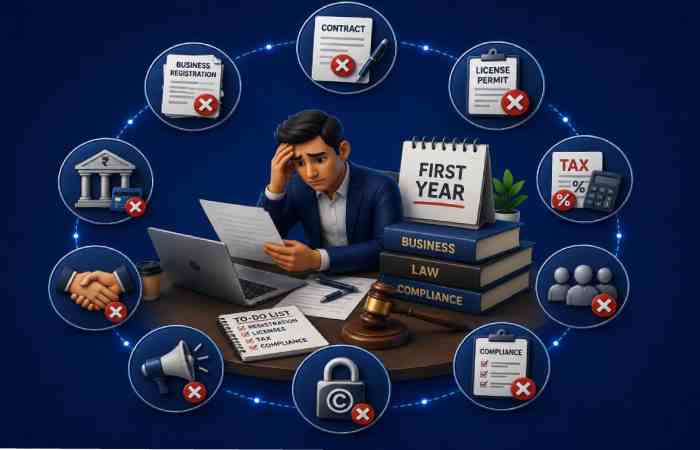
One of the common mistakes made is that of commencing business without considering the necessary legal requirements.
These requirements may differ based on different factors like the location, industry, nature of the business and activities carried out.
It is necessary for one to know the legal requirements needed before starting business.
How to Avoid This Mistake
Develop a general legal checklist that includes:
- Business registration
- Licenses and permits
- Tax requirements
- Industry regulations
- Insurance
- Employment requirements
- Customer protection rules
The checklist should be reviewed as the business evolves.
2. Selecting an Unfavourable Business Entity
The business entity may determine ownership, liability, tax treatment, reporting, and other management aspects.
Owners sometimes select an entity because they find it simple or because a similar business operates under that entity.
This may lead to problems in the future.
Avoiding the Error
The different types of entities must be understood while considering factors such as size, ownership, risk, and investment considerations for the future.
3. Using Verbal Agreements
It might seem very convenient to use verbal agreements, especially when dealing with those who are familiar with the business.
The trouble with using verbal agreements is that different people have their own interpretations of the conversations they had.
Solution to Avoid Making This Mistake
At any rate, one should always enter into written agreements with his/her partners, including pricing, duties, and other terms and conditions in such agreements.
4. Signing Contracts Without Careful Reviewing of the Document
A typical legal blunder in business activities is signing of the contract without reviewing the document.
The contract may have various terms including those on liability, automatic renewal, confidentiality, intellectual property rights, warranty, termination, or dispute settlement.
How to Avoid the Blunder
Carefully read all relevant documents before signing them. Specifically, take into consideration any obligations which could be costly or restrictive in the long run.
5. Contract Templates for All Situations
The firm could create one contract template and use it for every client or vendor that it deals with.
While templates help in saving time, not all situations might carry the same risks.
Use templates and modify them according to the specific situation.
6. Neglecting Intellectual Property
Entrepreneurs usually concentrate on tangible properties but neglect the fact that intellectual property is of great importance too.
The business name; logo; contents of the website, software, drawings, photos, and inventions; as well as trade secrets might prove to be very useful to the firm.
How to Steer Clear of This Error
Pinpointing your intellectual property and determining what kinds of protection are possible is the right way of avoiding the above-mentioned mistake.
Your firm should refrain from using copyrighted materials, logos, images and other types of content without proper permissions.
7. Employee Documentation Problems
When employees are hired without adequate documentation, the duties that need to be fulfilled can be confused.
In addition, the necessary employment regulations that must be followed in that particular business environment can be overlooked by firms.
8. Poor Handling of Employment Terminations
Employment termination issues could lead to legal troubles.
Problems could arise where employment terminations are not well handled through documentation and proper procedure.
Follow a uniform procedure for handling employment issues.
Maintain proper documentation and be conversant with the employment requirements before you act.
9. Ignoring Data Privacy
Businesses collect customer and employee information every day. It is a misconception among some organizations that privacy is an area of concern only for big tech firms.
This is not always the case.
Even a small enterprise can collect personal information including name, phone number, email address, billing information, and so forth.
Make sure that proper security measures are taken and understand privacy requirements of the business.
10. Forgetting to Keep Up with Licenses and Revisions
An organization might get the license needed but fail to renew it on time.
This is a preventable error.
Make a calendar for compliance of the business for license renewals, filing deadlines, permits, insurance, and other necessities.
Give reminders well in advance for every deadline.
Simple Checklist for Preventing Business Legal Mistakes
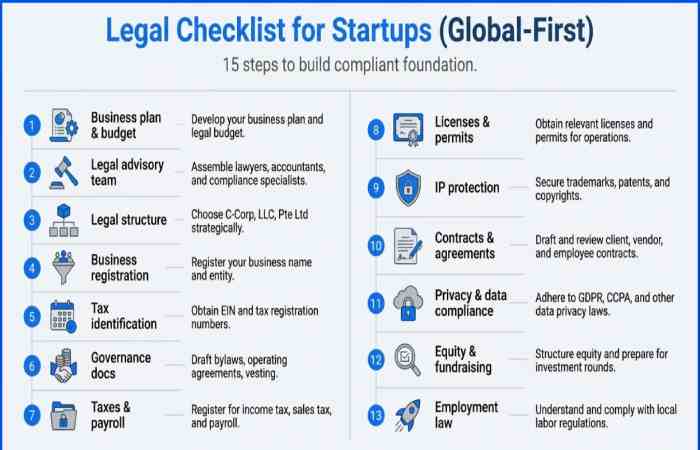
Organizations can go through this simple checklist to ensure their legal procedures:
- Maintain up-to-date registrations for business. Use written agreements for important transactions.
- Review contracts before signing.
- Monitor contract renewal dates.
- Maintain employee documentation.
- Protect intellectual property.
- Handle customer information responsibly.
- Keep accurate business records.
- Review advertising and customer terms.
Conclusion
Most common business legal mistakes are not caused by a lack of effort. They usually occur because of the informal discharge of legal obligations.
A lot of problems that could have been avoided may be avoided through setting up simple processes within the firm. This includes having written contracts, record keeping, reminders about the laws, employee policies, tracking of intellectual properties, among others. The intention here is not to make all entrepreneurs experts in law. The idea is to set the right tone and realize when a problem needs a lawyer.
Having the right attitude towards business law will protect the firm, avoid unnecessary quarrels, facilitate good decision making, and pave way for firm growth in the future.