

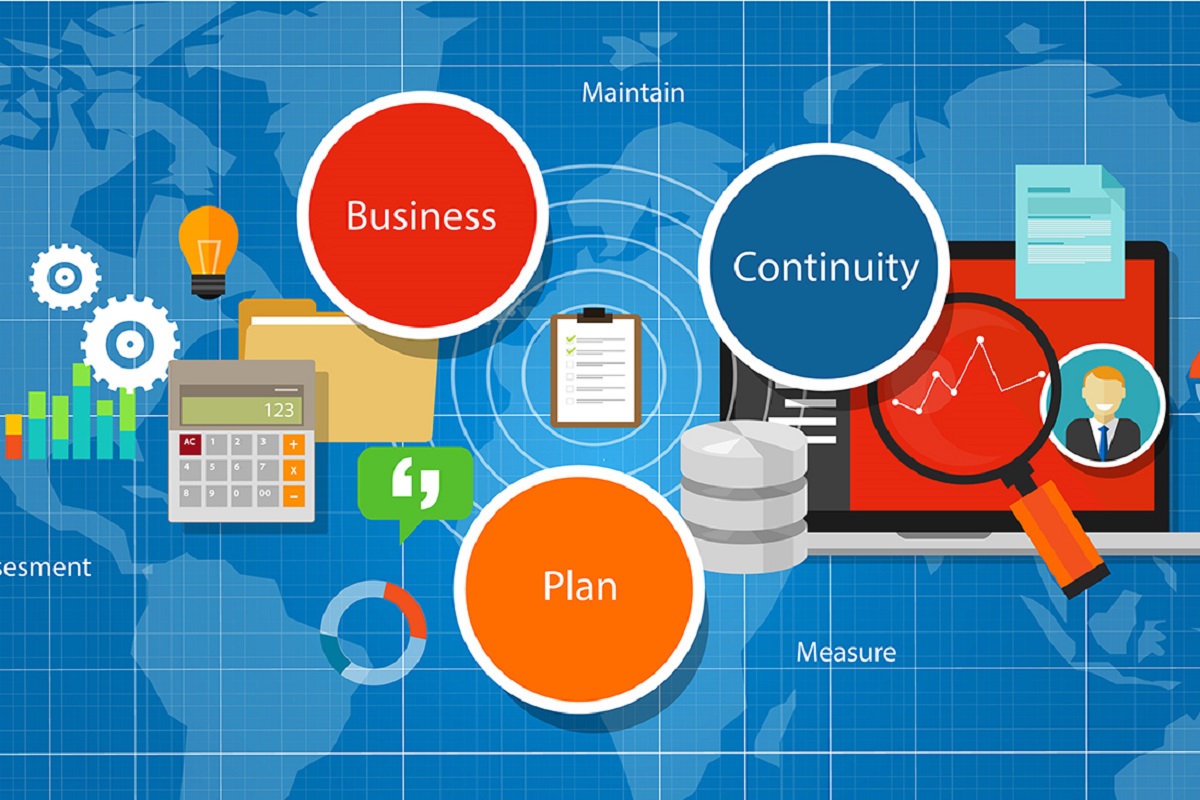
What is Contingency Plan? And How It Can Be Apply
To regulate the etymological origin of the two main words that shape the term, we have to go to Latin. Thus, in this language, we find the fact that the plan comes from the word planus that can live translated as “flat.”
>Meanwhile, contingency emanates from the contingent plan concept that Remian the result of the union of three parts: the prefix with – which equivalent to “meeting”, the verb tangere that synonymous with “touching” and finally the suffix – encia that can determined that its meaning is equal to “quality”.
A contingency plan is a type of plan preventive, predictive, and reactive. It presents a strategic and operative structure that will help to control an emergency and minimalize its negative significance’s.
The eventuality plan advises a series of alternative procedures to the normal operation of an organization when any of its usual functions are affected by an internal or external contingency.
Why Is a Contingency Plan Important?
This kind of plan, tries to guarantee the continuity of the operation of the organization in the face of any eventuality, whether material or personal. A contingency plan includes four basic stages: evaluation, planning, feasibility testing, and execution.
Specialists recommend planning when it is not yet necessary; that is before accidents happen. On the other hand, a contingency plan must be dynamic and must allow the inclusion of alternatives in the face of new incidents that may occur over time. Therefore, it must be updated and revised periodically. Regular maintenance can reduce the likelihood of unexpected equipment failures and other operational disruptions. Understanding the definition of maintenance can help organizations include preventive maintenance activities as part of their broader risk-management strategy.
Contingency Planning for Business Continuity
Organizations use contingency planning to protect important operations, resources, employees, and services. A well-prepared plan can help businesses respond more effectively to unexpected disruptions while reducing downtime and operational losses.
A contingency plan also has to establish certain strategic objectives and an action plan to meet those goals. Many organizations benefit from action plan template to effectively manage and complete projects. These objectives should be clearly connected to the overall project requirements. Establishing a project scope definition can help organizations identify the activities, deliverables, limitations, and responsibilities that a contingency plan needs to address.
Specifically, we can establish that any contingency plan must be formed in turn by three other plans that will be those that establish the measures to be carried out, the threats that are faced and the time of the establishment of those. Process mapping can also support contingency planning by showing how important activities flow through an organization. By visualizing these processes, teams can identify critical dependencies and determine where alternative procedures may be needed if an unexpected event occurs.
First of all, there is the backup plan that is responsible for determining what preventive measures are, that is, those that have to be carried out with the clear objective of preventing the materialization of a threat in particular.
How Often Should a Contingency Plan Be Updated?
A contingency plan should not be treated as a one-time document. Organizations should review and update it periodically as their operations, technology, employees, resources, and potential risks change.
Regular reviews also provide an opportunity to identify weaknesses and add new response procedures when necessary.
Secondly, it also integrates into the contingency project what is the emergency plan that, as its name indicates, is made up of the set of actions that must be carried out during the materialization of the threat and also after the same. And third is the recovery plan that is made after the threat with the clear objective of recovering the state in which things were before it became real.
Alternative program
In computer science, a contingency plan is an alternative program for a company to recover from a computer disaster and restore its operations quickly. These plans are also known by the acronym DRP, from the English Disaster Recovery Plan. Organizations can also use productivity software to organize contingency tasks, assign responsibilities, monitor deadlines, and keep important planning information accessible to the team.
A DRP program includes a backup plan (which done before the threat), an emergency plan (applied during the threat) and a recovery plan (with measures to apply once the threat has been controlle). For businesses relocating their workplace, disaster recovery planning should also consider network infrastructure, computers, servers, and other essential technology. Planning how to eliminate IT downtime when moving an office can help organizations maintain access to critical systems while the move is taking place.