


Tips to Crack Aptitude Test in First Attempt
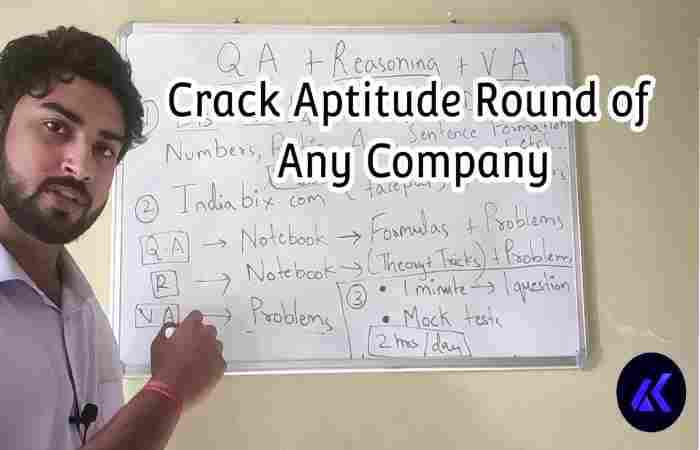
If you’ve ever applied for a job, college admission, or competitive exam, you already know how important aptitude tests are. These tests evaluate your problem-solving, reasoning, and time management skills — and yes, cracking them on the first attempt isn’t easy. But the good news is, with the right strategy, focus, and mindset, you can absolutely ace it.
In this guide, I’ll walk you through the best tips to crack an aptitude test in your first attempt, from understanding the test format to practicing smartly and managing time during the exam.
Understanding What an Aptitude Test Really Is
Before jumping into preparation, it’s important to know what you’re dealing with.
What Is an Aptitude Test?
An aptitude test measures your ability to think logically, solve problems, and handle data efficiently. It’s not about what you already know; it’s about how you apply your thinking to new situations.
Most aptitude tests cover sections like:
-
Quantitative Aptitude: Math problems, number series, percentages, profit and loss, etc.
-
Logical Reasoning: Puzzles, seating arrangements, coding-decoding, and patterns.
-
Verbal Ability: Grammar, reading comprehension, and vocabulary.
-
Data Interpretation: Tables, graphs, and charts that test your analytical skills.
Tip #1: Know the Test Format Inside Out
Why It Matters
Every aptitude test is slightly different. Some are focused on math, while others emphasize logic or verbal skills. Knowing the exact structure helps you prioritize what to study.
How to Do It
-
Go through previous year’s question papers (if available).
-
Visit the company or exam website for pattern details.
-
Note down the number of questions, time limit, and marking scheme.
-
Identify if there’s negative marking—it affects your guessing strategy.
Pro tip: Make a small note sheet summarizing the test pattern and keep it handy for daily revision.
Tip #2: Strengthen Your Basics First
Master the Foundation
No matter how complex the questions look, they always rely on basic concepts. If you’re weak in fundamentals, advanced questions will always seem intimidating.
Here’s how you can strengthen your basics:
-
For Quantitative Aptitude: Brush up on high school-level topics like ratios, percentages, averages, time and work, and geometry.
-
For Logical Reasoning: Practice simple puzzles first before attempting complex ones.
-
For Verbal Ability: Read short articles, learn new words daily, and revise grammar rules.
Recommended Practice
Spend the first two weeks just revising the basics without timing yourself. Once you feel confident, switch to timed tests.
Tip #3: Create a Smart Study Plan
Time Management Is Everything
You can’t prepare for everything at once. That’s why you need a smart plan that divides your preparation into daily, weekly, and monthly goals.
Here’s a simple structure you can follow:
Week 1–2: Concept Building
-
Focus on learning basics and formulas.
-
Watch topic-wise YouTube tutorials.
-
Practice 10–15 questions per topic.
Week 3–4: Moderate Practice
-
Take sectional tests for Quant, Verbal, and Reasoning.
-
Analyze mistakes carefully.
-
Learn shortcuts for common problems (like speed-distance-time).
Week 5–6: Full-Length Tests
-
Attempt mock tests with real-time limits.
-
Review your performance and note weak areas.
-
Revise formulas and vocabulary daily.
Tip #4: Learn Shortcuts and Tricks
The Secret to Solving Fast
Most aptitude tests are time-bound. You might get only 30 seconds to 1 minute per question. So, solving efficiently matters more than solving perfectly.
Here’s what you can do:
-
Memorize common squares, cubes, and percentages (like 15%, 25%, etc.).
-
Use Vedic Maths techniques for quick calculations.
-
Eliminate wrong options using logic rather than full solving.
-
Learn approximation methods—they save precious seconds.
Example
If the question asks for a rough percentage or comparison, don’t calculate fully—estimate it. The goal is accuracy and speed.
Tip #5: Practice with Mock Tests and Analyze Mistakes
Simulate Real Exam Conditions
Mock tests are your best friends when preparing for aptitude exams. They help you get comfortable with the pressure and improve your decision-making speed.
How to Make the Most of Them
-
Take at least two mock tests per week.
-
Analyze your wrong answers — that’s where real learning happens.
-
Identify whether your mistake was due to conceptual error, carelessness, or time pressure.
Keep a “mistake notebook” and record repetitive errors. Review it weekly so you don’t make the same mistake again.
Tip #6: Work on Your Time Management Skills
Don’t Get Stuck on One Question
Many students lose marks because they spend too long on a single problem. Remember: not every question deserves equal time.
Time-Saving Techniques
-
Attempt easier sections first to build confidence.
-
Set a timer while practicing.
-
Mark difficult questions to revisit later.
-
Keep the last 5 minutes for review and guesses (if allowed).
Tip #7: Improve Your Reading and Comprehension Skills
Verbal Section Can Make or Break Your Score
Aptitude tests often include reading comprehension, sentence correction, and synonyms. The best way to excel is to make reading a daily habit.
Practical Steps
-
Read short editorials or news summaries daily.
-
Practice comprehension exercises online.
-
Learn 5–10 new English words each day with meanings and usage.
You’ll notice a sharp improvement in your reading speed and understanding.
Tip #8: Stay Consistent and Confident
Consistency Beats Cramming
Cramming a day before the test doesn’t work. Aptitude preparation requires steady and consistent effort.
How to Stay Consistent
-
Dedicate at least one hour daily to practice.
-
Mix subjects to avoid boredom (e.g., 30 mins Quant + 30 mins Reasoning).
-
Reward yourself after completing each weekly target.
And most importantly — believe that you can crack it. Confidence plays a huge role during the test.
Tip #9: Manage Stress Before and During the Test
Don’t Panic — Plan
Stress can mess up even the best preparation. That’s why managing your mindset is as important as managing time.
Tips to Stay Calm
-
Sleep well the night before.
-
Eat light before the exam.
-
Take deep breaths if you feel anxious.
-
Skip and return to tough questions instead of freezing up.
A calm mind helps you think clearly, and clear thinking leads to correct answers.
Tip #10: Revise Regularly and Stay Updated
Why Revision Matters
Without revision, you’ll forget formulas, tricks, and vocabulary. Allocate your final week solely to revision.
Revision Checklist
-
Revise all formulas and short tricks.
-
Go through your mistake notebook.
-
Take at least 3 final mock tests before exam day.
-
Rest well and avoid learning new topics at the last minute.
Common Mistakes to Avoid
Even the best-prepared students make silly errors. Avoid these common traps:
-
Guessing too much when negative marking exists.
-
Skipping instructions — they often contain key details.
-
Not managing time — getting stuck on one section.
-
Ignoring weak areas because they feel uncomfortable.
Fix these, and your chances of clearing the aptitude test on your first attempt shoot up.
Final Thoughts
Cracking an aptitude test in your first attempt isn’t about being a genius — it’s about smart preparation, consistency, and confidence. Understand the test, strengthen your basics, practice daily, and analyze your progress.
When you go in with the right mindset and strategy, you’ll not only pass but stand out among other candidates.
So, take a deep breath, pick up that practice book, and start today — your future self will thank you for it.