


Project Management Techniques Every Project Manager Should Know
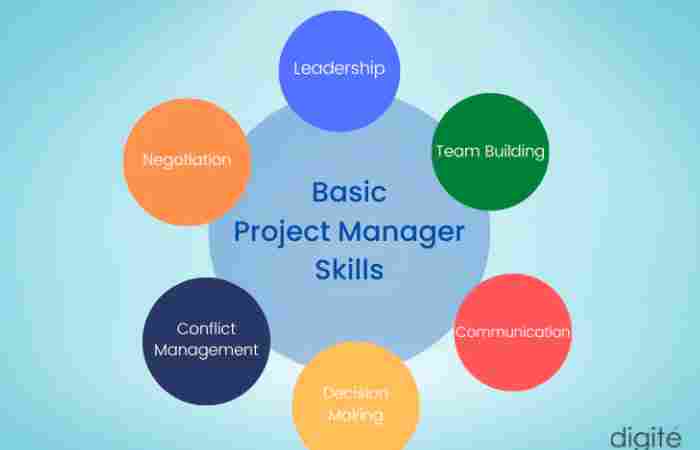
In today’s competitive business environment, successful project delivery is not just about meeting deadlines—it’s about using the right project management techniques to ensure efficiency, collaboration, and quality outcomes. Whether you’re managing a small startup project or a massive corporate rollout, the techniques you apply can make or break the final result.
Let’s dive deep into the top project management techniques every project manager should know, why they matter, and how to apply them effectively in real-world scenarios.
What is Project Management?
Before we get into techniques, it’s important to understand what project management actually means.
Project management is the process of planning, organizing, and managing resources to achieve specific goals within a defined timeline and budget.
It involves:
-
Setting clear objectives
-
Defining tasks and timelines
-
Allocating resources efficiently
-
Monitoring progress and mitigating risks
The key to success lies in choosing the right project management technique that aligns with your team structure, project complexity, and goals.
Why Project Management Techniques Matter
Without a proper system, even the most talented teams can struggle with:
-
Missed deadlines
-
Budget overruns
-
Communication breakdowns
-
Scope creep (uncontrolled project growth)
Project management techniques bring structure, predictability, and transparency to your process. They help teams stay aligned, track progress, and deliver measurable results.
Top Project Management Techniques You Should Know
Let’s explore the most effective and widely used project management techniques that every project manager should master.
1. The Waterfall Model
Overview
The Waterfall technique is one of the oldest and most traditional project management methods. It’s a linear, step-by-step approach where each phase must be completed before moving on to the next.
How It Works
The project flows through sequential stages:
-
Requirements gathering
-
Design
-
Implementation
-
Testing
-
Deployment
-
Maintenance
Best For
-
Construction projects
-
Manufacturing
-
Software development with fixed requirements
Pros
-
Easy to understand and manage
-
Clear structure and documentation
-
Predictable timelines and costs
Cons
-
Difficult to adapt to changes
-
Testing happens late in the process
2. Agile Methodology
Overview
The Agile approach focuses on flexibility, collaboration, and continuous improvement. Instead of following a strict sequence, Agile breaks a project into small, manageable iterations called sprints.
How It Works
Teams work in short cycles—usually 1 to 4 weeks—to deliver a working product increment. Feedback is gathered at the end of each sprint to guide future work.
Best For
-
Software development
-
Marketing campaigns
-
Startups and innovation projects
Pros
-
Fast feedback loops
-
Adapts easily to change
-
Encourages collaboration
Cons
-
Requires active client involvement
-
Harder to predict timelines and budgets
3. Scrum Framework
Overview
Scrum is a subset of Agile and one of the most popular techniques today. It emphasizes team roles, time-boxed sprints, and daily stand-up meetings.
Key Roles
-
Product Owner: Defines the vision and priorities.
-
Scrum Master: Facilitates the process and removes roadblocks.
-
Development Team: Executes the work.
Best For
-
Projects requiring rapid iteration
-
Cross-functional teams
Pros
-
Encourages accountability
-
Delivers quick, tangible progress
-
Promotes teamwork and transparency
Cons
-
Needs consistent communication
-
May overwhelm non-technical stakeholders
4. Kanban Method
Overview
The Kanban technique focuses on visualizing workflow and limiting work in progress (WIP). It uses a Kanban board with columns like “To Do,” “In Progress,” and “Done.”
How It Works
Tasks are represented by cards and moved across the board as they progress. This makes it easy to identify bottlenecks and manage workflow efficiently.
Best For
-
Maintenance or support teams
-
Continuous delivery environments
Pros
-
Visual and intuitive
-
Encourages continuous delivery
-
Easy to implement
Cons
-
Lacks time constraints
-
Can become chaotic if not monitored
5. Critical Path Method (CPM)
Overview
The Critical Path Method (CPM) helps project managers identify the longest sequence of dependent tasks that determine the minimum project duration.
How It Works
You:
-
List all activities.
-
Estimate their durations.
-
Identify dependencies.
-
Calculate the “critical path”—the sequence that takes the most time.
Best For
-
Complex projects with many interdependencies
-
Construction and engineering
Pros
-
Helps optimize scheduling
-
Highlights time-sensitive tasks
-
Improves resource allocation
Cons
-
Can be complex to manage manually
-
Assumes accurate time estimates
6. Program Evaluation and Review Technique (PERT)
Overview
The PERT technique is similar to CPM but introduces probabilistic time estimates—optimistic, pessimistic, and most likely durations.
Best For
-
Research and development projects
-
Projects with uncertainty
Pros
-
Handles unpredictable timelines better
-
Helps with risk analysis
Cons
-
Time-consuming to create
-
Requires detailed data
7. Lean Project Management
Overview
Lean methodology focuses on eliminating waste—anything that doesn’t add value to the end product.
How It Works
Teams streamline processes, automate repetitive tasks, and focus on delivering customer value efficiently.
Best For
-
Manufacturing and production
-
Startups focused on MVPs
Pros
-
Cost-efficient
-
Increases productivity
-
Improves quality
Cons
-
Requires cultural change
-
May not fit all project types
8. Six Sigma
Overview
Six Sigma is a data-driven methodology that aims to eliminate defects and improve quality. It uses statistical tools to analyze processes and identify inefficiencies.
The DMAIC Framework
-
Define – Identify the problem.
-
Measure – Collect data.
-
Analyze – Find root causes.
-
Improve – Implement solutions.
-
Control – Maintain improvements.
Best For
-
Manufacturing
-
Process improvement projects
Pros
-
Increases quality and consistency
-
Reduces waste and errors
Cons
-
Complex and data-heavy
-
Requires trained professionals (Green/Black Belts)
9. PRINCE2 (Projects IN Controlled Environments)
Overview
PRINCE2 is a structured project management methodology developed by the UK government. It focuses on defined roles, responsibilities, and stages.
Principles
-
Business justification
-
Defined roles and responsibilities
-
Focus on products
-
Manage by stages
Best For
-
Government and corporate projects
-
Large organizations with strict procedures
Pros
-
Highly structured and documented
-
Scalable for complex projects
Cons
-
Can be too rigid for small teams
10. Hybrid Project Management
Overview
Hybrid models combine the best of Agile and Waterfall. For instance, you might use Waterfall for planning and Agile for execution.
Best For
-
Teams transitioning from traditional to modern methods
-
Large enterprises needing flexibility
Pros
-
Balances structure and adaptability
-
Works well in multi-team environments
Cons
-
Needs clear communication
-
Can become confusing without strong leadership
Choosing the Right Technique
With so many options, how do you choose the right one?
Ask yourself these questions:
-
How flexible is my project scope?
-
What’s the team size and skill set?
-
How strict are the timelines?
-
What’s the budget and client expectation?
For example:
-
A software startup might go for Agile or Scrum.
-
A construction firm might prefer Waterfall or CPM.
-
A manufacturing unit may rely on Lean or Six Sigma.
The right technique depends on your industry, team culture, and project complexity.
Best Practices for Project Managers
Regardless of which technique you choose, follow these proven best practices:
-
Set clear goals and KPIs from the start.
-
Communicate consistently with your team and stakeholders.
-
Use project management tools like Trello, Asana, or Jira.
-
Monitor progress with dashboards and reports.
-
Stay flexible—adapt when things change.
-
Celebrate milestones to keep morale high.
The Future of Project Management
Project management is evolving fast with the rise of AI, automation, and data analytics.
Emerging trends include:
-
AI-powered project insights for predictive scheduling
-
Remote team collaboration tools
-
Agile-at-scale for large enterprises
-
Sustainability-focused project planning
The modern project manager must blend technical expertise with leadership and emotional intelligence to thrive.
Final Thoughts
Mastering project management techniques isn’t just about following frameworks—it’s about knowing when and how to apply them. Whether it’s Agile for flexibility, Waterfall for predictability, or Lean for efficiency, the key is finding what works best for your team and project goals.
When applied effectively, these project management techniques can help you deliver projects faster, smarter, and with better outcomes.