

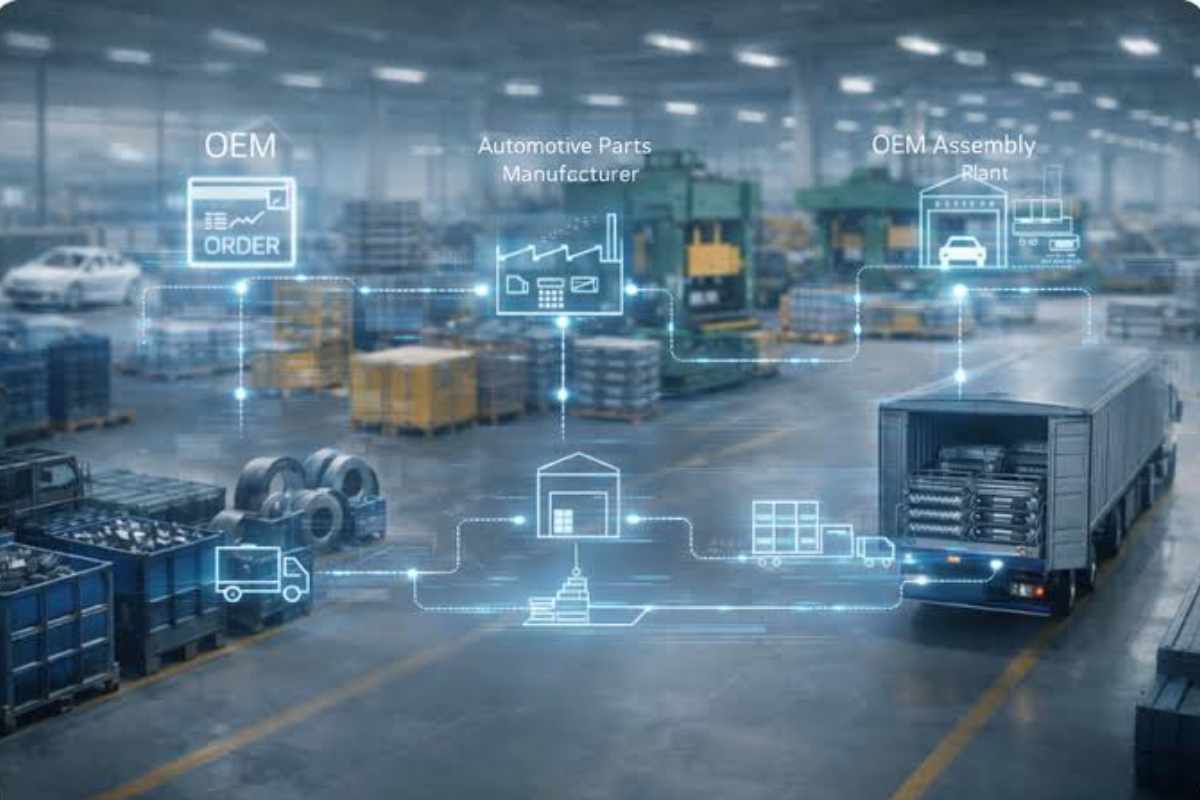
Trends in Manufacturing and Logistics and Case Studies
Manufacturing and Logistics Trends and Case Studies—It is worth mentioning that the field of manufacturing and logistics changes more rapidly now than it did ten years ago. The following are some examples of the reasons why companies should rethink their strategies regarding manufacturing, storing, and delivering their products.
Whereas the focus was traditionally on the production of as many goods as possible at low prices, modern companies are required to produce good-quality goods, satisfy customer demands, reduce downtime, and work under unfavorable conditions.
The same can be said about logistics. Nowadays, customers require such features as timely and fast delivery and accurate information about their delivery. As a consequence, companies should create effective approaches to inventory, transportation, and warehousing.
Fortunately, many issues may be solved with the help of practical measures, which include both technological developments like artificial intelligence, automation, interconnected devices, and analytics as well as improvement of core processes and competencies of workers.
In this article, we will review the main manufacturing and logistics trends alongside relevant case studies and lessons learned by businesses.
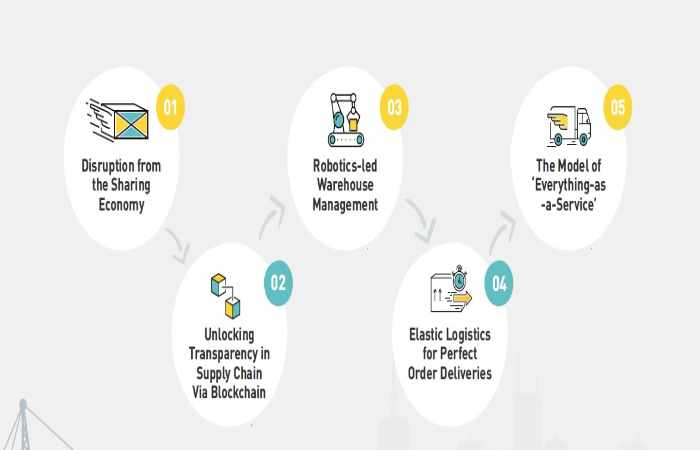
Trends in Manufacturing and Logistics
1. AI is Gaining Practicality
Artificial Intelligence is one of the trends which is clearly visible in manufacturing and logistics.
Organizations are using artificial intelligence in activities such as demand forecasting, production planning, quality inspection, inventory management, predictive maintenance, routing, and other similar tasks. A manufacturing company can examine historical data to predict any upcoming issues with machines. A logistics firm can identify which shipping routes always suffer delays from the analysis of data.
In addition, AI is being adopted to carry out tedious administrative tasks. In place of employees spending numerous hours searching for information manually, there would be a way of sorting out information using software and identifying the gaps which need to be addressed.
However, artificial intelligence cannot be considered as the remedy to all problems because organizations need information, process, and skilled workers that can evaluate results sensibly.
2. Intelligent Manufacturing is Trending
A smart factory integrates technology to make production better.
Manufacturing in the traditional manner relies on employees monitoring machines and manually noting down data. In a connected factory, data can be collected automatically.
For instance, sensors can keep track of the machine’s temperature, vibration, operational speeds, and other such parameters. With a system that can spot abnormal patterns, the maintenance team may be able to conduct an investigation before a failure occurs.
Smart manufacturing also offers enhanced visibility. They will be capable of analyzing manufacturing efficiency and locating any bottle necks more quickly than ever before.
3. Smart Manufacturing Has Taken Off
A smart factory integrates technology to make production better.
Manufacturing in the traditional manner relies on employees monitoring machines and manually noting down data. In a connected factory, data can be collected automatically.
For instance, sensors can keep track of the machine’s temperature, vibration, operational speeds, and other such parameters. With a system that can spot abnormal patterns, the maintenance team may be able to conduct an investigation before a failure occurs.
Smart manufacturing also offers enhanced visibility. Such managers would be in a good position to keep track of the performance of the production process and identify problems before they occur.
4. Predictive Maintenance
Downtime of the equipment would lead to huge losses to the manufacturing companies. In case a major piece of equipment breaks down at an unplanned time, operations could come to a halt. Orders of customers can get delayed; employees may be kept waiting; and costs of emergencies will end up being higher than those of planned maintenance.
Analyses the data from the equipment to detect any indication of trouble.
Maintenance staff can then study any abnormality in performance and arrange for repair works.
5. Greater Supply Chain Visibility
Greater supply chain visibility has now gained a lot of importance.
It is important for companies to have an idea as to where the materials and products stand in the process.
The manufacturing company might be interested in knowing whether its supplier has already sent out the critical component or not. The warehouse manager may require information regarding the stock that is there in the inventory.
6. More Emphasis on Supply Chain Resilience
Companies have also realized that being efficient and resilient is not always the same thing.
The supply chain may be very efficient under normal circumstances, yet susceptible once there is a failure of the supplier or the mode of transport.
Companies that are resilient think about potential problems and plan for contingencies.
This means that company manufacturing goods can get a backup supplier for a critical component. Likewise, a logistics company can keep good relations with different modes of transport.
The idea here is not to mitigate all risks. It is about planning for the risks that can potentially disrupt the business operations.
7. Sustainable Manufacturing and Logistics
Sustainability is now an element of planning operations on a daily basis. Manufacturers are considering energy consumption, waste from raw materials, packaging, water consumption, and emission levels. Logistics specialists are studying transport routing, fuel consumption, capacity of vehicles, and packaging.
Minimizing unnecessary packaging would cut down on material costs and space required in warehouses.
The best sustainable approaches tend to be related to operational improvement.
Concluding Remarks
Manufacturing and logistics processes will tend to become more interdependent, automated, adaptive, and information-based operations. It is anticipated that artificial intelligence, robotics, smart manufacturing, predictive maintenance, supply chain visibility, and sustainability technologies will remain fields of development. However, technology alone is not enough for successful transformation.
As evident from the case studies analyzed above, the most successful outcomes of technological implementation can be achieved by addressing real business challenges with the help of technology. DCM Shriram addressed challenges related to energy, materials, and maintenance; Unilever aimed at increasing flexibility and sustainability; Hitachi addressed inventories and lead times; RRS Qingdao integrated warehousing and transportation.
The mentioned approach may help businesses to control costs, increase reliability, respond to customers faster, and develop their manufacturing and logistics operations for the future.