

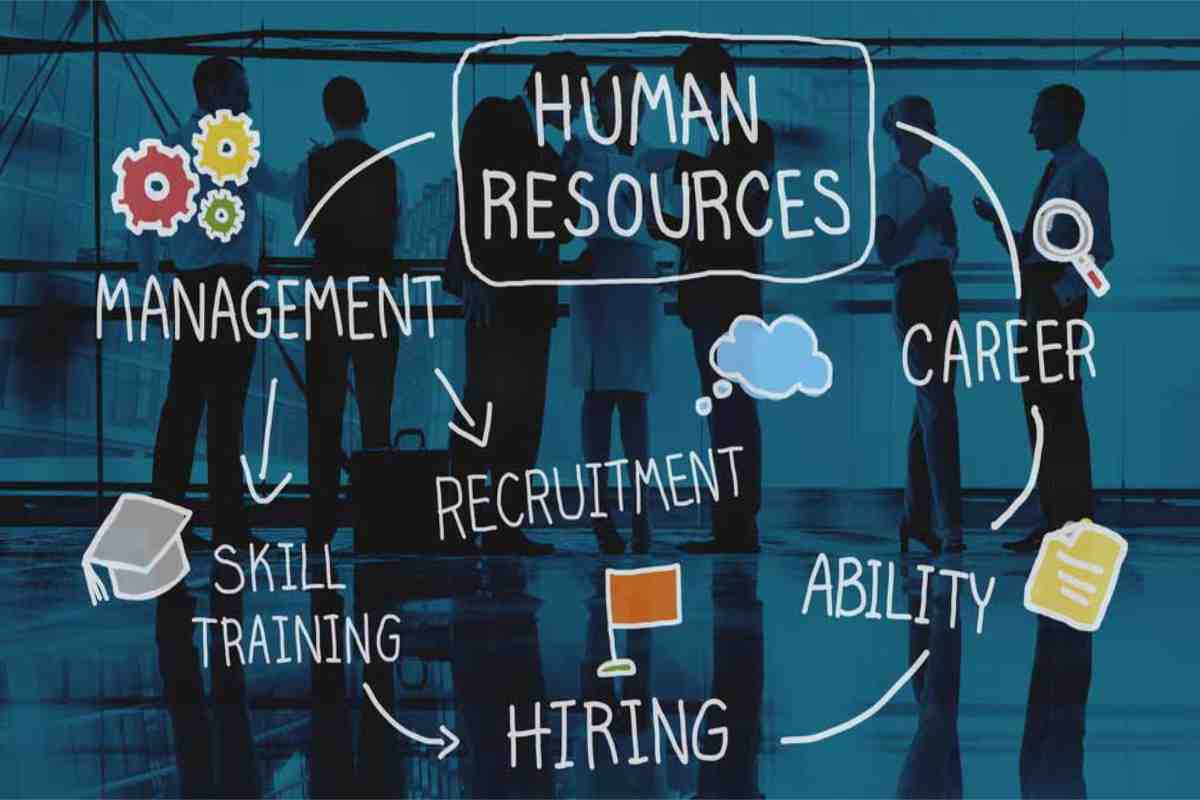
Human Resources, Hiring and Workplace Management
Human Resources, Hiring, and Workplace Management—The concept of human resources goes far beyond mere recruitment and handling leave applications. In an effectively run company, human resources will assist in bringing the right personnel on board, help existing employees cope with their job, help managers deal with issues at work, and establish procedures to streamline operations in a day-to-day environment.
This will be enough for small businesses to have efficient human resources management: choose your workers wisely, communicate effectively, be fair to your employees, and help them do their jobs well.
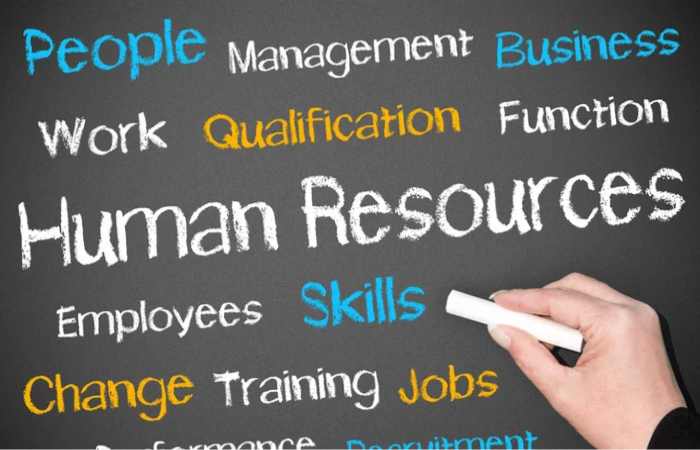
What Is Human Resources and Why Does It Matter?
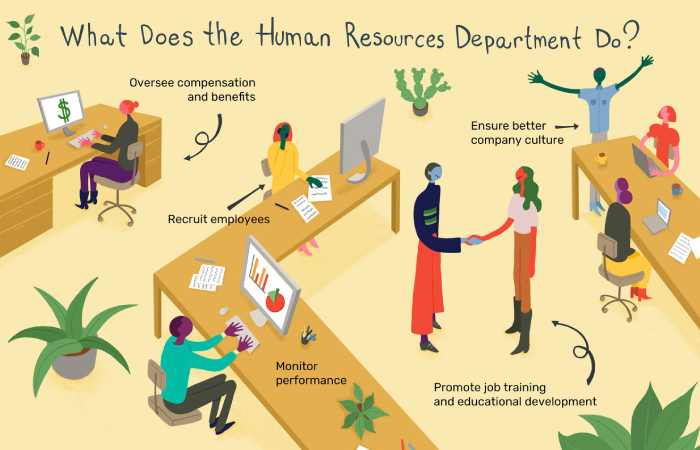
Human Resources Department is the department in the company that looks after its workers. The department has a variety of responsibilities including recruitment of employees, onboarding, employee tracking; attendance of employees; management of leave and overtime; skills development; performance evaluation of the staff members; development of workplace policies; assistance in building good interpersonal relationships among the employees and support for the managers.
For instance, let us assume that a certain firm is continuously losing employees from its customer service department. Hiring employees to fill those vacant places may not solve the problem. The Human Resources should try to find out what is causing such a high turnover rate in the customer service department. The cause could be the overload of work; poor supervision by supervisors; unclear role of an employee within the department; lack of training and so on.
It is more beneficial to understand the reasons why employees leave the customer service department than continue hiring people to do the same job repeatedly.
Preparation Before the Hire
First of all, before the hire the role must be understood.
Before posting an open position, the organization has to understand why this post is required and what will the individual do in this post. This includes the definition of responsibilities, hierarchy, skills, conditions of work, and the level of performance.
For example, an organization seeking for a customer support executive may start off with writing:
“Effective communication skills required.”
However, this does not give any information to the applicants.
What the organization has to do is provide more information regarding the responsibilities that the worker will perform.
It includes handling the queries of customers, resolving complaints of the customers, managing the data base of customers, communicating with other departments, and escalating complex issues to the superior.
Giving Constructive Feedback to Employees

Giving of feedback should not be delayed until it becomes a matter for discussion during the year-end performance review meeting.
Where the employee repeats the mistake or does not meet the expected standard, then the supervisor needs to discuss this before it is too late.
Constructive feedback has to be specific.
Instead of telling:
“You are performing poorly.”
The supervisor can say:
“The past three reports have been handed in late. Let’s figure out why this is happening.”
The above statement addresses a particular problem and gives room for finding a solution.
Positive feedback should also be specific. The employee will feel appreciated when told exactly what he or she has done well.
Handling Poor Performance
Inability of an employee doesn’t mean that he doesn’t want to do work. There may be several possible causes such as poor training, wrong guidance, overloading, poor equipment, and complicated procedures. It is essential for managers to know the real reason behind the failure of any person. For instance, when the problem is that the individual lacks the specific skill, proper training would be of great help.
Where the expectations are not clear, a good manager will make sure that the expectations are known to the person.
Where the individual has the skills and the resources but continually fails to perform up to the expectations, performance management could be necessary.
Effective performance conversations should be properly documented.

Workplace Policies for Better Understanding
Workplace policies are useful to both the employee and the manager.
Different policies can apply to issues such as attendance, leaves, working hours, telecommuting, conduct at the workplace, complaints procedures, disciplinary procedures, data handling, and more.
Workplace policies have to be understandable to all employees.
A difficult policy that is not read by anybody does not have any role to play.
Workplace policies need to be followed by the managers without creating different ad hoc rules for different people.
Managing Workplace Conflict
Conflict is natural in the course of working with other people. Differences may arise due to their responsibilities, their way of communicating, deadlines, workload, and process of decision-making. The aim is not to eliminate conflicts. The aim is to resolve disputes so that the workplace is not affected.
In the case of any dispute in the workplace, HR or the management needs to know the exact situation by listening to the parties involved. Assumptions and taking sides is not a good idea in such cases.
While in some cases, the dispute may be resolved by discussion only, while in others, it may be necessary to clarify responsibilities and even investigate. Workplace disputes need to be managed in privacy and unnecessary sharing of information is not required.
Improvement of Workplace Communication
Most of the problems in the workplace are the result of poor communication. A manager assumes that his/her employee understands when something is expected to be completed. An employee is under the impression that there will be some leeway in meeting the deadline. One department alters its procedure without informing another department which relies on it.
HR updates a policy without clarifying what the employee is expected to do.
Effective communication avoids such conflicts.
It is possible to develop basic modes of communication depending on the kind of information being communicated.
Formal communication may be done via email.
Group discussions by teams may be held through workplace communication tools.
Meetings are meant for decision-making while individual issues of employees may be sorted out through personal discussions.
Fostering Employee Engagement
Engagement of employees is all about what happens at work every single day. Do managers listen to them? Is good work appreciated? Are things done fairly in the workplace?
Not always something expensive or often done. It could be simply an issue of appreciating the effort put in by the employee on the part of the manager. It should not simply be “Well done” but something like:
“Thanks for persisting with the customer until the issue was sorted out.” You have great communication skills that helped prevent the matter from becoming even bigger.” Acknowledgment demonstrates to the employees that their efforts have been observed.
Training and Employee Development
Training should be based on a specific need.
An organization could offer training in response to difficulty that employees have in using new software, difficulties that managers face in conducting performance conversations, lack of knowledge about products among sales employees, or new employees’ need to learn internal processes.
Some possible forms of training are as follows:
- Workshops
- On-line learning
- Coaching
- Mentoring
- Shadowing
- Purposeful tasks
- Internal training programs
Employee development should not end with finishing a class.
It is necessary for employees to be given chances to apply the knowledge they have gained.
For example, allowing an opportunity for an employee to get involved with a small project or assignment following their training in leadership.

Managing Remote and Hybrid Employees
Remote and hybrid nature indicates that the management will have to concentrate on outputs and communications rather than being present physically.
The remote employee should know what needs to be done, when it needs to be done, how the information will be provided, and whom to contact in case there are any issues.
It is also necessary to ensure that realistic expectations are established in terms of communication.
It is unrealistic to assume that the employees will be available throughout the day as they are working from a remote location.
Employee Attendance and Leave Management
It is important that attendance and leave procedures should not be too complicated for employees to comprehend.
Employees should be well aware of the way of applying for leave, reporting absenteeism, recording working hours, and asking any questions regarding the number of leaves.
It is the responsibility of HR to keep all the information up to date and to ensure that managers are knowledgeable about those policies.
Sometimes problems arise when managers use various criteria.
For instance, if one manager tends to accept leave applications from certain circumstances, but another one denies such applications without any explanation, then employees will feel that this procedure is unfair.
Retention of Correct Employee Records
There is quite a lot of paperwork involved in HRM.
Records for employees can have such documents as employment contract, contact information, attendance record, holiday record, remuneration details, training records, and performance evaluation records.
Records must be accurate and well-organized. In addition, they must not be available to those who have no right to access them.
In addition, organizations must not gather personal information about their employees when there is no need for it.
Employee Retention and Reduction of Turnover
Employee retention actually starts way before someone decides to resign.
The HR needs to consider any trends related to employee turnover.
In case of high turnover rate within a certain department, there is probably something wrong with the management or the workload.
In case of high turnover among new recruits, it is possible that the expectations were too high for them. When employees continually talk about lack of growth opportunities, there is probably something wrong with training and promotion programs.
The exit interview could be quite informative; however, it shouldn’t be the only source of data. Employees are not always ready to share all the reasons behind their decision.
Checking different sources of data provides a clearer picture.
HR Metrics Useful to Businesses for Decision Making
The HR department may use data for spotting trends and possible problems.
Some metrics useful in this case are as follows:
- Staff turnover rate
- Time to fill open positions
- Rates of offer acceptance
- Attrition rate of new hires
- Patterns of absence
- Completion of training programs
- Internal promotions
- Conducting performance reviews
The figures per se are not of importance.
What is crucial about them is what they imply.
In case the recruitment process is delayed more than expected, you may need to look at the approval procedure and qualifications of candidates again.
When new employees leave the company shortly after starting working there, there may be something wrong with the onboarding procedure or management practices.
When people from one particular team miss work, the reason can be found in work load, schedule, or workplace.
HR information should result in better decisions instead of just making reports.
An Effective HR Checklist for Small Businesses

Although small firms might lack an adequate HR department, they definitely have enough grounds to implement proper practices.
Recruitment involves the creation of job descriptions, identification of required skills, conducting interviews, documentation of the entire recruitment process and making the terms of employment very clear.
Onboarding involves the provision of necessary equipment and access to systems for the new hires, introduction to other employees, and briefing on their roles and training them.
Performance management requires that you set proper expectations, give feedback, reward good performance and deal with performance issues. Employee relations require you to set up proper channels for complaints, be observant, handle complaints properly and be able to keep things confidential if necessary. For administration, organize employee files, maintain leave and attendance records accurately, inform about policies clearly, and secure sensitive data from unauthorized access.
Conclusion
Human resource management is not about generating as many policies as possible or arranging as much activity in the workplace as possible.
It is about getting the fundamentals right. Hiring gets individuals into the business, but what happens next depends on proper workplace management.
The best human resource management systems are often those which are basic: proper job description, an effective first week, constructive feedback from the manager, a fair system for granting leaves, an appropriate procedure for airing grievances, and communication whenever there are changes.
These basic procedures may not always get enough attention, but they set the stage for an effective workplace environment.