

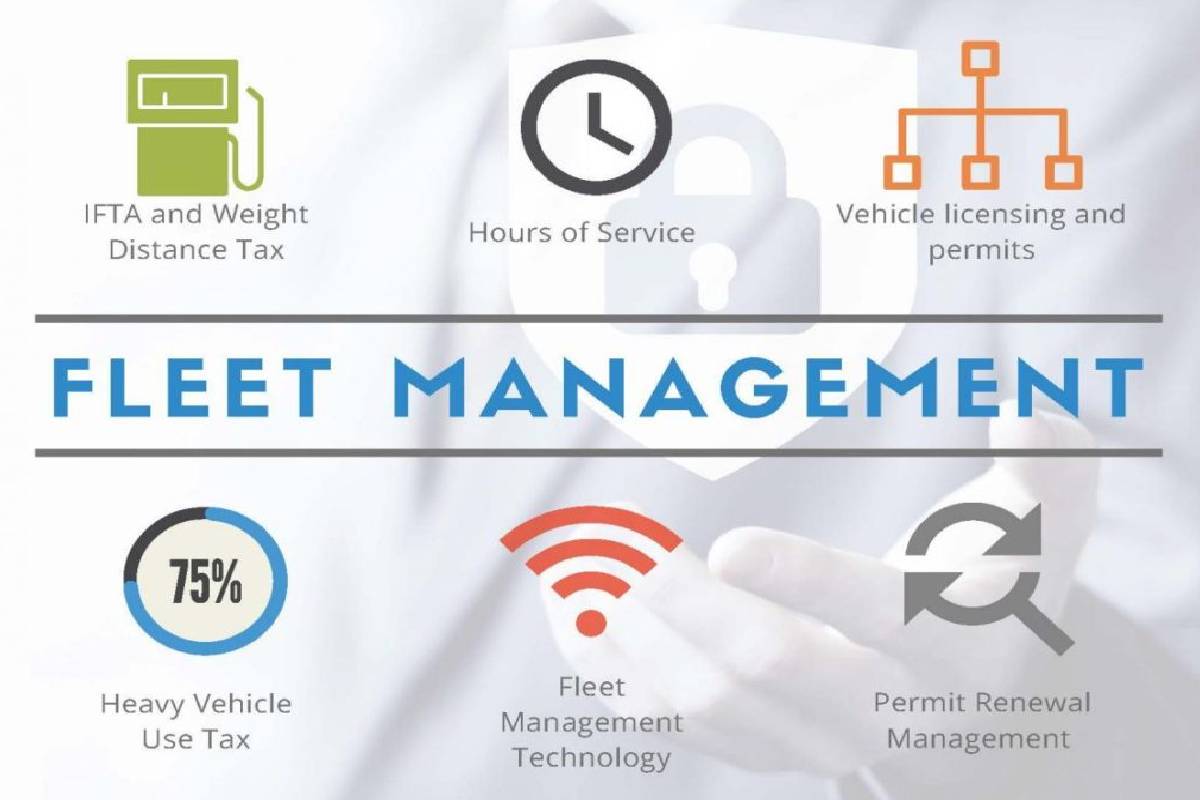
Fleet Management Definition
Fleet Management describes the management, planning, control, and monitoring of vehicle fleets.
The distances traveled by vehicles ( trucks, cars, ships, trains, buses ) coordinated, evaluated, and optimized with the help of specific influencing parameters.
It should help to use all resources and services in the best possible way and to identify, correct, or circumvent problems at an early stage.
State of the art is digital Fleet Management Software. Complex software-based systems used to support the work of the user – for example, the dispatcher of a transport company.
The essential goals of systematic fleet management include relieving the disposition, optimizing route planning as well as operational process optimization and cost
Fleet management, by definition, is the process by which firms use to control and coordinate all the vehicles they have, including private cars, trucks, machines, and vans. If you own either a small-scale delivery business or a massive logistics company, fleet management can help you make your business more effective and more efficient.
The following guide will cover everything there is to know about fleet management.
What Is Fleet Management?
At its core, fleet management is the process of administering a company’s vehicle assets throughout their lifecycle — from acquisition and maintenance to tracking and replacement. It involves:
Vehicle procurement
Maintenance scheduling
Fuel management
Driver safety and compliance
Telematics and GPS tracking
Cost control and reporting
The goal? To ensure vehicles are operated safely, efficiently, and cost-effectively.
Why Fleet Management Matters
Organizations that manage fleets — such as logistics providers, construction companies, field service teams, and delivery services — depend on reliable vehicles to generate revenue. For construction companies in particular, managing mobile assets also requires attention to mobility and efficiency in heavy equipment to keep projects productive and reduce unnecessary downtime.
A well-executed fleet management program:
Reduces operating costs
Improves vehicle uptime
Enhances driver safety
Increases productivity
Supports regulatory compliance
Provides real-time visibility into operations
In competitive industries like transportation and delivery, effective fleet management is no longer optional — it’s a strategic advantage. This is especially important because businesses operating in this sector must also address several key challenges faced by the transportation industry, including safety, labor shortages, and technology adoption.
Key Components of Fleet Management
1.Vehicles Selection and Replacement
Proper vehicle selection and timely replacements impact operating costs. These decisions are made based on:
The size of fleet and usage patterns
Fuel efficiency
TCO
Maintenance costs
Replacement plan helps in avoiding problems and unforeseen costs.
2. Maintenance and Repairs
Timely maintenance helps to prevent failures.
Key things to do are:
✔ Routine inspections
✔ Preventive maintenance based on mileage or time
✔ Parts inventory management
✔ Integration with shop management software
This keeps vehicles in top condition and avoids downtime.
3. Fuel Management
Fuel is often one of the largest fleet expenses. Smart fuel management includes:
Fuel cards
Consumption tracking
Route optimization to reduce idling
In-vehicle monitoring
By analyzing consumption patterns, businesses uncover savings opportunities.
4. Telematics and GPS Tracking
Telematics systems collect real-time vehicle data using sensors and GPS. This includes:
Vehicle location
Speed and idle time
Route history
Engine diagnostics
Fuel consumption
The growing use of connected systems and real-time data is part of how technology is transforming transportation, giving fleet operators greater visibility and control over their assets.
These insights help managers make informed decisions about routing, maintenance, and driver behavior.
5. Driver Safety and Compliance
Driver safety is critical for fleet operations. Programs often include:
Safety Training
Driver monitoring to identify hazardous behavior (speeding, heavy braking)
Adherence to Hours of Service (HOS) regulations
Electronic logging devices (ELDs) for regulatory purposes
Keeping drivers safe helps reduce accidents and insurance claims.
Alongside vehicle and driver management, delivery companies can streamline workforce-related processes with an HRMS for delivery businesses in India.
6. Fleet Management Software (FMS)
Modern fleet management makes use of dedicated software systems.
✔ Real-time tracking dashboard
✔ Maintenance scheduling
✔ Reporting and analytics
✔ Alerts and notifications
✔ Driver behavior scoring
Leading applications include Samsara, Verizon Connect, Fleet Complete, Omnitracs, and Geotab.
Best Practices for Effective Fleet Management
In order to make your fleet management efforts successful, consider the following tips:
Take action based on facts and data.
Concentrate on preventative maintenance.
Implement safety programs for drivers.
Simplify policies and procedures.
Integrate telematics and GPS from the very beginning.
Consistently review and adjust key performance indicators.
Regularly tracking fleet management performance metrics can make it easier to identify inefficiencies and measure whether operational improvements are delivering meaningful results.
What are the Applications of fleet management?
There is no fixed definition for the term “ Element fleet management.” the service providers have different concepts.
- The FMS standard, which regulates which data can / may be read from a system by the vehicle CAN bus, is essential.
- An additional acceleration sensor can provide data on extreme braking and acceleration maneuvers and thus indicate an accident if necessary.
- It does not only result in a profile of the distance traveled but also a particular driving situation. And also, the operating state of the vehicle can monitor.
- A simple device configuration only collects the position data of the vehicle via GPS.
- It mainly used in companies with a more massive stock of company cars, freight forwarders, taxi services, car rental companies, rescue organizations, and shipping.
Who is responsible for fleet management?
In the case of small companies, this usually takes over their office management. From a specific fleet size, a dedicated fleet manager required. As fleet operations become more complex, understanding the responsibilities of a fleet manager can help businesses assign the right person to oversee vehicles, drivers, and daily operations.
In the case of a more massive, there is also the option of handing over the management to an external service provider. For example, large car rental companies or leasing companies.
What are the tasks?
- Fleet management software
- Tour and route planning
- Repair management
- Driver time management
- Data evaluation and data archiving
- Dispatcher and order management
What is Privacy?
- The possibilities of fleet management, together with a data logger, enable full driver monitoring.
- It can lead to impairment under personal law. Unobserved movement is no longer possible for those affected, as they are under pressure to adapt and to behave as expected.
- A balance of interests must, therefore, weighs between the control interests of the operator and the data protection interests of the person concerned.
- The rights of localized persons who are not contractual partners of the service provider must also observed.
Conclusion
Fleet management is both a discipline and a strategic investment. It enables organizations to:
For companies looking to improve their day-to-day operations, there are also practical strategies for making a fleet business more efficient through better planning, maintenance, and resource utilization.
✔ Reduce expenses
✔ Improve operational reliability
✔ Enhance driver safety
✔ Leverage real-time data
✔ Boost customer satisfaction
No matter if you handle a small field force or a national logistical operation, the implementation of new fleet management concepts and technologies is necessary for success.