


What Is a Business Model? A Practical Guide with Types, Examples & Real Use Cases (2026)
If you’ve ever wondered how companies actually make money—not just what they sell, but how everything works behind the scenes—you’re really asking about one thing: the business model.
Many people think it’s just a plan or a document. But in reality, it’s much more than that. It’s the logic that explains how a business survives, grows, and generates profit.
This guide breaks it down in a simple, real-world way so you can actually understand and apply it.
What Is a Business Model (Simple Explanation)
A business model is the core idea of how a company creates value, delivers it to customers, and earns money from it.
In practical terms, it answers three key questions:
- What are you selling?
- Who are you selling to?
- How do you make money from it?
Instead of being a document, it acts like a blueprint for how a business operates and generates profit.
Why Business Models Matter More Than You Think
A strong business model is not optional—it’s the foundation of every successful company.
Without it:
- Revenue becomes unpredictable
- Costs go unmanaged
- Growth becomes difficult
With it:
- You understand how money flows
- You identify opportunities to scale
- You attract investors and customers
In simple terms, it tells the story of how your business works and why it will succeed.
How a Business Model Works in Real Life
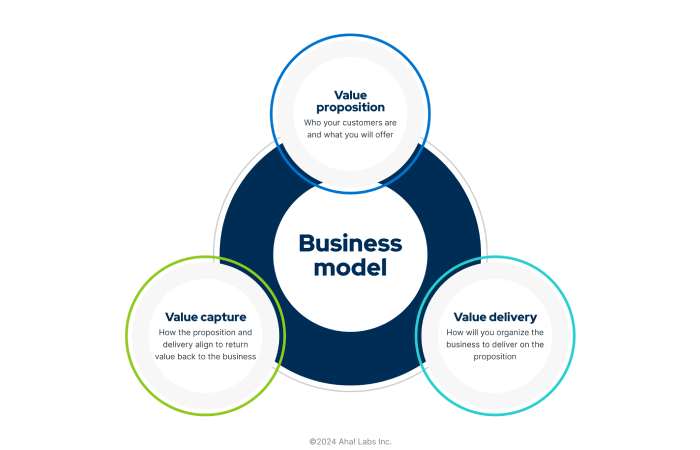
Let’s make it practical.
Example: Online Clothing Store
A clothing brand selling online operates like this:
- Buys or manufactures clothes
- Lists products on a website
- Customers place orders
- Company earns profit from each sale
That entire system—from sourcing to selling—is the business model.
Key Components of a Business Model
Every successful business model includes a few essential elements.
1. Value Proposition
This is what makes your product or service valuable.
Example:
- Faster delivery
- Lower price
- Better quality
2. Target Customers
Who are you selling to?
- Students
- Businesses
- Families
Understanding your audience is critical.
3. Revenue Streams
How does the business earn money?
- Product sales
- Subscriptions
- Advertising
4. Cost Structure
What does it cost to run the business?
- Production
- Marketing
- Operations
5. Delivery Channels
How do customers receive your product or service?
- Online store
- Physical shop
- Mobile app
Real Case Study: Why Business Models Matter
Situation
A startup launched a great product but struggled to make money.
Problems:
- Pricing was too low
- Costs were too high
- No clear revenue strategy
What They Changed
They redesigned their business model:
- Introduced subscription pricing
- Reduced operational costs
- Targeted a specific audience
Results
- Increased revenue
- Improved profit margins
- Better scalability
The product didn’t change—the model did.
Types of Business Models (Common Examples)
Different businesses use different approaches depending on their goals.
1. Product-Based Model
Companies sell physical goods.
Example:
- Electronics brands
- Clothing companies
2. Service-Based Model
Businesses sell services instead of products.
Example:
- Consulting firms
- Agencies
3. Subscription Model
Customers pay regularly (monthly or yearly).
Example:
- Streaming platforms
- SaaS tools
4. E-commerce Model
Products are sold online.
Example:
- Online marketplaces
5. Freemium Model
Basic services are free, premium features are paid.
Example:
- Apps and software platforms
6. Advertising Model
Revenue comes from ads.
Example:
- Social media platforms
These models can also be combined depending on business needs.
Business Model vs Business Plan (Important Difference)
Many people confuse these two.
| Feature | Business Model | Business Plan |
|---|---|---|
| Purpose | How business makes money | How business will operate |
| Focus | Revenue and value | Execution strategy |
| Nature | Conceptual | Detailed document |
A business model explains the logic.
A business plan explains the steps.
Benefits of a Strong Business Model
1. Clear Direction
You know exactly how your business operates.
2. Better Decision Making
Every decision aligns with your revenue strategy.
3. Scalability
You can grow without losing structure.
4. Investor Confidence
Investors want to see how you’ll make money.
5. Competitive Advantage
A strong model can differentiate you from competitors.
Common Mistakes Businesses Make
1. Focusing Only on Product
A great product without a clear revenue model often fails.
2. Ignoring Costs
Revenue means nothing if costs are too high.
3. Poor Customer Understanding
Selling to the wrong audience leads to failure.
4. Not Adapting
Markets change, and business models must evolve.
When You Should Rethink Your Model
You should review your approach when:
- Revenue is inconsistent
- Growth has stalled
- Costs are increasing
- Competition is rising
Adapting your model is often the key to survival.
Future Trends (2026 and Beyond)
Business models are evolving quickly.
Key Trends
- Subscription-based growth
- Digital-first businesses
- Platform-based ecosystems
- AI-driven monetization
Companies that adapt faster tend to win.
Key Takeaways
- A business model explains how a company creates, delivers, and earns value
- It includes customers, revenue, costs, and operations
- It is the foundation of every successful business
- Different models suit different industries
- A strong model improves growth, profit, and sustainability
Final Thoughts
Understanding what a business model is goes beyond theory—it’s about understanding how businesses actually work.
It’s the difference between:
- Having an idea
- And turning that idea into a profitable system
When done right, a business model doesn’t just support a company—it drives its success.