


What Is Entrepreneurship? A Practical Guide with Examples, Types & Real Business Insights (2026)
If you’ve ever thought about starting your own business, building something from scratch, or turning an idea into income—you’re already thinking about entrepreneurship.
But entrepreneurship is not just about starting a business. It’s about solving problems, taking risks, and creating value in a way that didn’t exist before.
This guide explains the concept in a simple, practical way—so you can actually understand how it works in real life.
What is Entrepreneurship
The term entrepreneurship is not part of the dictionary of the Royal Spanish Academy (RAE). It is about the effect of the undertaking, a verb that refers to carrying out work or business. Entrepreneurship is usually a project that develops with effort and facing various difficulties, with the resolution of reaching a certain point.
The most common use of the concept appears in the field of economics and business. In this case, an enterprise is an initiative of an individual that assumes an economic risk or that invests resources in taking advantage of an opportunity offered by the market.
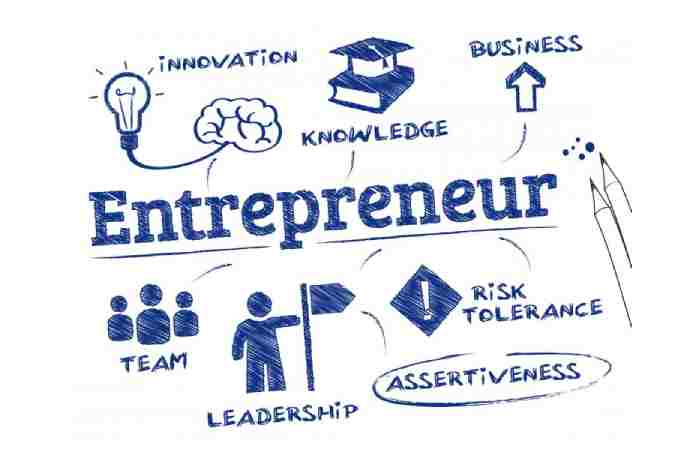
The subject who starts a business or who creates a small business on his initiative is known as an entrepreneur. In times of crisis, ventures usually represent an exit (or, at least, a possibility of growth) for unemployed people.
Experts argue that entrepreneurs must have certain capacities to succeed: flexibility, dynamism, creativity, push, etc. These are necessary values since the enterprises face all kinds of difficulties, and those who promote them must be able to adapt to a changing reality. It is worth mentioning that teamwork is usually the best way to promote a project since it enhances the virtues of each member.

What Is Entrepreneurship (Simple Explanation)
Entrepreneurship is the process of creating, developing, and managing a business venture by identifying opportunities and taking risks to make a profit.
In simple terms:
- You identify a problem or opportunity
- You create a solution (product or service)
- You build a business around it
It involves innovation, decision-making, and the ability to handle uncertainty.
Who Is an Entrepreneur?
An entrepreneur is the person who:
- Starts and manages a business
- Takes financial and operational risks
- Earns rewards if the business succeeds
Entrepreneurs are often seen as innovators because they introduce new ideas, products, or ways of doing things.
Why Entrepreneurship Matters
Entrepreneurship plays a major role in both business and society.
1. Drives Economic Growth
New businesses create income, increase production, and contribute to the economy.
2. Creates Jobs
Entrepreneurs don’t just employ themselves—they create opportunities for others.
3. Encourages Innovation
Many modern solutions and technologies exist because someone took the initiative to build something new.
4. Improves Living Standards
New products and services make life easier, faster, and more efficient.
How Entrepreneurship Works in Real Life
Let’s look at a simple example.
Scenario: Starting an Online Store
- You notice people want affordable clothing
- You source or design products
- You create an online store
- Customers place orders
- You earn profit
This entire process—from idea to execution—is entrepreneurship.
Real Case Study: From Idea to Business
Situation
A student noticed that local food delivery was slow and unreliable.
Action
- Built a simple delivery app
- Partnered with nearby restaurants
- Focused on fast delivery
Result
- Increased customer demand
- Business growth
- New job opportunities
The success came from identifying a real problem and solving it effectively.
Key Characteristics of Entrepreneurship
Successful entrepreneurship usually includes:
1. Innovation
Introducing something new or improving existing solutions.
2. Risk-Taking
Every new venture involves uncertainty and financial risk.
3. Opportunity Recognition
Entrepreneurs identify gaps in the market.
4. Resource Management
Using time, money, and people effectively.
5. Decision-Making
Quick and strategic decisions are essential.
Types of Entrepreneurship
Entrepreneurship is not limited to startups. It exists in different forms.
1. Small Business Entrepreneurship
- Local businesses
- Focus on steady income
Examples:
- Shops
- Salons
- Restaurants
2. Scalable Startup Entrepreneurship
- High-growth businesses
- Focus on innovation and expansion
Examples:
- Tech startups
3. Social Entrepreneurship
- Focus on solving social or environmental problems
- Profit is not the only goal
4. Corporate Entrepreneurship
- Innovation within large companies
- New products or services inside existing businesses
Entrepreneurship vs Business (Important Difference)
| Feature | Business | Entrepreneurship |
|---|---|---|
| Focus | Profit and stability | Innovation and growth |
| Risk | Lower | Higher |
| Approach | Established models | New ideas |
Not every business is entrepreneurial—but every entrepreneurial venture is a business.
Benefits of Entrepreneurship
1. Financial Independence
You are not dependent on a fixed salary.
2. Creative Freedom
You can build something based on your ideas.
3. Growth Opportunities
Businesses can scale and expand.
4. Personal Development
Entrepreneurship improves:
- Leadership
- Problem-solving
- Decision-making
Challenges of Entrepreneurship
It’s not always easy.
1. Financial Risk
Investment may not always return profits.
2. Uncertainty
Market conditions can change quickly.
3. Work Pressure
Entrepreneurs often handle multiple responsibilities.
4. Competition
New businesses face strong market competition.
When Entrepreneurship Makes Sense
Entrepreneurship is ideal if:
- You have a strong idea
- You are willing to take risks
- You want independence
- You are ready to solve real problems
When It May Not Be Suitable
It may not be the best choice if:
- You prefer stable income
- You are not comfortable with uncertainty
- You lack resources or planning
Future of Entrepreneurship (2026 Trends)
Entrepreneurship is evolving rapidly.
Key Trends
- Digital-first businesses
- AI-driven startups
- Remote and global operations
- Social and sustainable ventures
More people are choosing entrepreneurship as a career path than ever before.
Key Takeaways
- Entrepreneurship is the process of starting and managing a business
- It involves innovation, risk, and value creation
- Entrepreneurs identify opportunities and build solutions
- It drives economic growth and job creation
- It offers both rewards and challenges
Final Thoughts
Entrepreneurship is not just about making money—it’s about creating something meaningful.
It starts with an idea, but success comes from execution, persistence, and the ability to adapt.
In today’s world, opportunities are everywhere.
The difference lies in who takes action.