

Compliance and Risk Management Beginner Guide
Setting up a business entails much more than just selling goods or delivering services. The business owner should understand the regulations pertinent to his/her business and be prepared for all sorts of risks. These concepts include compliance and risk management.
For novices, these notions may seem complicated. In fact, they have very simple definition. Compliance includes the application of legislation, regulations, contracts, and company’s own policy within the framework of the company’s operations. Risk management refers to identification of potential threats and appropriate actions regarding these threats.
Small businesses do not require an extensive legal department to start their work in these spheres. With simple checklists, proper policies, training of staff, and periodic reviews, the groundwork will be laid.
What Is Business Compliance?
The concept of business compliance refers to the meeting of requirements applicable to the company’s operations.
These requirements can be regulatory, contractual, licensing, privacy requirements, employment requirements, etc.
For instance, one company may be required to have certain food safety certification while another may be required to follow certain requirements regarding its online activity. A company employing people may have certain employment requirements and workplace safety requirements.
Why Is Compliance Significant?
Failure to comply with the law can bring about numerous difficulties depending on the situation. These include paying fines, engaging in legal battles, losing licenses, contract issues, and damage to the reputation of the company.
In addition to that, compliance will make organizations run in an efficient manner since employees will know how to do things right.
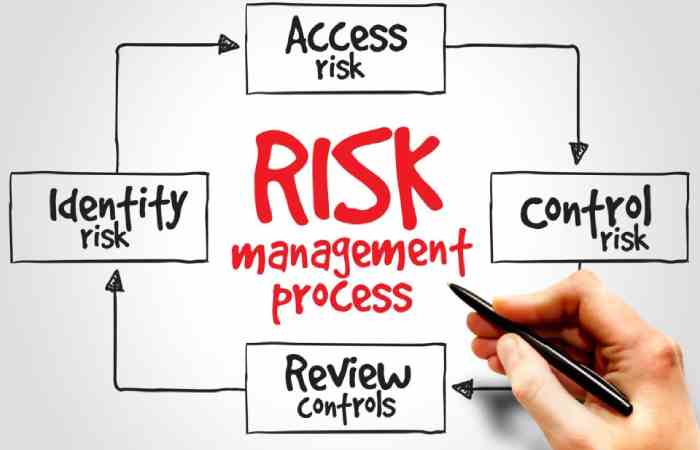
Risk Management Process – What Is It?
The risk management process involves the identification, evaluation, and management of risks. Every business is exposed to different risks which include supplier failure, computer system failure, failure to pay the bill by the customer, and leak of sensitive information by the staff member. Risk management is not meant to prevent every possible hazard. It is impossible to do so. Therefore, companies have to consider only significant risks and plan reasonable measures.
Example of Risk Management
Let us assume that we have an online clothing business which is highly dependent on one particular supplier providing its most popular product.
If something goes wrong with this particular supplier, the business will lose sales.
To avoid this problem, the business can look for another supplier in advance.
It is a rather simple example of practical risk management.
Contracts and Agreements
Contracts are yet another crucial aspect of compliance and risk management. Organizations might have contracts with their customers, suppliers, employees, contractors, landlords, technology firms, and many other stakeholders.
Some essential aspects of a contract might include payment conditions, liabilities, confidentiality, intellectual property rights, liabilities, contract termination, and renewal dates. Contract management helps you keep track of your contracts.
Types of Risks That a Business Can Face
Understanding the types of risks makes the risk management process easier for novices.
Financial Risk
The financial risks might be:
- Cash flow problems
- Unpaid invoices
- Unexpected expenses
- Fraud
- Rising operating costs
- Relying on a single customer
Companies can reduce their financial risks via accounting, management of cash flow, and the review of spending on a regular basis.
Operational Risks
Operational risks relate to possible risks that may arise during routine operations.
Such risks may include failures in the use of equipment, mistakes made by employees, delay in shipping, failure of computers, and problems related to the supplier.
Legal Risks
Legal risks may relate to contract, employment, complaints of customers, intellectual property, and confidentiality. Firms should not wait until they get a legal notice before addressing the possibility of such risks.
How to Start Risk Management
A beginner does not need a complicated risk management system.
Start with four simple steps.
Step 1: Identifying Risks
Think about what could possibly go wrong.
Consider anything that may happen to go wrong.
Consider risks involving things like staff, customers, suppliers, finances, technology, regulation, and everyday issues.
Step 2: Assessing Risks
There are two basic questions you must ask yourself:
How likely is this issue to happen?
What are the potential consequences of this issue happening?
An issue that is unlikely to happen but could have serious consequences could be worth considering.
Step 3: Risk Prioritization
All risks do not need the same effort put into them. Risks that carry high impact usually warrant more attention than trivial problems.
Use a straightforward classification system like low, medium and high for easy risk prioritization.
Make a Simple Compliance Checklist
A compliance checklist can help a small business stay organized.
It may include:
- Business registrations
- Licenses and permits
- Tax responsibilities
- Employment documents
- Workplace policies
- Contracts
- Insurance
- Privacy requirements
- Employee training
- Compliance deadlines
Periodically examine the checklist and revise it each time the business makes changes.
Importance of Employee Awareness
Employees are usually directly connected to compliance and risk management.
Even if the company has a great set of policies, if the employees do not understand them, they will not help in any way.
Therefore, training has to be relevant.
For instance, instead of just telling the employees to protect the confidentiality of some data, the company has to define which data is confidential and what should be done in case of suspicious emails.
In addition, the employees have to know whom to contact in case they suspect a problem.
Mistakes Made by Beginners
Some common mistakes that companies usually make at the beginning are:
Mistreating Compliance as a One-Time Task
Compliance requires constant attention because business activities and regulations can change.
Keeping Bad Records
All the contracts, licenses, policies, training records, and major decisions have to be properly documented.
Assigning Everybody the Same Responsibility
When nobody is responsible for something, it will be forgotten eventually.
Using Random Online Templates
Not all online templates may fit in all countries, all industries, and all situations. Legal documents should be examined and adjusted if required.
Conclusion
It is not so hard to learn compliance and risk management. Newbies can begin with a simple system that will gradually evolve along with the development of their business.
Compliance deals with following all relevant regulations and obligations. Risk management deals with preparing for potential difficulties. Together, these concepts allow creating well-organized and responsible enterprises.
To begin, it is necessary to determine all requirements of the company. It is necessary to establish initial policies, keep all records up-to-date, control all deadlines, educate workers, and determine all risks.
As the company grows and gets into more complex areas, its compliance and risk management systems will become more complicated too.
However, the aim is not to predict all possible troubles. The aim is to develop such a business that would be able to recognize its risks and solve its problems.