

What Is Resource Management? A Practical Guide with Types, Examples & Business Insights (2026)
Every business, project, or organization relies on resources. Every business, project, or organization depends on resources including people, money, time, machines, and technology. Having these resources is not sufficient by itself, however.
The real challenge is using them efficiently.
That’s where resource management becomes essential. It makes sure that everything you have is utilized in the proper manner and at the right time for the right purposes.
The guide offers a practical approach to understanding resource management so you get to know how resource management really works in practice.
What Is Resource Management (Simple Explanation)
Resource management refers to the planning and use of resources efficiently to accomplish certain objectives or to complete projects.
Simply put:
- You identify what resources you need
- You assign them to tasks
- You use them efficiently
- You avoid waste
Resources can include:
- People (employees, teams)
- Money (budget, funds)
- Time (deadlines, schedules)
- Equipment and tools
- Technology and data
Businesses also need to manage the resources involved in creating and delivering a product, from production and staffing to technology and distribution.
Why Resource Management Matters
Many projects fail not because of lack of effort, but because of poor resource usage.
Resource management helps businesses:
- Avoid overuse or underuse of resources
- Reduce costs and waste
- Improve productivity
- Complete projects on time
Businesses can also use financial and performance ratios to measure whether resources are being used efficiently and where improvements may be needed.
When done properly, it improves efficiency and ensures smooth operations across the organization.
How Resource Management Works in Real Life
Let’s understand this with a simple example. For teams handling multiple projects and workflows, using a Smart Sheet alternative can also help organize tasks, information, and resource-related activities in one place.
Scenario: Building a Website
To build a website, you need:
- Developers
- Designers
- Budget
- Time
Without Resource Management
- Too many tasks assigned to one person
- Budget overspending
- Delays in deadlines
With Resource Management
- Tasks distributed properly
- Budget controlled
- Work completed on time
Digital tools such as Search Atlas can also help businesses organize information and make better use of data when planning and managing resources.
Result: better efficiency and successful delivery
Real Case Study: Business Improvement
Situation
A company was facing:
- Missed deadlines
- Overworked employees
- Rising costs
What They Did
- Planned resource allocation
- Balanced workload among teams
- Monitored usage regularly
Results
- Improved productivity
- Reduced costs
- Timely project completion
Better resource allocation can also support business activities that directly contribute to revenue, including turning customer interest into a completed purchase.
The difference came from better organization—not more resources.
Types of Resource Management
Resource management is not limited to one area. It covers different types depending on the resource.
1. Human Resource Management
Focuses on managing people.
Includes:
- Hiring and training
- Assigning tasks
- Managing performance
2. Financial Resource Management
Deals with money and budgets. Investment decisions can involve different financial products and funds, such as ACFOX, which investors may evaluate based on their objectives and risk considerations.
Includes:
- Budget planning
- Cost control
- Investment decisions
3. Time Management
Ensures tasks are completed within deadlines.
Includes:
- Scheduling
- Prioritization
- Deadline tracking
Why Resource Management Matters
The resource management, consists in the efficient management of these means, which can be both tangible and intangible. The objective of the administration of resources is that they allow the satisfaction of interests.
The people, the money, the technology, and even the weather can be considered, depending on the context, as resources that can be managed. The correct assignment of functions of each of these resources will help to make the operation of a set more efficient.
Within any company, when talking about resource management is talking about the correct management, use, and development.
Four types of resource management fundamentals.
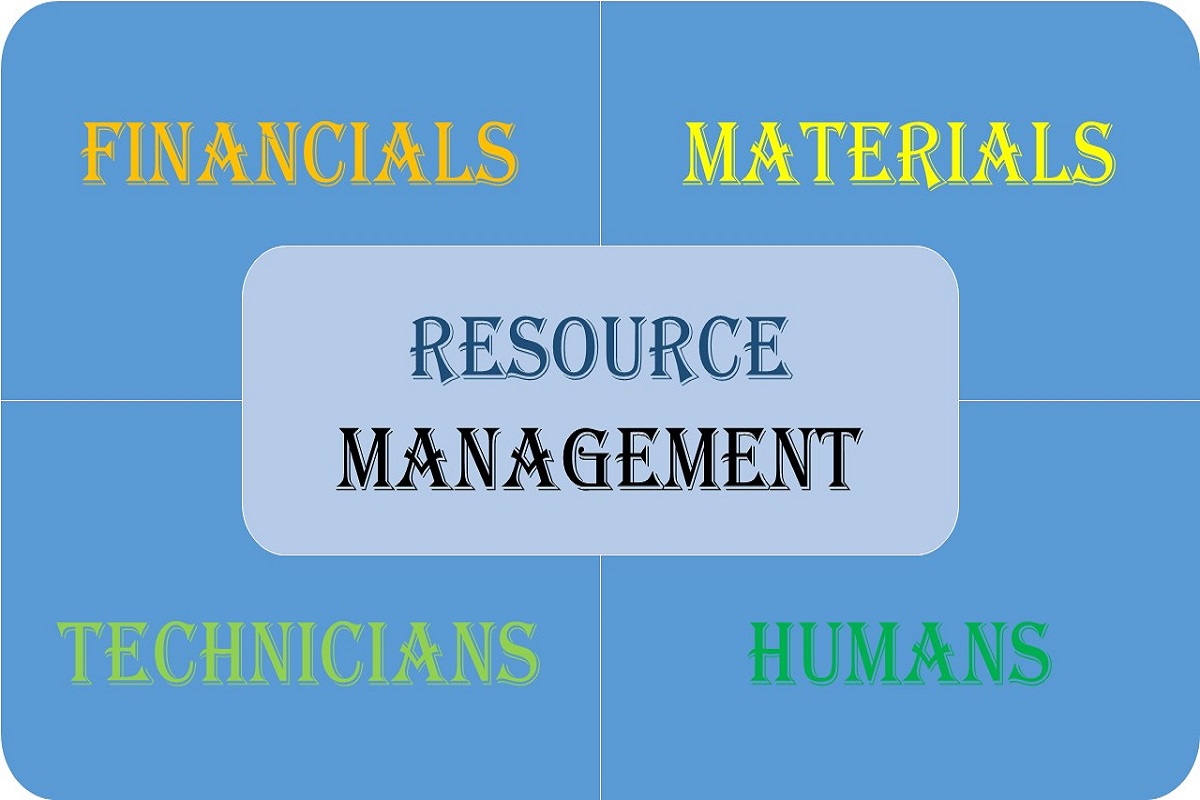
Financial: When we refer to them, we are mentioning all the monetary resources that are fundamental to the development of the company in question. These can be of two kinds, such as cash and shares; or third parties, such as bonds, loans granted by banks or the various types of loans.
Technicians: In this case, they are the resources that are fundamental to be able to coordinate and manage other types of resources. In this way, we would find elements such as trademarks and patents, production systems, sales mechanisms. When managing products and services, businesses may also need to account for customer protections such as a warranty and the resources required to support those obligations. Because patents can be valuable business assets, companies developing new technologies may also need advice from a patent attorney to protect their intellectual property.
Humans: When managing this type of resources, which come to be the set of employees of a company, the people in charge of this task is fundamental to take into account many aspects related to those such as skills, ideas, knowledge, needs, development, feelings, experience, burdens.
The administration of human resources is one of the most important fields of a company. It is responsible for choosing, hiring, training, and retaining the employees of an organization.
The function of human resource management (which can be left to a person or a department) is to motivate workers to perform at their maximum capacity and to make the group of employees function as a block in pursuit of corporate goals.
Leadership, internal communication, teamwork, and negotiation skills are some of the factors that should be addressed by the administration of human resources.
It’s significant to keep in mind that resources are finite and have to serve to satisfy virtually infinite needs. The administration of resources is key to success.