

Guide to Advanced Compliance & Risk Management
As an organization expands its operations, moves into new geographical locations, hires more people, manages greater amounts of information, or works with several different suppliers and partners, compliance and risk management become increasingly relevant. In an advanced context, the purpose is not just to be compliant or create a simple risk list anymore, but rather have a framework that links all of compliance, risks, governance, internal controls, technology, and business.
What Is Advanced Compliance Management?
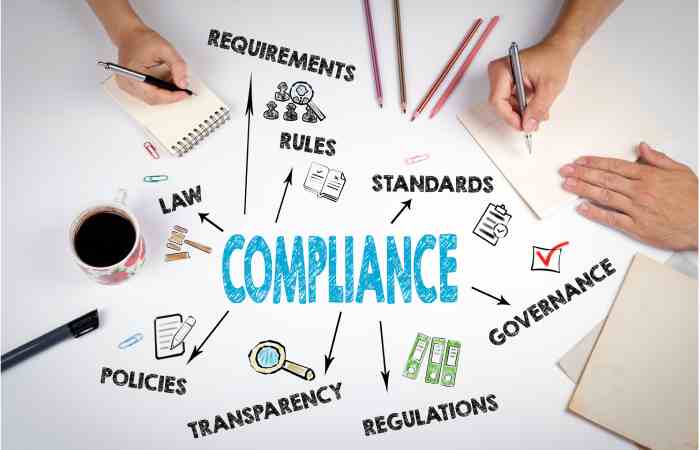
The process of advanced compliance management entails the ongoing identification of requirements, evaluation of exposure, implementation of controls, measurement of performance, and process improvement.
A mature compliance management program typically involves:
- Regulatory monitoring
- Internal policies and procedures
- Risk assessments
- Employee training
- Internal controls
- Audits and testing
- Incident management
- Third-party due diligence
- Documentation
- Management reporting
The actual structure will vary depending on the firm’s industry, geography, size, and risk appetite.
From Rules to Risk-Based Compliance
One common error in compliance is treating all compliance requirements as equally critical.
A more sophisticated approach is risk-based compliance, which entails a higher focus on the areas where a problem might result in severe damage to the firm from a legal, financial, operational, or reputational perspective.
For instance, an enterprise collecting customer data will likely have more stringent privacy and security policies than an enterprise without collecting such information.
Enterprise Risk Management Program
A sophisticated risk management framework will link individual risks to the firm’s overall goals.
Such risks need to be analysed while strategizing, not after any trouble arises.
Identify Operational Risks
They include:
- Entering a new market
- Losing a major customer
- Changing business models
- Introducing new technology
- Increasing competition
- Acquiring another company
The above risks should be considered when planning strategically and not after the problem arises.
Identification of operational risks
Operational risks can affect everyday activities.
They may involve:
- Employees
- Suppliers
- Equipment
- Technology
- Logistics
- Production
- Customer service
Businesses should identify which processes are essential and determine what could interrupt them.
Evaluate Financial Risks
Financial risk management can include monitoring:
- Cash flow
- Credit exposure
- Customer concentration
- Currency exposure
- Fraud
- Debt
- Unexpected costs
The appropriate controls will depend on the company’s size and financial structure.
Third Party Risk Management
Third party relations bring forth significant risks.
The company could depend on vendors for cloud computing, payment systems, payroll management, logistics, manufacturing, marketing, and customer service.
Vendor Due Diligence
Due diligence must be proportional to the risk.
A high-risk vendor may require reviews covering:
- Ownership
- Financial stability
- Security controls
- Privacy practices
- Regulatory compliance
- Insurance
- Business continuity
- Contractual protections
Vendors’ Continuous Monitoring
Due diligence is not mandatory after the completion of contract execution.
Periodic inspections should be conducted for important vendors, especially those who have access to sensitive information.
Cybersecurity and Compliance Risk
Cybersecurity is closely connected with modern compliance programs.
A strong approach should consider both technology and human behavior.
Important controls can include:
- Multi-factor authentication
- Access management
- Data encryption
- Security monitoring
- Employee training
- Vulnerability management
- Secure backups
- Incident response procedures
However, technical controls are not enough on their own.
It is important for employees to be educated on how phishing attacks, social engineering attacks, password attacks, and data disclosure can be a threat to the organization.
Business Continuity and Resilience
It is necessary that risk management prepares the organization in case of any disruptions.
Some potential disruptions are:
- Cyberattacks
- Natural disasters
- Technology failures
- Supplier disruption
- Power outages
- Loss of key employees
Disaster Recovery
Disaster recovery is especially concerned with recovering technology and other systems after an occurrence.
It is important to consider prior recovery priorities and responsibilities for businesses.
Compliance Monitoring and Testing
A policy alone does not prove that a business is compliant.
Organizations should test whether controls actually work.
Testing may involve:
- Reviewing samples
- Checking system access
- Examining contracts
- Interviewing employees
- Testing security controls
- Reviewing training records
- Conducting internal audits
Findings should be documented and assigned to responsible owners.
Key Risk Indicators
Key Risk Indicator (KRI) can function as an indicator showing that there is increasing risk.
Compliance Reporting
The top management requires meaningful data rather than just masses of data.
A compliance report may include:
- Major risks
- Significant incidents
- Regulatory developments
- Control weaknesses
- Audit findings
- Corrective actions
- Emerging risks
Reports should point out areas needing the attention of the management.
Corrective and Defensive Actions
In case the control fails, rectifying the failure is not always sufficient.
Organizations need to find out the cause for the failure.
For instance, when an employee keeps on submitting wrong information, it does not mean that only the document needs to be corrected.
Root cause analysis becomes important here.

Compliance Culture
An established compliance program relies on corporate culture quite extensively.
It is essential that staff members know that compliance is one of their usual duties.
Managers can help in the following ways:
- By setting an example
- By providing effective training
- By encouraging reporting of concerns
- By reacting properly to problems
- By not forcing staff to overlook crucial regulations
- By learning from incidents
Conclusion
A properly developed program for compliance and risk management consists of much more than just having policies in place.
This is a whole process that connects corporate strategy, regulations, internal controls, technology, people, vendors, and decision-making of the management.
Organizations should define their key risks, be aware of all the requirements in this regard, put proper controls in place, track their effectiveness and respond in case of failures. The best programs are also adaptable. The risks that are associated with businesses’ operations will change as they adopt new technology, expand into new markets, employ new people, deal with different suppliers, offer new products and services, etc.
Finally, successful compliance and risk management is all about making the right business decision. It allows companies to know their weaknesses, do the right thing before things become worse and establish a stronger company.