

Manufacturing and Logistics Guide Tools and Templates
Manufacturing and logistics contain many elements that have to be managed by a company. These include managing materials, production process, inventories, warehouses, people, suppliers, transport, and client orders. Inconsistent distribution of information within various documents or processes may lead to unnecessary errors and increase in costs and time.
This is when manufacturing and logistics tools and templates are useful. Appropriate tools simplify organizing information, monitoring activities and solving potential issues, as well as coordinating efforts of different teams.
The tools that are needed for small companies may consist of well-organized spreadsheets and checklists. Larger companies may need manufacturing, transportation or warehouse management software and other systems. What matters is choosing tools that meet the requirements of your business.

Template for Manufacturing Production Planning
Production planning is one of the areas which can greatly benefit from using templates.
With the help of a production planning template, the manager will be able to prepare for the upcoming operations and determine whether all the needed resources are available.
Important fields are the following:
- Name of the product
- Quantity of products
- Date of production start
- Date of production end
- Materials needed
- Equipment
- Workers assigned
- Status of production
- Priority
In case when the firm plans to manufacture 1,000 pieces of the product, the template will help to make sure that all the necessary materials are available before starting the production process.
Bill of Material Template
A Bill of Materials (BOM) consists of the components and materials needed for producing a product.
For instance, a basic wooden chair will be required to have:
- Wood panels
- Screws
- Adhesive
- Paint
- Packaging material
BOM can be developed with the inclusion of component name, number of pieces needed, suppliers, cost per unit, and version of the product.
Accuracy of the BOM is very critical since a slight alteration in the number of the components can significantly impact the cost of purchasing and production.
Raw Material Inventory Template
The amount of the raw material available should be known before manufacturing starts.
Raw Material Inventory System May Have The Following Components:
| Material | Quantity Available | Reorder Level | Supplier | Storage Location |
| Steel Sheet | 450 | 150 | Supplier A | Zone A |
| Plastic Parts | 800 | 300 | Supplier B | Zone B |
| Packaging Boxes | 1,200 | 500 | Supplier C | Zone C |
Reorder point is a very effective indicator that acts as a warning before material becomes critically low.
Periodic inventory control remains essential because the amount shown on the spreadsheet might not correspond to the actual inventory at all times.
Checklist for Machine Maintenance
Machine failure can stop production and delay deliveries.
A checklist for machine maintenance helps employees to document their maintenance activities.
The first thing is to identify the actual problem
- Machine name
- Inspection date
- Operating hours
- Cleaning completed
- Parts checked
- Problems identified
- Maintenance performed
- Next service date
- Employee responsible
A standardized maintenance system can help in detecting potential problems before they escalate into more serious issues.

Supplier Management Template
Supplier performance has a direct effect on manufacturing and logistics.
A supplier management template can track:
- Supplier name
- Contact information
- Materials supplied
- Price
- Minimum order quantity
- Lead time
- Quality rating
- Delivery performance
- Payment terms
- Current status
This gives purchasing teams a clearer picture of supplier performance instead of relying only on memory or individual emails.
Warehouse Inventory Template
Warehouse Inventory Template allows you to monitor locations of your products and quantities of inventory.
Useful columns include:
- Product name
- SKU
- Quantity
- Storage location
- Batch number
- Received date
- Expiry date, if applicable
- Stock status
Clear storage information is especially useful when warehouses contain hundreds or thousands of products.
Picking and Packing Checklist
Warehouse employees can also use a standard picking and packing checklist.
The process may include:
- Review customer order.
- Locate the correct product.
- Confirm SKU or barcode.
- Check quantity.
- Inspect product condition.
- Pack the order securely.
- Add required documents.
- Confirm delivery details.
- Update the order status.
A consistent process reduces the chances of sending the wrong product to a customer.
Delivery Route Planning Tool
Reorder level serves as a valuable indicator that helps prevent materials from becoming dangerously scarce.
Routine inventory counts are vital since the number on the spreadsheet might not correspond to the actual count at all times.
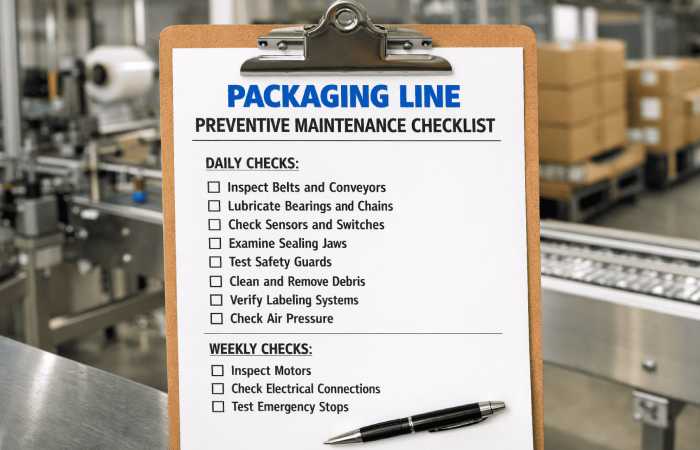
Machine Maintenance Checklist
Inadvertent malfunctioning of the equipment might disrupt the production process.
A machine maintenance checklist will serve as a helpful reminder to employees regarding the maintenance procedures.
Route Planning for Companies Delivering Multiple Deliveries
A basic route planning sheet can list the following:
- Customer location
- Delivery priority
- Delivery time
- Vehicle
- Driver
- Estimated distance
- Delivery status
More advanced transportation management software can automatically help organize routes and shipments based on available information.
Manufacturing KPI Dashboard
A KPI dashboard helps managers understand whether manufacturing operations are performing as expected.
Useful manufacturing KPIs include:
- Production output
- Defect rate
- Scrap rate
- Machine downtime
- Production cycle time
- Capacity utilization
- On-time production
How to Select the Correct Tools
A business shouldn’t buy any software just because it has many features.
Once you know what the problem is, find an application which solves the problem.
Ease of use must also be considered because a complex application used incorrectly by the employee does not offer much benefit.
Conclusion
Tools for manufacturing and logistics could help to streamline daily processes. From scheduling processes to performing quality checks, from monitoring your warehouse to organizing delivery, simple tools would help to avoid a lot of errors that could be easily avoided.
A small enterprise could start using simple tools such as spreadsheets, checklists, and well-established procedures. With the growth of business and increasing complexity of processes, it could use special software that would allow it to automate everything.
The main thing is to remember that tools should simplify business processes, not complicate them. First, identify the problematic areas, introduce a proper process there, assess the results, and then improve the system.
All this will eventually lead you to better management of your costs, time, quality and delivery. The first step is to find out what the problem is.