


Employee Onboarding: Some Advice to Welcome New Employees
The perfect recruit is only the beginning of building an excellent team. How the new employee will be received after he or she accepts your job offer is equally important for the employee’s experience in your company. The newcomer does not only require his or her own space at work, access credentials, and brief introduction to you and your coworkers. He or she requires understanding of the role, meeting with coworkers, understanding the workplace, and being comfortable with asking any questions.
This is where onboarding of new employees is helpful.
What Is Employee Onboarding?
Employee onboarding refers to the process of welcoming a new worker and letting him or her become familiar with his or her new role and other aspects of the company.
It typically starts before the first working day and may last for several weeks or even months. Where the orientation process is connected with signing papers and getting acquainted with company policies, onboarding is about something else.
A typical onboarding process may include:
- Completing employment paperwork
- Introducing the employee to colleagues
- Explaining job responsibilities
- Setting expectations
- Providing equipment and system access
- Giving initial training
- Explaining workplace policies
- Establishing early goals
- Organizing scheduled follow-ups
This would depend largely on the organization and the position being held.
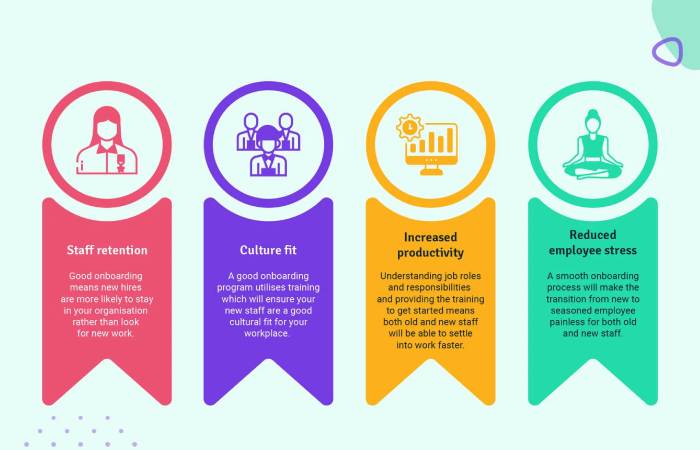
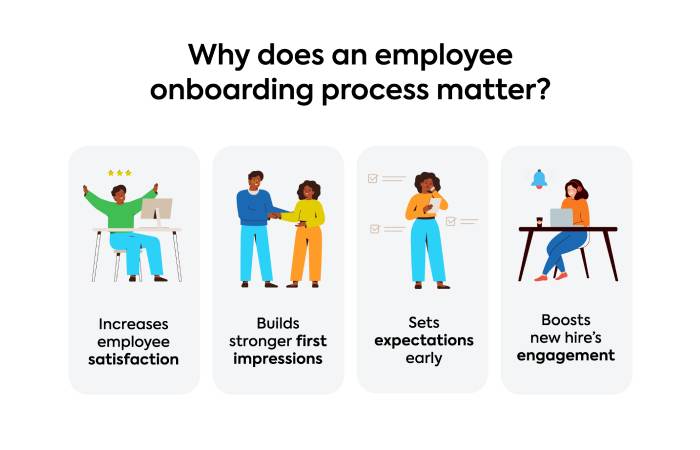
Why Is Employee Onboarding Important?
Working at a new place could be an exciting affair for the new employee, but the process could still have many questions for the new employee.
Employee onboarding is the key to solving all those questions that the new employee may have.
Employee onboarding can make sure that a new employee will be able to:
- Be aware of their responsibilities;
- Get to know the company procedures;
- Get to know the colleagues;
- Get to know the tools used in the workplace;
- Be aware of the company expectations regarding their work;
- Fit into the environment better;
- Contribute to the work of the team more effectively.
Onboard Before the First Day
Onboarding should not start the moment the employee steps inside the company premises.
Here are some aspects that an employer may wish to take care of beforehand. Make sure that the employee has all the required information and that everything in his workplace and system is set up.
Some of the aspects that you might want to set up before the employee’s first day include:
- Employment paperwork
- Work email
- Computer or other equipment
- System access
- Space
- Employee manual
- Schedule
- Training materials
- Report information
Such minor details can have a huge impact. Nobody likes spending their first morning waiting for an account setup or equipment installation.
Create a Clear First-Day Plan
It can be said that the first day can have a significant effect on the way in which the new employee perceives the organization.
It is not recommended to leave the first day completely open-ended. You should create a basic agenda for the first day. It doesn’t have to include many meetings.
A first-day plan might include:
- Welcome and introduction
- Workplace tour
- Meeting the team
- Overview of the company
- Explanation of the employee’s role
- Basic system setup
- Introduction to workplace policies
- Initial training
- Time with their manager
Opportunity to ask questions
This means making sure that the employee is given all the necessary information on how far they have progressed and how much further they must progress.
Short-term Goal Setting
It is very helpful for a new employee to be aware of their short-term goals in the first few weeks of employment. Instead of expecting them to know everything right away, it will be more productive to set some reasonable short-term goals for them.
These include the following:
- Learning key systems
- Understanding daily responsibilities
- Completing required training
- Meeting important team members
- Handling basic tasks independently
Having clear goals makes it easier for the employee to have some tangible things to do and for the manager to measure their progress.
Onboard Buddy or Support
An employee who starts in a company may be reluctant to approach their manager with every little doubt they have.
The buddy may assist with questions such as:
- Locating information
- Understanding the workings of the internal systems
- Finding out whom a certain task belongs to
- Understanding team communication
- Understanding the general routine at work
This person does not act as a replacement for the official training process or managerial function.
Schedule Periodic Check-Ins
Don’t wait until your first performance appraisal to find out whether the new hire is having any issues.
A series of brief check-ins during the first few weeks can reveal potential issues.
How to Improve Onboarding
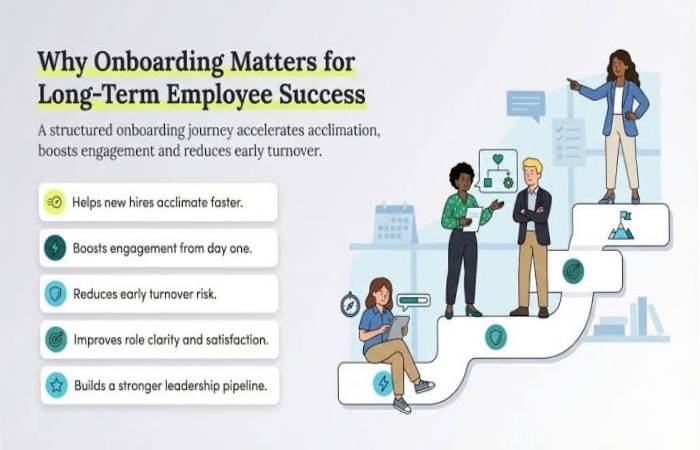
The effective onboarding process doesn’t necessarily have to cost a lot of money and efforts. In many situations, consistency is more important than anything else.
To improve the process, the company should create a standard process of onboarding, prepare all necessary materials ahead, divide responsibilities between managers and HR, and get feedback from new workers.
It is also a good idea to check the process periodically. Find out from employees how things were done and what could be improved. They can notice something which was overlooked by management.
Concluding Words
Onboarding of workers is a vital process to create an effective working environment. The initial days and weeks of a worker can be utilized to set up expectations, instill work culture, develop relations, and provide assistance to become successful.
An effective onboarding process will be systematic but not overly burdensome to workers. It will equip workers with all that they need while giving them sufficient time to learn and adapt.
Businesses that look beyond bureaucracy when it comes to onboarding will end up creating a better onboarding experience.