

Hiring Checklist: Step-by-Step Guide to Hiring a Right Employee
When looking for an employee to add to your business, you should take time and ensure you do things right. No matter what kind of business you have, whether a small one or a bigger one, you will have an impact on productivity, workplace environment, and performance in the future.
A hiring checklist helps to keep everything in order. It makes it possible to give a step-by-step guide to HR departments and managers from the moment when there was a necessity to hire a person until the first day of work.
What Is a Hiring Checklist?
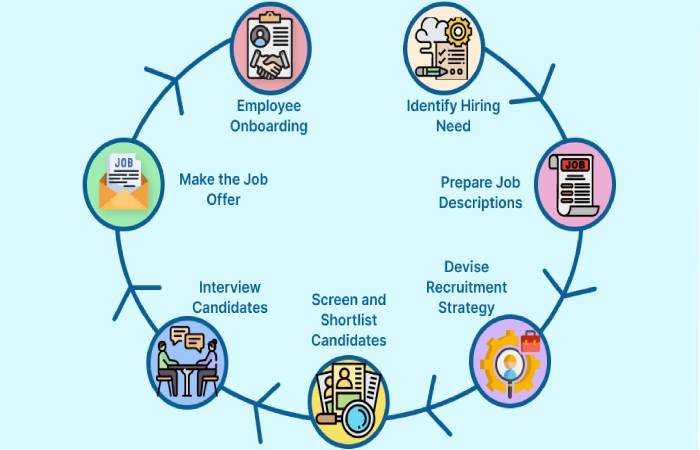
A hiring checklist is a simple list of things that will help the employer to navigate through the whole process of hiring and recruiting.
Typical hiring checklist includes:
- Identifying the hiring need
- Creating a job description
- Setting qualifications and expectations
- Advertising the position
- Reviewing applications
- Shortlisting candidates
- Conducting interviews
- Evaluating candidates
- Completing appropriate checks
- Making an employment offer
- Preparation for onboarding
The list may be adapted according to the size of the firm, job, and recruitment policies of the firm.
Why Is It Important to Have a Hiring Checklist?
The process of hiring is comprised of several small steps, which means that something might be overlooked in case there was no set procedure. The checklist is the structure that will help HR experts and managers in their work.
It may be useful for businesses:
- Keep recruitment organized
- Reduce unnecessary delays
- Create a consistent hiring process
- Improve communication with candidates
- Clarify job expectations
- Reduce rushed decisions
- Plan well for onboarding
The use of a checklist does not substitute for wisdom, but it helps management to come to a decision in a more structured manner.
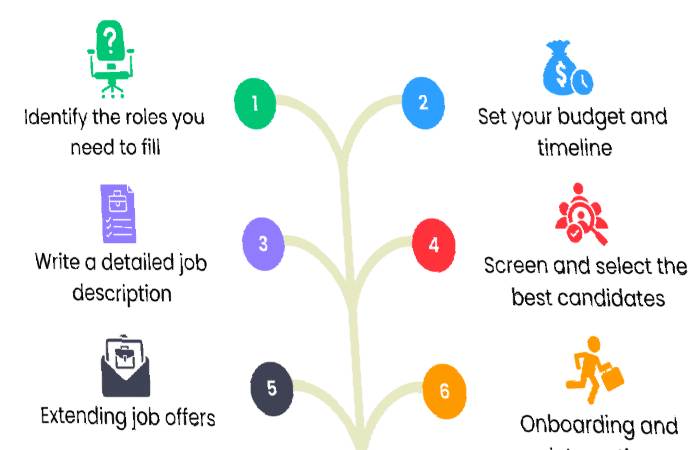
1. Recognizing the Need for a New Staff Member
Before offering the job, first know why the organization needs a new one.
The vacancy may be created due to the growth of the business, a staff member leaving, workload increase, or due to skill sets needed in the business that are unavailable at the moment.
Ask yourself some simple questions:
- Which duties require coverage?
- Is a new position actually necessary?
- What skills are missing?
- Is there adequate budget for the position?
2. Ways to Create a Proper Job Description
It is necessary that the job description provides an understanding of what the position involves to the candidate.
Give information on the position to the applicant. Consider all duties, requirements, and other aspects of the job.
Include the:
- Job title
- Main responsibilities
- Required skills
- Qualifications
- Experience requirements
- Working hours
- Location or work arrangement
- Reporting structure
- Employment type
- Other important expectations
Be careful about writing about the job in ways that make it seem attractive to potential employees without telling them exactly what the work involves.
A well-written job description will also help avoid unsuitable applications as the candidate can decide if the job is suitable based on his or her qualification.
3. Specify the Required Candidate Qualifications
Specify those qualifications and skills that are needed.
Separate essential qualifications and skills from preferred qualifications and skills. For instance, the former might include certain certification, while the latter could include knowledge of certain software program.
This way you would be able to concentrate on candidates who can really do the work and not reject all those applicants who lack some small qualification.
4. Establish the Hiring Budget
Set the salary range before starting the hiring process.
Keep in mind not only salary but also other costs of hiring like equipment, training, software license, benefits, recruiting costs, etc.
Knowing the realistic budget allows managing to clearly inform the candidates about salary.
5. Advertise the Job
Select suitable recruitment sources.
- A business organization can advertise the job through:
- Company career pages
- Job websites
- Professional networking platforms
- Industry-specific platforms
- Employee referrals
- Recruitment agencies
The advertisement for the job vacancy should be clear and honest. You should not offer any benefits that you cannot afford.
6. Screen the Applicants and Make a Shortlist
Once you have received the application forms, start the screening process on the basis of the job requirements.
Reject those applicants whose experience, qualification, and skill set will not allow them to perform the duties mentioned in the job advertisement. Choose only those applicants who meet the requirements of the job. Hiring should be based on relevant criteria and not any irrelevant characteristic.
7. Interview Preparation
It is very important to prepare yourself in order to conduct a good interview.
Write down a set of questions that will help you to examine the candidate’s experience, communication, problem solving skills, and work ethics.
Good questions could be:
- Previous responsibilities
- Relevant work experience
- Handling difficult situations
- Teamwork
- Problem-solving
- Managing priorities
- Interest in the position
Using a consistent set of core questions for candidates can make evaluations easier and more structured.
8. Conduct the Interview
The interview is not only a chance for the interviewer to evaluate the prospective employee. It is also an opportunity for the prospective employee to evaluate the company that he or she has applied to work at.
Provide the candidate with information concerning the vacancy. Consider all the duties, qualifications, expectations, and other aspects associated with the job.
Give candidates an opportunity to discuss their experience and ask some questions. The experience of the candidate should be related to the requirements for the job.
9. Assess Candidates Properly
Never allow the first impression influence the final decision.
Each candidate should be evaluated after each interview according to the following criteria:
Relevant experience
- Technical skills
- Communication
- Problem-solving
- Understanding of the role
- Ability to meet job requirements
In the event that there are several people handling the hiring process, getting feedback from all the individuals will give you a broad perspective of the candidate.
10. Perform Appropriate Checks
Depending on the nature of the position, employers might have to perform reference or background checks.
The information gathered in this process should be relevant to the job and should be conducted within the bounds of the law and company policies.
The checks should complement rather than act as an alternative to proper evaluation of the candidate.
- Common Mistakes Made During Recruitment
- Although hiring can seem like a simple process, even experienced managers are guilty of some mistakes that they make during recruitment. They include:
- Hiring Too Fast
- Although having a vacant position causes urgency, the decision to hire the wrong person because the vacancy needs to be filled will only cause bigger problems in the future.
- Using a Bad Job Description
- A bad job description attracts the wrong candidates and leads to confusion regarding the job being offered.
- Relying Only on Resume
- A resume gives helpful information but does not reflect the way an individual performs in a specific work environment.
- Making Decisions Based on First Impressions
Conclusion
The employment checklist provides a business with a useful framework for dealing with its recruiting process in an organized manner. The employment checklist will help the management team keep track of all the activities involved in the recruitment process, and at the same time provide a better candidate experience.
The intention here is not to complicate the entire recruiting process but to ensure that key activities and decision-making processes are done efficiently and effectively with respect to the demands of the particular position.
Each step of the recruiting process including crafting a job description and carrying out a structured interview process to on-boarding is essential in recruiting the right employee.
An effective hiring checklist is thus a very useful document for any business.