


Table of Contents
Verification of Emails: How to Enhance Email Marketing
When it comes to email marketing, your campaign’s success doesn’t just depend on catchy subject lines or great visuals — it starts with something much simpler but critical: email verification.
If your emails aren’t reaching real people, you’re wasting time, money, and damaging your sender reputation. In this article, I’ll walk you through the importance of verifying emails, how it boosts your email marketing performance, and the best practices to follow for long-term success.
What is Email Verification?
Email verification is the process of confirming whether an email address is valid, active, and capable of receiving messages. In other words, it filters out fake, mistyped, or inactive addresses from your list before you send your campaign.
It’s not just about cleaning up your contact list — it’s about ensuring that every email you send lands in the right inbox.
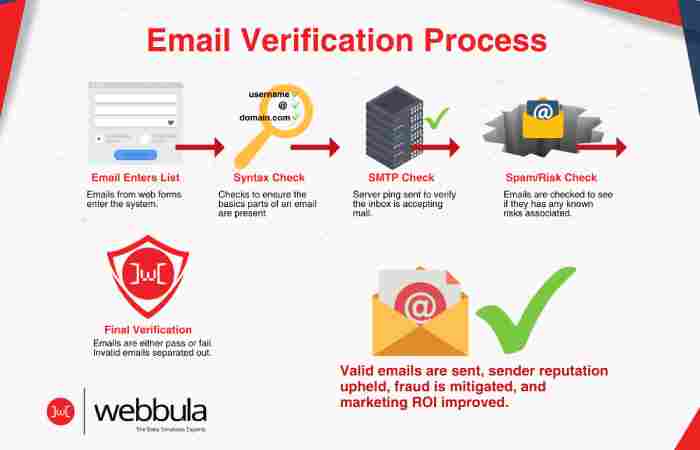
How Email Verification Works
Here’s what typically happens when you verify an email list:
-
Syntax Check: Detects spelling errors, missing characters, or formatting issues (e.g., “john@gmailcom” instead of “john@gmail.com“).
-
Domain Validation: Confirms whether the email domain (like gmail.com or companyname.com) exists and can receive emails.
-
Mail Server Verification: Pings the domain’s mail server to confirm that the mailbox is active and can accept messages.
-
Role-Based and Disposable Email Detection: Filters out generic or temporary emails like “info@company.com” or “tempmail@xyz.com“.
-
Spam Trap Identification: Detects addresses that could harm your sender reputation or get your domain blacklisted.
Why Email Verification Matters in Marketing
Many marketers underestimate how powerful email verification is — until their open rates plummet, or worse, their campaigns start landing in spam. Here’s why it’s so important:
1. Improves Deliverability
Deliverability is the heart of email marketing. If your emails aren’t being delivered, it doesn’t matter how engaging your content is.
Email verification ensures your messages reach real inboxes and not bounce back due to invalid addresses.
2. Reduces Bounce Rate
A high bounce rate (emails that couldn’t be delivered) signals to email providers that you might be spamming users. This can lead to your emails being automatically filtered as spam.
Verified lists drastically reduce this risk and keep your sender score healthy.
3. Protects Your Sender Reputation
Your sender reputation determines whether your emails end up in the inbox or junk folder. Sending to invalid or inactive addresses lowers your reputation over time.
Verification keeps your domain in good standing with ISPs (Internet Service Providers).
4. Saves Money
Most email marketing platforms (like Mailchimp, ConvertKit, or SendGrid) charge based on the number of contacts. If a portion of your list is fake or inactive, you’re literally paying for nothing.
By cleaning your list, you reduce costs and improve ROI.
5. Boosts Engagement Metrics
A verified email list contains only genuine recipients — meaning higher open rates, better click-throughs, and more conversions.
Your analytics become more accurate and meaningful, allowing you to make smarter marketing decisions.
How to Verify Emails (Step-by-Step Process)
Email verification isn’t complicated, but doing it properly can make all the difference. Here’s how you can get started:
Step 1: Gather Your Email List
Export your list from your CRM or email marketing platform. This might include contacts collected from:
-
Sign-up forms
-
Landing pages
-
Event registrations
-
Purchased lists (though not recommended)
Step 2: Choose a Reliable Email Verification Tool
You’ll need a professional verification service that can clean your list in bulk. Some popular tools include:
-
ZeroBounce
-
NeverBounce
-
Bouncer
-
Hunter.io
-
VerifyBee
These tools automate validation and give you a detailed report on valid, invalid, and risky emails.
Step 3: Upload and Clean the List
Once uploaded, the tool will:
-
Validate each email
-
Detect duplicates
-
Identify disposable and spam-trap emails
You’ll then get categorized results like:
-
Valid emails — safe to send
-
Catch-all emails — risky but might work
-
Invalid emails — should be removed immediately
Step 4: Update Your CRM or Marketing Platform
Remove invalid and risky addresses from your main list before sending your next campaign.
This ensures you’re only contacting engaged and active users.
Step 5: Verify Regularly
Email lists decay over time. People change jobs, switch email providers, or abandon old accounts.
To keep your list clean, verify at least every 3–6 months, or after every major lead generation campaign.
Best Practices for Email Verification and List Hygiene
Email verification is only one piece of the puzzle. For a consistently strong email marketing performance, follow these best practices:
1. Use Double Opt-In
Always use a double opt-in process — where users confirm their subscription by clicking a verification link.
This ensures that only real, interested people join your list.
2. Avoid Buying Email Lists
Purchased lists often contain fake, outdated, or spam-trap emails. They might give you volume but destroy your deliverability in the long run.
3. Monitor Bounce Rates
Keep an eye on your metrics after every campaign. If your bounce rate exceeds 2%, it’s a red flag — time to re-verify.
4. Segment Your List
Once you’ve verified your contacts, segment them based on behavior, interests, or location.
This allows for more personalized communication and better engagement.
5. Authenticate Your Emails
Use authentication protocols like:
-
SPF (Sender Policy Framework)
-
DKIM (DomainKeys Identified Mail)
-
DMARC (Domain-based Message Authentication)
These verify your identity as a sender and protect your domain from phishing or spoofing attacks.
6. Keep Signup Forms Clean
Prevent invalid sign-ups from the start. Use real-time email verification on your web forms — it checks email validity as users type.
7. Re-Engage or Remove Inactive Subscribers
Not every unresponsive contact is fake, but too many inactive subscribers can still hurt engagement metrics.
Create re-engagement campaigns for dormant users. If they still don’t respond, it’s better to remove them.
How Verified Emails Enhance Your Marketing Results
Let’s talk numbers — because the impact of verified emails is measurable and immediate.
1. Higher Open and Click Rates
Verified contacts are genuinely interested. When you remove junk emails, open and click rates naturally rise.
2. Better Conversion Rates
You’re targeting real humans who want to hear from you. That means more leads turning into paying customers.
3. Lower Unsubscribe Rates
If your emails are relevant and go to real users, they’re less likely to unsubscribe.
4. Improved Insights
Clean lists mean accurate data. You can trust your reports and make better decisions for future campaigns.
Top Email Verification Tools You Can Try
To make things even easier, here are a few top-rated tools to enhance your verification process:
| Tool | Key Features | Best For |
|---|---|---|
| ZeroBounce | AI-driven scoring, GDPR compliant, API integration | Marketers & Enterprises |
| NeverBounce | Real-time verification, team collaboration, affordable pricing | SMBs |
| Hunter.io | Domain search, lead generation, email verification | B2B marketing |
| Bouncer | Quick verification, detailed reports, API access | Agencies |
| EmailListVerify | Bulk cleaning, spam trap detection, API | High-volume senders |
Each of these tools can integrate with email marketing platforms, saving you time and reducing manual work.
The ROI of Email Verification
Here’s what you stand to gain by keeping your email list clean:
-
Up to 98% deliverability rate
-
30–40% higher open rates
-
Lower spam complaints and blacklisting risks
-
Increased ROI from every campaign
A clean list means every dollar you spend on email marketing actually reaches your audience — maximizing returns and brand trust.
Common Mistakes to Avoid
Even experienced marketers sometimes make these errors when handling email verification:
-
Ignoring verification until after a deliverability problem arises
-
Verifying only once (instead of maintaining hygiene regularly)
-
Using cheap or unreliable verification toolsForgetting to update CRM data after cleaning
Avoiding these mistakes ensures smoother campaigns and consistent performance.
Future of Email Verification and Marketing
As AI and data analytics advance, email verification will become even smarter.
Modern verification tools will:
-
Predict which emails are likely to go inactive
-
Offer real-time data cleaning
-
Integrate deeply with CRMs for automated hygiene
Soon, verification will be a seamless background process rather than a separate task.
Conclusion
In the fast-paced world of digital marketing, verification of emails is the unsung hero of successful campaigns. It’s not just about cleaning your list — it’s about building a foundation of trust, accuracy, and engagement.
By verifying your email list regularly, you’ll reduce bounces, protect your sender reputation, and ensure your marketing messages reach real, responsive people.
Remember: a smaller, verified list always outperforms a massive, unverified one. Because in email marketing, quality always beats quantity — and verification ensures you’re sending to the right audience, every single time.