

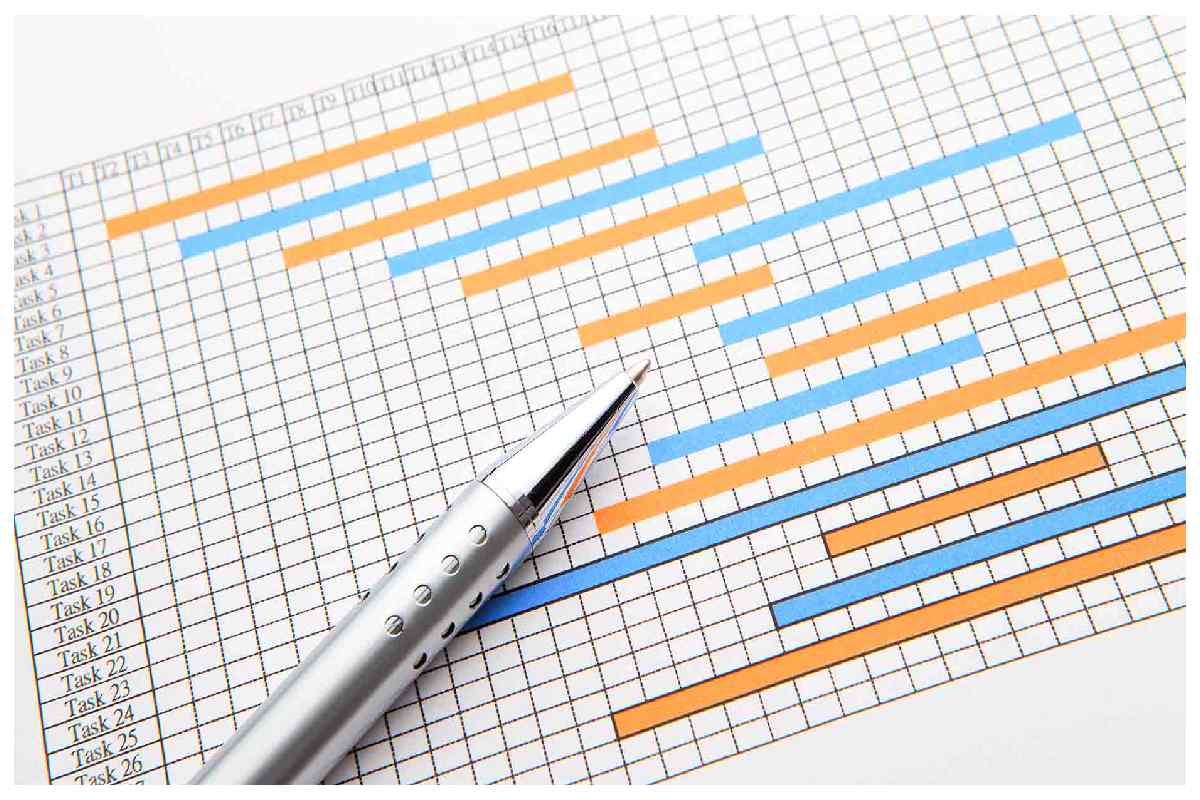
Gantt Chart Definition
A Gantt chart is the project management chart tool supporting the arrangement and scheduling of all sizes, although they are beneficial for shortening intricate projects.
Project management timelines and tasks are converted to a horizontal bar chart showing start and end dates and dependencies, scheduling, and deadlines, including how much of the job is complete per stage and who the task owner is.
It is helpful to keep tasks on track when there is a large team and multiple stakeholders when the scope changes. A Gantt chart is a graphical representation of a project schedule.
It’s a bar chart that shows the start and finishes dates of numerous fundamentals of the project that include resources, milestones, tasks and dependencies. Henry Gantt, an American mechanical engineer, designed the Gantt chart.
What Is a Gantt Chart (In Plain Terms)
A Gantt chart is a visual project timeline.A Gantt chart is a visual project timeline. It lays out tasks along a calendar so you can see the start and end dates, duration of each task, order of work, and dependencies between tasks. Clear definitions are especially useful when explaining unfamiliar business or digital concepts, such as the Acfox definition
It lays out tasks along a calendar so you can see:
- Start and end dates
- Duration of each task
- Order of work
- Dependencies between tasks
Each task appears as a horizontal bar.
The location and the duration of the bar indicate when the activity takes place and how long it takes. Anyone who has ever tried to coordinate a project solely using a to-do list knows that lists don’t convey any sense of timing or interrelation of the activities. This connection between related concepts is also important in content and search optimization, where co-occurrence can provide additional context around a topic.
Why Teams Need Gantt Charts
Where projects have several actions, individuals, and deadlines involved, coordinating them becomes the difficult part. The Gantt chart helps by making the whole planning process visual. Where projects have several actions, individuals, and deadlines involved, coordinating them becomes the difficult part. The Gantt chart helps by making the whole planning process visual. Visual planning can also be supported by digital content and creative tools, such as Animaker, which is explained in more detail in the Animaker definition.
What It Helps Improve
Transparency: Everybody sees the timeline
Planning: Scheduling is done sensibly
- Coordination: Teams know when their work starts and ends
- Tracking: Progress is visible without constant meetings
- Risk control: Delays and bottlenecks become obvious early
It doesn’t replace execution—it makes execution smoother.
Real Case Study: From Confusion to Control
Situation
A mid-size agency was handling multiple client projects. Their workflow relied on spreadsheets and chat updates.
Problems:
- Deadlines kept shifting
- Teams worked out of sync
- Managers lacked visibility
What Changed
They introduced Gantt charts for each project, defined task timelines, mapped dependencies, and assigned ownership. Clear project goals can also benefit from a unique value proposition, particularly when teams need to understand the specific value they are working to deliver.
- Defined task timelines
- Mapped dependencies
- Assigned ownership
Results
- Delivery time improved by around 25–30%
- Fewer last-minute issues
- Better coordination between teams
The workload didn’t change—only the structure did.
Key Components You Should Understand
Task List
The foundation of your project. Every activity must be listed.
Timeline
Defines when work happens. Choose a scale that fits your project.
Task Duration
How long each task takes. This should be realistic, not optimistic. This is particularly important when planning work across different types of professionals, including independent workers who operate under the freelance definition and manage projects for multiple clients.
Dependencies
These show relationships between tasks. For example, you can’t test before development is finished, and you can’t launch before testing is complete. The same principle of connected processes can apply to technical projects involving infrastructure and products such as optical fiber, where different stages may depend on one another.
- You can’t test before development is finished
- You can’t launch before testing is complete
Milestones
Important checkpoints, such as:
- Approval completed
- Beta version ready
- Final launch
Conclusion
A Gantt chart is not only a visual representation, but rather a mindset. Once you begin scheduling tasks, you move from responding to issues to anticipating them. This by itself may have a significant effect on the process. Clear explanations are equally important when working with unfamiliar terminology, which is why a straightforward 0x0 0x0 definition can help readers understand a technical term more easily.
Once you begin scheduling tasks, you move from responding to issues to anticipating them. This by itself may have a significant effect on the process.
In case your projects are characterized by a lack of organization and unpredictability, using such an easy structure will not cause additional complications.