

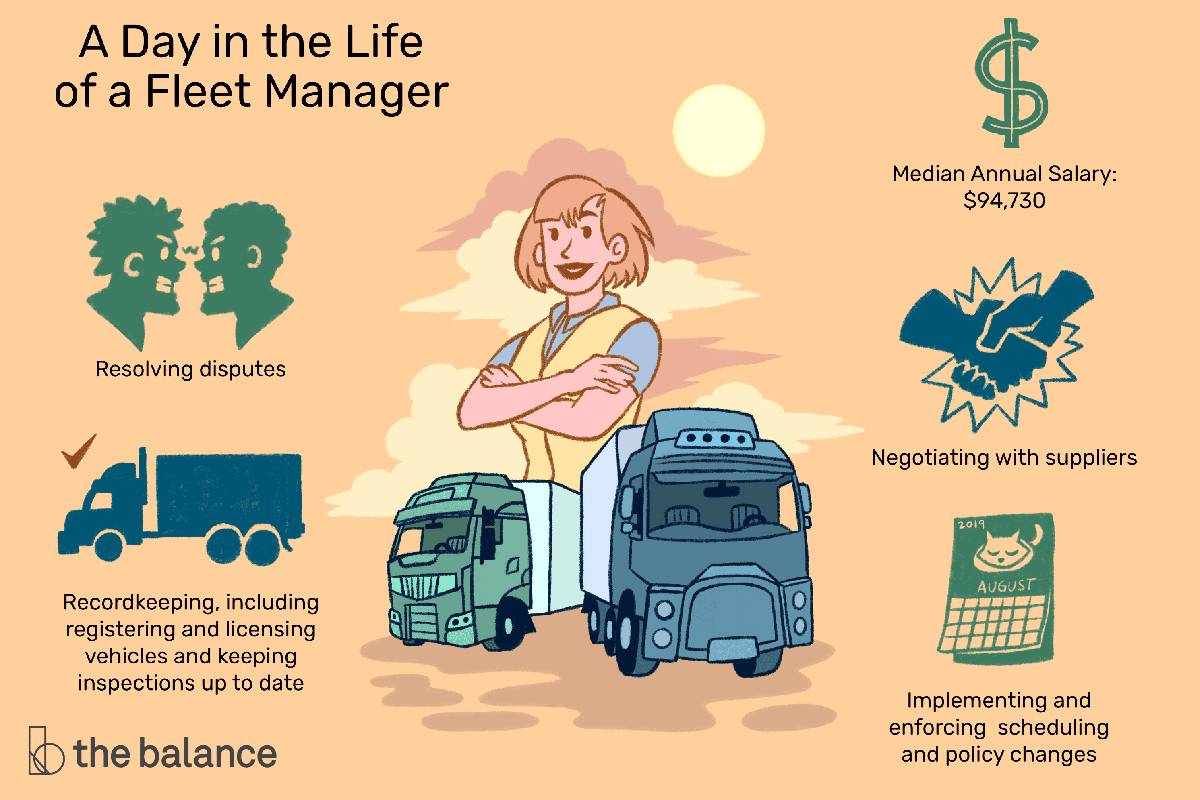
The Job Duties of a Fleet Manager—Functions, Skills, Responsibilities, and Much More
Fleet managers have the responsibility of managing the vehicles, drivers, maintenance, cost of operation, and overall transportation in a business firm. This position is especially significant for organizations that rely on their vehicles to facilitate transportation of goods and services from one location to another or even movement of individuals from one place to another.
Not only does fleet management involve maintaining the operation of the vehicles. Fleet managers are also expected to manage the costs incurred in the process, maximize vehicle utilization, ensure safety of the drivers, record information, and ensure compliance to organizational transportation policies as well as relevant regulations.
Due to increased adoption of global positioning systems (GPS), telematics, fleet management software, and vehicle monitoring technology, fleet managers today have access to much more information, such as fuel consumption, miles driven, performance of the vehicles and the driving practices.
What Is a Fleet Manager?
A fleet manager is a specialist who manages a company’s fleet of vehicles and coordinates individuals and processes related to transportation operations.
Depending on the size and industry category, a fleet manager may handle a fleet ranging from a few corporate vehicles up to hundreds of commercial vehicles. The responsibilities of a fleet manager include purchasing of vehicles, scheduling maintenance, managing drivers, cost control of fuel consumption, tracking of vehicles, and disposing of vehicles after completion of the lifecycle of the vehicles.
The key objective of the activities of a fleet manager is ensuring that the fleet is safe, reliable, efficient, and profitable.
What Does a Fleet Manager Do?
Everyday activities of a fleet manager depend on the industry and size of the company’s fleet. However, all fleet managers perform a number of important functions. Fleet managers also need to understand the wider operational issues affecting transportation businesses, including the key challenges faced by the transportation industry.
1. Vehicle Procurement and Replacement
Fleet managers help in decision making regarding the purchase of vehicles according to the needs and financial capability of the firm.
A delivery firm would require fuel-efficient vans while a construction firm would need heavy duty trucks. For businesses that operate larger vehicles and machinery, improving mobility and operational efficiency is also an important part of managing heavy equipment.
Factors that a fleet manager takes into account include:
- Size and capacity of a vehicle
Purchase price
Fuel consumption
Maintenance needs
Operating life of a vehicle
Safety
2. Driver Management
Drivers are a crucial element in the fleet process.
Some of the duties of the fleet manager include allocating vehicles to drivers, evaluating drivers, planning drivers’ schedule and also driver training.
Driver management includes evaluating drivers, record keeping of drivers, informing drivers of company policies, and ensuring that drivers drive safely.
Communication is particularly important because drivers usually work outside the headquarters of the organization. The instructions will be necessary in order to avoid any misunderstanding.
3. Vehicle Maintenance
Not only does vehicle maintenance make the vehicle reliable, but it also minimizes the risks of any unexpected breakdowns.
The fleet manager can establish a routine of maintenance operations such as lubrication, tire check, brake test, battery test, among others. Keeping maintenance records of vehicles will be essential in order to keep track of the history and current status of each vehicle.
Firms may have their own facilities for maintenance or may rely on dealerships, mechanics, or other service providers. It is up to the fleet manager to evaluate the cost of services and choose the appropriate one.
4. Fuel Management
Fuel may constitute a substantial operating cost for businesses that have large fleets.
The fleet manager monitors the fuel consumption and attempts to reduce any unnecessary expenses. This might involve checking the fuel logs, identifying unnecessary fuel consumption, measuring vehicle miles driven, and encouraging efficient driving.
Fuel management may also involve:
- Fuel cards
- Fuel transaction monitoring
- Route optimization
- Idling reduction
- Vehicle efficiency tracking
- Regular fuel usage reports
Analyzing fuel data can help identify unusual patterns and improve overall fleet efficiency.
5. Route and Logistics Management
Fleet managers sometimes collaborate with the dispatching and logistics department to ensure that their fleets are effectively utilized.
Some of the considerations for the fleet managers during their activities in transportation include the schedule of delivery, vehicle availability, traffic conditions, mileage, and customer requirements.
The route planning is very effective in minimizing unnecessary mileage and travel time.
Better route management may also allow a business to complete more deliveries or service calls without adding additional vehicles.
What are the Functions of a fleet manager?
The main functions of a fleet manager are as follows:
Financing and purchase of vehicles
- The fleet manager is in charge of making the relevant decisions on the type of cars to buy, as well as the quantity and distribution.
- A company dedicated to the transport of live animals, for example, will have different needs than a company dedicated to the transportation of frozen merchandise.
- At the end of the useful life of the vehicles, the fleet manager is also in charge of reselling it to recover the investment as much as possible.
Organization and management of drivers
- Drivers are essential in the transportation business.
- The manager must ensure that the drivers in their care have excellent driving skills.
- As otherwise, they can cause delays in delivery, mechanical problems in vehicles, or even unnecessary costs through fines.
Vehicle maintenance
- The fleet manager is also in charge of maintaining the vehicles throughout their useful life, trying to keep them in the best possible condition. So that they are as efficient as possible within the objectives of the company.
- While some large companies will have their manufacturing centers to carry out maintenance, other smaller companies outsource it to external workshops.
- The manager is in charge of making these types of decisions, always seeking the highest profitability.
Logistics
The fleet manager is in charge of optimizing through telematics systems various parameters of vehicle management, for example:
- Several drivers are operating.
- Number of vehicles in transit.
- Mileage.
- Fuel.
In this way, you can meet customer needs while optimizing fleet resources
What are the main features?
A good manager must have the following characteristics:
- You must have organizational capabilities to organize the activity of the entire fleet.
- You must have excellent communication skills to communicate efficiently with the whole workforce.
- And also, You must have negotiation skills to obtain the maximum benefit at the time of sale.
- You should be able to analyze large amounts of data without losing focus on detail.
What are the tools of a fleet manager?
Software and computer tools (both monitoring and diagnostic) are essential for fleet management. These tools are central to modern fleet management, helping businesses coordinate vehicles, drivers, maintenance, and operational information more efficiently.
As they facilitate the registration and collection of all car data, find behavior patterns that help reduce expenses, and find optimization opportunities.
Key Skills of a Fleet Manager
Skills of fleet management consist of organizational, technical, financial, and communicational aspects.
Organization
A person managing a fleet can be dealing with many vehicles, drivers, schedules, maintenance, and documentation simultaneously. Effective organizational skills are needed in order to keep all of these in harmony.
Effective fleet management involves good organization, technology, finance, and communication abilities. Managing employees and driver-related information can also be streamlined with digital workforce tools, such as those discussed in this resource on HRMS for delivery businesses in India.
Organization
There may be various activities involved in fleet management, such as dealing with different cars, drivers, schedules, maintenance appointments, and other paperwork. Having good organizational skills will help with all these activities.
Communication
Fleet managers need to interact on a regular basis with drivers, mechanics, suppliers, customers, finance department, and management. Communication is important in order to provide effective transportation service.
Analytical Skills
There is much information generated in the course of fleet management. Managers can analyze such things as fuel usage, vehicle mileage, maintenance expenses, usage rate of the vehicles, and drivers’ performance. Tracking these figures consistently can help managers evaluate performance, and this introduction to fleet management performance metrics explains some of the key measures businesses can monitor.
Financial Management
Understanding operating costs and budgets is important because fleet decisions can have a direct effect on company expenses.
important because fleet decisions can have a direct effect on company expenses.
Negotiation Skills
Fleet managers can bargain with dealerships, maintenance services, parts suppliers, insurers, and technology providers. Proper negotiation skills can be beneficial for companies in handling costs of purchases and services.
Technology Skills
Modern fleet management involves the use of various software. Knowledge of GPS navigation, telematics, fleet management software, spreadsheet programs, reporting software, and diagnostics is useful.
Tools for Managing Fleets
Technology has introduced changes into the process of managing fleets. It no longer depends solely on paperwork and communication.
Some commonly used fleet management tools are:
GPS Navigation Software
GPS navigation software helps in tracking location and reviewing the route of vehicles.
Fleet Management Software
Fleet management software can integrate data on vehicles, drivers, maintenance, fuel, expenses, etc.
Telematics Systems
Telematics can collect vehicle and driving information and turn it into useful reports.
Maintenance Management Tools
These tools can help schedule preventive maintenance and store vehicle service histories.
Fuel Management Systems
Fuel management software can organize transactions and help managers monitor consumption.
Vehicle Diagnostic Technology
Diagnostic systems can provide information about vehicle conditions and potential mechanical issues.
Fleet Manager vs. Fleet Management
However, even though the two terminologies have some relationship, they do not mean the same thing.
Fleet manager is the term used to refer to the individual who manages fleet functions.
Fleet management refers to the wider concept of the managing of vehicles, drivers, maintenance, fuel, cost, safety, compliance, and transportation among others.
The growing role of connected systems is part of how technology meets transportation, giving fleet managers more ways to monitor vehicles and improve day-to-day operations.
In small organizations, the duties of a fleet manager can be carried out by one individual while in larger organizations, these duties can be shared among various individuals or departments under the supervision of a fleet manager.
Fleet Manager FAQs
What is the primary job of a fleet manager?
The primary job of a fleet manager is to supervise the operation of the company’s fleet of vehicles while ensuring that there is balance between safety, dependability, efficiency, and cost.
What do fleet managers keep track of?
Some of the data that fleet managers track include the location of vehicles, their mileage, fuel usage, maintenance schedule, utilization, activity, operating costs, among others.
Do fleet managers manage drivers?
In some organizations, fleet managers are responsible for coordinating drivers, assigning vehicles to them, monitoring the way they drive, managing driver records, and driver training.
Why is fleet maintenance important?
Fleet maintenance can help keep your fleet running smoothly by identifying problems before they occur, minimize breakdowns, prolonging vehicle lifespan, and keeping your vehicles dependable.
What technology do fleet managers use?
Some of the technologies used by fleet managers include GPS tracking, telematics, fleet management software, fleet maintenance system, fuel management system, and diagnostic equipment among others.
What skills must a fleet manager possess?
Important skills include organization, communication, analytical skill, financial management, negotiation, problem-solving ability, and technology knowledge.
Are fleet managers required for transportation companies only?
No. Any company owning
Conclusion
A fleet manager is an essential aspect in ensuring that the transportation operations of a company are organized and efficient. This job requires much more than just following up on the vehicles. Some of the things that the fleet manager does include the purchase, maintenance, operation, driving, fuel, routing, safety, compliance, technology, cost management, and replacement of vehicles.
In the modern world, where there are many connected cars and fleet management technologies in use, the importance of having accurate data about vehicle operations becomes very significant. Through technology and effective planning, preventive maintenance, driving, and cost management, the fleet manager is able to ensure efficient vehicle operation.