

Table of Contents
What Is SKU? Meaning, Importance, and How Businesses Use It
If you have managed products run a store worked in retail or checked a product label you have probably seen the term SKU. At first it may sound complicated. Skus are actually a simple and important tool that businesses use to stay organized.
Without SKUs managing products gets confusing fast. Especially when a business sells items, in different sizes, colors, models or categories.
Imagine running a clothing store without a system. A black medium T-shirt and a black large T-shirt may look almost the same. To a business they are different products. That’s where SKUs come in.
An SKU helps businesses identify products fast track inventory correctly avoid errors and improve operations.
In this guide we will break down:
- What SKU means
- Why SKUs matter
- How businesses create them
- Real examples of SKU numbers
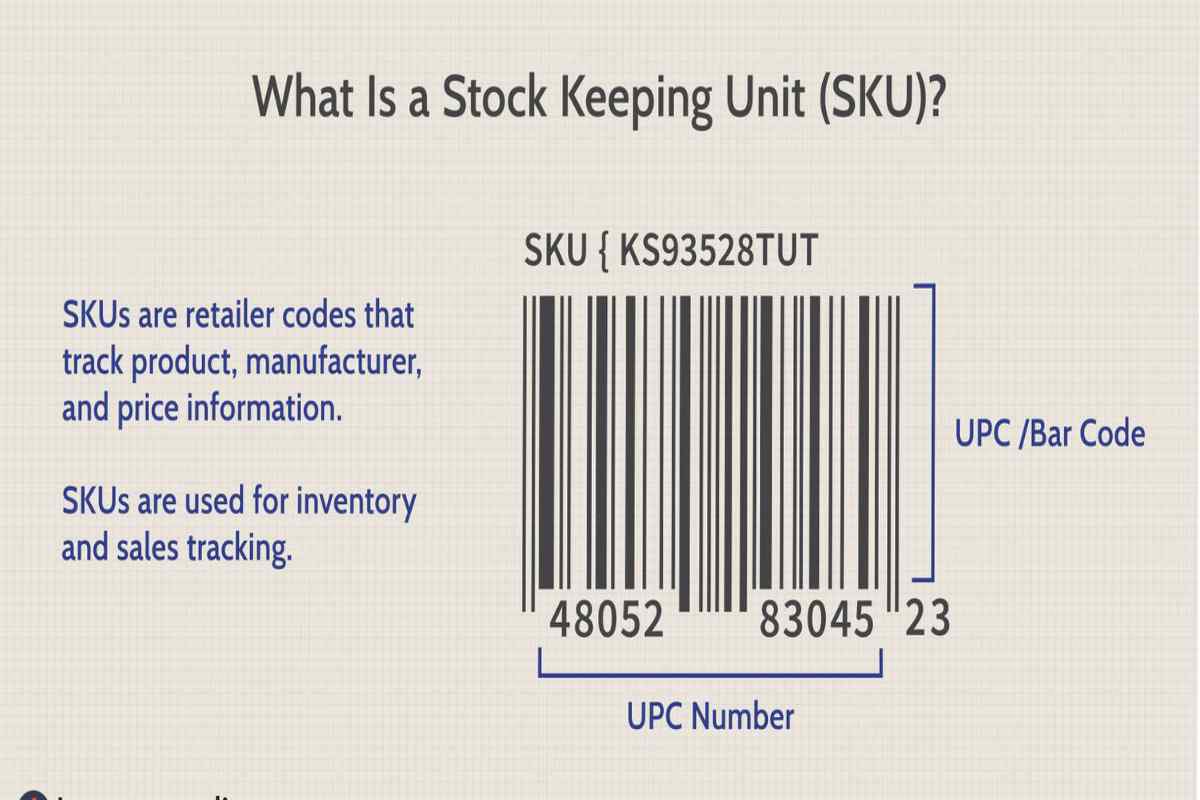
- The difference between SKU and UPC
- Best practices for inventory management
Whether you run a small ecommerce store or simply want to understand inventory systems better, this article explains everything in simple terms.
What Is SKU?
A Stock Keeping Unit or SKU is a code that businesses use.
They make this code to know what products they have in stock.
A SKU is a code that helps businesses identify and track individual products in their inventory.
The main thing about a SKU is that it is a code, for each product.
So when we talk about a Stock Keeping Unit we are talking about this code.
The Stock Keeping Unit is used by businesses to keep track of their products.
For example:
TSH-BLK-M-001This SKU might represent:
- TSH = T-shirt
- BLK = Black
- M = Medium
- 001 = Product variation number
The SKU helps staff instantly identify the exact product without confusion.
Why SKUs Are Important
SKUs may look like random codes, but they play a huge role in business operations.
As inventory grows, managing products manually becomes difficult. SKUs help businesses stay organized and efficient.
Main Benefits of Using SKUs
| Benefit | Why It Matters |
|---|---|
| Faster inventory tracking | Saves time |
| Fewer product errors | Improves accuracy |
| Easier stock management | Prevents confusion |
| Better sales tracking | Helps analyze performance |
| Improved customer service | Faster order handling |
Without SKUs, businesses often struggle with inventory mistakes, delayed shipments, and stock management issues.
How SKUs Work
An SKU works as a unique identifier for every product variation.
For example:
A shoe store may sell the same sneaker in:
- Multiple sizes
- Different colors
- Different styles
Even though the product name is similar, each variation receives its own SKU.
Example
| Product | SKU |
|---|---|
| White Sneakers Size 8 | SN-WHT-8 |
| White Sneakers Size 9 | SN-WHT-9 |
| Black Sneakers Size 8 | SN-BLK-8 |
This system helps businesses track exactly which product is selling.
Where SKUs Are Commonly Used
SKUs are used across many industries.
Businesses That Use SKUs
- Ecommerce stores
- Retail shops
- Warehouses
- Supermarkets
- Fashion brands
- Electronics stores
- Manufacturing companies
Any business managing inventory usually depends on SKUs.
How Businesses Create SKU Numbers
There’s no universal format for SKUs.
Every business creates its own system depending on its inventory structure.
Most companies include details such as:
- Product category
- Brand
- Size
- Color
- Model number
Example SKU Structure
LAP-DELL-15-BLKMeaning:
- LAP = Laptop
- DELL = Brand
- 15 = Screen size
- BLK = Black color
The goal is to make SKUs simple, readable, and easy to understand internally.
Best Practices for Creating SKUs
A poorly organized SKU system can create confusion instead of solving problems.
Good SKU Practices
- Keep codes simple
- Use consistent formatting
- Avoid confusing characters
- Make SKUs easy to read
- Create logical category structures
Avoid These Mistakes
| Bad Practice | Problem Created |
|---|---|
| Using very long SKUs | Hard to manage |
| Random numbering | Confusing for staff |
| Inconsistent formatting | Inventory errors |
| Similar-looking codes | Picking mistakes |
A clean SKU structure improves efficiency significantly.
Difference Between SKU and UPC
Many people confuse SKU and UPC, but they are different.
SKU vs UPC
| SKU | UPC |
|---|---|
| Created by business | Universal barcode |
| Internal use | External retail use |
| Custom format | Standardized format |
| Helps inventory management | Used for scanning globally |
Simple Explanation
- SKU = Internal tracking system
- UPC = Universal product barcode
A business may create its own SKU even if the product already has a UPC barcode.
Why Ecommerce Businesses Depend on SKUs
For online stores, SKUs are extremely important.
Ecommerce businesses often manage:
- Multiple product variations
- Different suppliers
- Warehouse inventory
- Shipping systems
- Marketplace listings
Without SKUs, managing orders becomes chaotic.
SKUs Help Ecommerce Stores:
- Track stock levels
- Prevent overselling
- Organize warehouse inventory
- Process orders faster
- Monitor product performance
Platforms like Shopify, Amazon, and WooCommerce all encourage sellers to use SKUs properly.
How SKUs Improve Inventory Management
Inventory management becomes much easier when products are organized properly.
SKUs help businesses:
- Track fast-selling products
- Identify low-stock items
- Analyze sales trends
- Reduce inventory mistakes
Example
A store may discover:
- Black T-shirts sell faster than blue ones
- Medium sizes outperform large sizes
This information helps businesses make smarter purchasing decisions.
SKUs and Warehouse Organization
Warehouses often store thousands of products.
Without SKUs:
- Staff may pick wrong products
- Orders may get delayed
- Inventory becomes difficult to track
SKUs help warehouse teams:
- Locate products quickly
- Reduce packing mistakes
- Improve shipping speed
This becomes especially important during high-order seasons.
Can Small Businesses Use SKUs?
Absolutely.
Even small businesses benefit from SKU systems.
A simple inventory structure today can prevent major problems later as the business grows.
Example for Small Businesses
A handmade candle business could use:
CAN-VAN-250Meaning:
- CAN = Candle
- VAN = Vanilla scent
- 250 = 250g size
Even basic SKU systems improve organization.
Common SKU Mistakes Businesses Make
Many businesses create inventory problems because of poorly designed SKU systems.
Common Problems
- Duplicate SKUs
- Overly complicated codes
- Inconsistent naming
- Missing product variations
- Random numbering systems
These mistakes often create confusion for:
- Staff
- Warehouse teams
- Ecommerce systems
How Technology Improved SKU Management
Modern inventory software has made SKU management much easier.
Businesses now use tools that:
- Generate SKUs automatically
- Track inventory in real time
- Sync across platforms
- Analyze sales performance
Popular inventory systems include:
- Shopify
- Zoho Inventory
- QuickBooks Commerce
- NetSuite
- Cin7
These tools help businesses scale more efficiently.
SKUs Help Businesses Make Better Decisions
One underrated benefit of SKUs is data analysis.
Businesses can track:
- Best-selling products
- Seasonal demand
- Slow-moving inventory
- Customer preferences
This helps companies:
- Reduce waste
- Improve purchasing decisions
- Increase profits
- Optimize stock levels
Good inventory data often leads to smarter business strategies.
Are SKUs Necessary for Every Product?
Not always, but they are highly recommended for businesses managing multiple products.
If a company sells:
- Different sizes
- Multiple colors
- Product variations
- Large inventories
…then SKUs become extremely valuable.
The larger the inventory, the more important SKU organization becomes.
Conclusion
So what is an SKU? It is really simple once you see how companies use it every day. An SKU is a special code for each product that helps companies keep track of what they have in stock.
SKUs are important for companies. They help companies keep things organized and make sure they have the products, in stock. SKUs are used in stores, online shopping and warehouses. They help companies do things correctly keep track of what sells and make customers happy.
If you have an online store or a small shop using SKUs is a good idea. It saves you time. Helps you keep track of your products more easily. This is especially helpful when your business gets bigger and you have products to keep track of.