


What Are Project Management Methodologies? Complete Guide with Types, Examples & Real Use Cases (2026)
Every project—whether it’s building software, launching a product, or managing a construction site—follows some kind of process. The difference between success and failure often comes down to one thing:
How well that process is structured.
This is where project management methodologies come into play.
They are not just frameworks or theories. They are practical systems that help teams plan, execute, and deliver projects efficiently without chaos.
In this guide, you’ll learn what they actually are, how they work in real-world scenarios, and which ones are best for different types of projects.
What Are Project Management Methodologies (Simple Explanation)
Project management methodologies are structured approaches that guide how a project is planned, executed, and completed.
They provide:
- Clear processes
- Defined roles
- Step-by-step workflows
- Guidelines for managing time, cost, and scope
Instead of relying on guesswork, teams follow a proven system that improves efficiency and reduces risk.
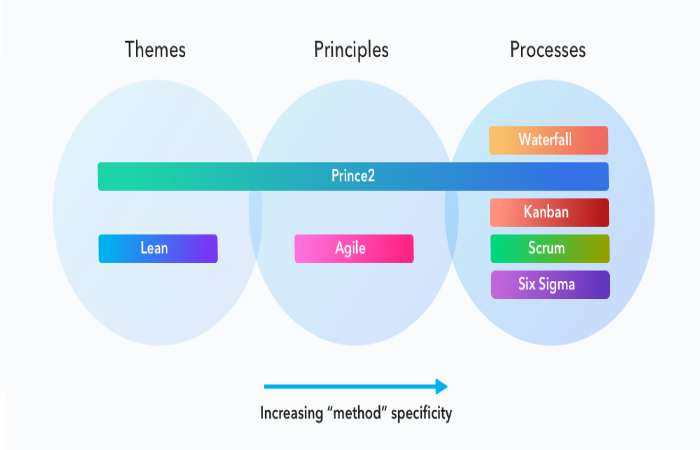
Why Project Management Methodologies Matter
Projects are becoming more complex. Without structure, teams often face:
- Missed deadlines
- Budget overruns
- Poor communication
- Confusion about responsibilities
Methodologies solve these problems by creating a standard way of working, helping teams deliver projects on time and within budget.
How Project Management Methodologies Work in Real Life
Let’s take a practical example.
Scenario: Mobile App Development
Without a methodology:
- Tasks are unclear
- Teams work randomly
- Deadlines slip
With a methodology:
- Tasks are planned
- Roles are defined
- Progress is tracked
Result: smoother execution and better outcomes
Main Types of Project Management Methodologies
Most methodologies fall into three broad categories.
1. Predictive (Traditional Approach)
This is a structured, step-by-step approach.
Key Characteristics
- Fixed scope
- Clear timeline
- Sequential phases
Example Method: Waterfall
Work flows in stages:
- Planning
- Design
- Development
- Testing
- Delivery
Best for projects with clear requirements.
2. Adaptive (Agile Approach)
This approach focuses on flexibility.
Key Characteristics
- Iterative process
- Frequent updates
- Continuous improvement
Agile methods emphasize collaboration, fast progress, and adapting to change.
Example Methods
- Scrum
- Kanban
Best for projects where requirements may change.
3. Hybrid Approach
This combines both structured and flexible methods.
Key Characteristics
- Balance of control and adaptability
- Custom workflows
Best for complex projects needing both planning and flexibility.
Popular Project Management Methodologies Explained
Let’s look at the most widely used methodologies in practice.
1. Waterfall Methodology
How It Works
- Linear and sequential
- Each phase must be completed before the next begins
Best For
- Construction projects
- Manufacturing
- Projects with fixed requirements
2. Agile Methodology
How It Works
- Work is divided into smaller iterations
- Continuous feedback and improvement
Best For
- Software development
- Startups
- Dynamic projects
3. Scrum Framework
A type of Agile approach.
Key Features
- Work divided into short cycles (sprints)
- Regular team meetings
- Continuous improvement
4. Kanban Method
How It Works
- Visual workflow using boards
- Tasks move through stages
Best For
- Teams needing real-time visibility
- Continuous work environments
5. Lean Methodology
Focus
- Eliminating waste
- Improving efficiency
Best For
- Manufacturing
- Process optimization
6. Six Sigma
Focus
- Quality improvement
- Reducing defects
Best For
- Large organizations
- Data-driven processes
7. Critical Path Method (CPM)
How It Works
- Identifies the longest sequence of tasks
- Determines project duration
Best For
- Projects with strict deadlines
Real Case Study: Choosing the Right Methodology
Situation
A software company struggled with delays.
Problems:
- Changing requirements
- Poor coordination
- Missed deadlines
Solution
They switched from Waterfall to Agile:
- Broke work into sprints
- Improved communication
- Adapted quickly to changes
Results
- Faster delivery
- Better team collaboration
- Improved product quality
The methodology change transformed the project outcome.
Benefits of Using Project Management Methodologies
1. Better Planning
Clear structure helps define goals and tasks.
2. Improved Communication
Everyone understands their role.
3. Risk Reduction
Potential issues are identified early.
4. Higher Efficiency
Processes are streamlined and repeatable.
5. Consistent Results
Standardized workflows improve quality.
Common Mistakes to Avoid
1. Using the Wrong Methodology
Not all projects need the same approach.
2. Overcomplicating Processes
Too many rules can slow down progress.
3. Ignoring Team Dynamics
Methodologies must fit the team’s working style.
4. Lack of Flexibility
Rigid processes can limit adaptability.
How to Choose the Right Methodology
Choosing the right approach depends on:
Project Type
- Fixed requirements → Waterfall
- Changing requirements → Agile
Team Size
- Small teams → Agile or Kanban
- Large teams → Structured methods
Timeline
- Strict deadlines → CPM
- Flexible timelines → Agile
When You Need a Project Management Methodology
You should use one when:
- Projects are complex
- Multiple teams are involved
- Deadlines and budgets matter
- Coordination is critical
Future Trends in Project Management (2026)
Project management is evolving rapidly.
Key Trends
- AI-powered project planning
- Hybrid methodologies becoming standard
- Increased automation
- Data-driven decision making
Organizations are moving toward flexible systems that combine structure with adaptability.
Key Takeaways
- Project management methodologies are structured frameworks for managing projects
- They help plan, execute, and deliver work efficiently
- Common types include Agile, Waterfall, and Hybrid
- Choosing the right methodology improves success rates
- Flexibility and adaptability are key in modern projects
Final Thoughts
Project management methodologies are not just frameworks—they are practical systems that bring order to complex work.
Without them, projects often become unpredictable.
With them, teams gain clarity, structure, and control.
The key is not choosing the most popular methodology.
It’s choosing the one that fits your project, your team, and your goals.