

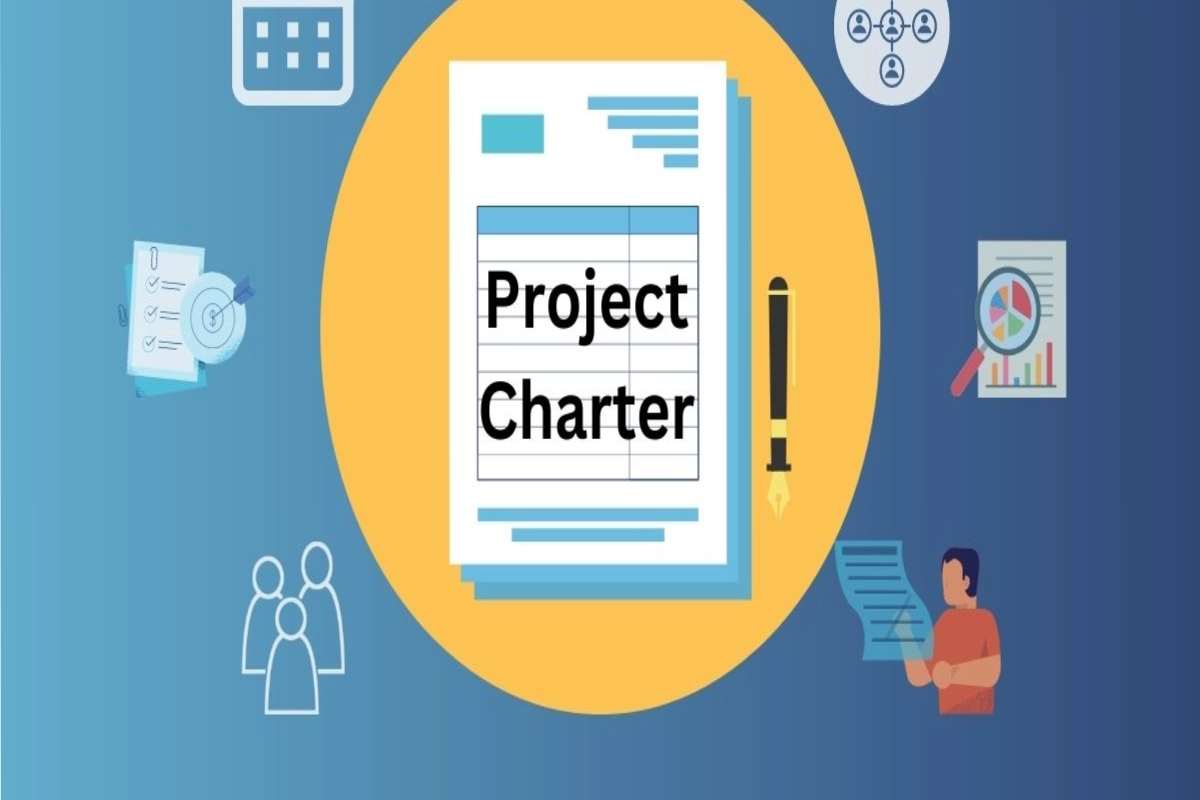
What is Project Charter? Full Guide with Examples, Components & Use Case in Business (2026)
No project is ever started successfully without some sort of guidance.
Projects that begin without any plan get into hot waters right away – confusion, wrong budget allocations, delay, and loss of trust from stakeholders. This is why professional project managers are always prepared with one document when beginning a project:
The project charter.
Despite its apparent simplicity, in fact, the presented document is a legally approved basis for the entire project, including the description of the essence of the project, its goals, stakeholders, and the list of their responsibilities and requirements.
Below you can find a brief guide on the definition and explanation of the term “project charter”.
Project Charter Definition
Project charter is a documented confirmation and description of the goals, scope, stakeholders and responsibility of the particular project. In other words, it provides an answer to the following questions prior to anything else. It may be called a formal project agreement. A project charter becomes easier to understand when it is viewed as the foundation for a broader project. Before defining the charter, it is useful to understand what a project is and how its goals, activities, resources, and expected results are organized.
The Importance of a Project Charter
Many organizations do not pay attention to project planning at all. They start implementing a project right away and pray for success after that.
That usually creates problems like
- Confusion among teams
- Undefined responsibilities
- Scope creep
- Budget overruns
- Delayed deadlines
A well-planned timeline should also identify the activities that have the greatest impact on the project’s completion date. Understanding the critical path in project planning helps project teams identify tasks that cannot be delayed without affecting important milestones or the overall project schedule.
Real-World Example (Easy to Understand)
Without a charter:
- Teams don’t fully understand objectives
- Developers build unnecessary features
- Budget keeps increasing
The document clearly defines:
- Purpose of the app
- Target users
- Budget limits
- Timeline
- Team responsibilities
Result:
- Better coordination
- Faster execution
- Reduced confusion
What a Project Charter Typically Includes
A good project charter is concise but detailed enough to guide the project effectively.
1. Project Purpose
This explains why the project exists.
Example:
- Increase online sales
- Improve customer experience
- Reduce operational costs
The purpose should focus on business value, not just activities.
2. Project Objectives
Objectives define what success looks like.
Good objectives are usually:
- Specific
- Measurable
- Realistic
- Time-based
Example:
- Increase website conversions by 20% within 6 months
3. Project Scope
Scope defines what is included—and equally important—what is not included.
This prevents unnecessary expansion later.
Example:
- Included: mobile app development
- Excluded: desktop software version
4. Stakeholders
Stakeholders are the people involved in or affected by the project.
Examples:
- Project sponsor
- Managers
- Clients
- Team members
Clearly identifying stakeholders improves communication and accountability.
5. Roles and Responsibilities
Every successful project needs defined ownership.
The charter outlines:
- Who leads the project
- Who approves decisions
- Who performs tasks
Without this, accountability becomes unclear.
6. Budget and Resources
This section outlines:
- Estimated costs
- Required tools
- Team allocation
It helps control spending and planning.
7. Timeline and Milestones
Major deadlines and phases are listed here.
Example:
- Planning completed → March
- Development completed → June
- Final launch → August
This creates measurable progress checkpoints. For projects with multiple deadlines, teams, and milestones, project management software can make it easier to organize tasks, assign responsibilities, monitor progress, and keep everyone updated throughout the project.
8. Risks and Constraints
Every project has limitations and potential risks.
Examples:
- Limited budget
- Tight deadlines
- Technology limitations
Identifying risks early improves preparation.
The charter starts the project.
The project plan manages the work afterward.
Real Case Study: How a Charter Saved a Project
Situation
A software company started a CRM development project without proper documentation.
Problems included:
- Constant feature changes
- Team confusion
- Budget increases
- Delayed launch
Clarity is also closely connected with the quality of the final result. Defining expectations at the beginning helps teams understand the required standards and evaluate what quality means throughout the project rather than only checking the outcome at the end.
What They Changed
Management paused the project and created a detailed charter:
- Defined project scope
- Assigned responsibilities
- Clarified goals and deadlines
Results
- Improved team alignment
- Controlled project scope
- Faster delivery timeline
The biggest improvement came from clarity—not additional resources.
When a Project Charter Is Most Important
A charter becomes essential when:
- Projects are large or complex
- Multiple teams are involved
- Budgets are significant
- Stakeholders need alignment
- Risks are high
Little personal projects need no documentation at all, but for business purposes, documentation becomes necessary. This is especially important for projects that involve changes to a company’s physical or technical environment.
Conclusion
A project charter is similar to any other form of documentation; yet, it is certainly one of the most significant parts of project management. The project will not be successful without clarity.
They succeed when everyone understands:
- Why the project exists
- What success looks like
- Who is responsible
- What limitations exist
That clarity is exactly what a strong project charter provides.