


Account-Based Marketing: Everything You Need to Know about Winning High-Value B2B Customers through This Marketing Strategy
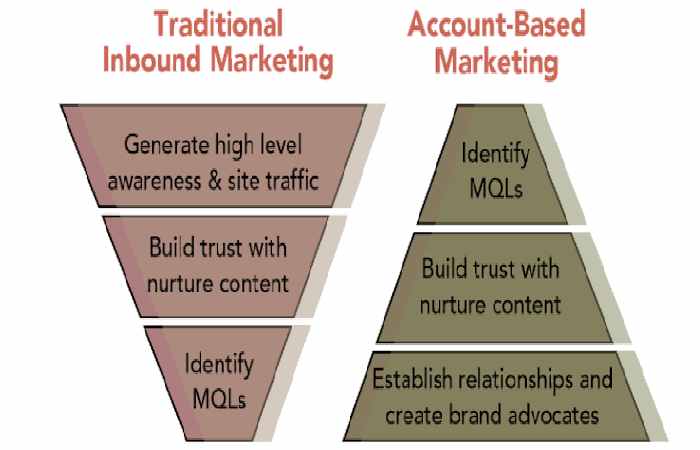
Account-Based Marketing (ABM) is an effective B2B marketing strategy that revolves around specific accounts as opposed to using mass media marketing messages to reach as many accounts as possible. The company identifies the right target accounts before initiating marketing and sales campaigns tailored to those specific accounts.
This strategy works well for companies offering high-end products or services whereby the purchase involves many stakeholders and long sales process. In ABM, marketing and sales department work together to concentrate all time, budget, and other efforts in accounts having potential in business terms.
What is Account-Based Marketing?
Account-Based Marketing is a marketing strategy whereby selected businesses are viewed individually. Marketing and communications content, advertisement, and sales messaging is tailored to the accounts.
For instance, a software firm marketing an enterprise security solution may target 50 companies that meet its requirements of an ideal customer. As opposed to conducting a mass mailing campaign to numerous firms, the marketers may now prepare their content to target only 50 clients while the sales personnel reach out to the key decision makers.
What this isn’t about is lead generation. That’s all about approaching the right firms and generating income.
How Does Account-Based Marketing Work?
An effective account-based marketing strategy follows a certain pattern.
1. Identification of Accounts
The first step involves determining the firms that should be targeted.
Some of the considerations that businesses may take into account include:
- Company size
- Industry
- Revenue potential
- Location
- Existing technology
- Business challenges
- Buying potential
Alignment with the product/services provided by the company
The process of creating an ICP will assist in deciding which accounts need to be prioritized.
2. Research the Account
After selecting target companies, teams need to understand them properly.
Research may involve the company’s objectives, current trends, challenges within the industry, competition, available solutions, and purchasing considerations.
Another key component of the research process is to determine who makes the buying decision. It might not be an individual, but rather several people in case of bigger B2B companies.
3. Create Personalized Content
Personalization is an important component of Account-Based Marketing.
Rather than sending out the same messages, personalized messages can be created for each account or industry segment of interest to the business.
Examples include:
- Personalized emails
- Industry-specific guides
- Customized case studies
- Targeted landing pages
- Account-specific presentations
- Personalized product demonstrations
- Relevant webinars
The aim is to prove to the prospective customers that the organization knows them better than just selling something to them.
4. Aligning Marketing and Sales
ABM is most effective when marketing and sales are operating off of the same target account list and objectives.
Marketing might be creating awareness and engagement on one side and sales will be reaching out to those people who have shown interest in the right type of content.
Types of Account-Based Marketing
Businesses can use different levels of ABM depending on their resources and the number of accounts they want to target.
One-to-One ABM
This is the most personalized approach. Marketing and sales create a detailed strategy for an individual high-value account.
It can work well when a single customer could generate substantial revenue.
One-to-Few ABM
Here, businesses target a small group of similar accounts The organizations could belong to the same sector or face similar problems.
It is possible to customize content to suit the target audience while retaining scalability of the campaign.
One-to-Many ABM
This approach targets a larger number of accounts using technology, automation, audience segmentation, and personalized campaigns.
Scalable but more focused compared to marketing.
5. Advantages of Account-Based Marketing
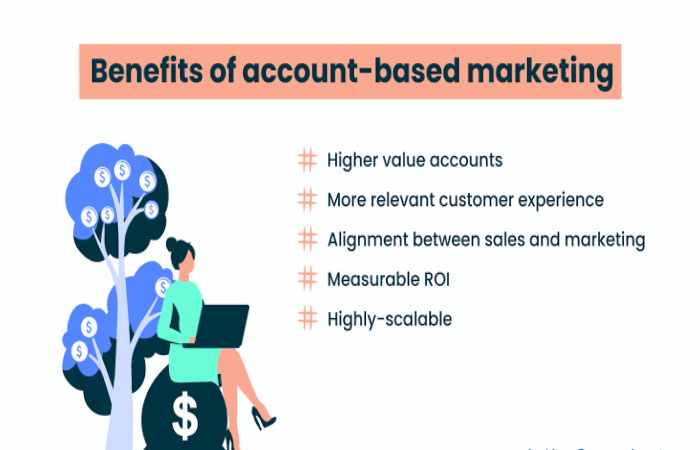
An account-based marketing strategy can have many advantages when well-planned.
Better Use of Marketing Budget
Companies do not need to waste their budget on a large number of poor quality leads but rather concentrate on those that are potential clients.
Stronger Personalization
Personalized Campaigns Enable Relevant Communications
By tailoring messaging to the industry or business challenges of an account, communications can become more valuable than promotional messages.
Better Alignment Between Sales and Marketing
Both departments focus on the same set of target accounts, instead of pursuing entirely different goals.
More High-Value Prospects
ABM is typically applicable to companies that can get a lot of revenues from a small number of clients. Thus, it makes sense to concentrate on such accounts if the benefits exceed the efforts.
More Effective Customer Relationship Management
ABM does not have to come to an end once there is a sale; the same concept can be applied in account management.
Account-Based Marketing FAQs
What is the ultimate objective of Account-Based Marketing?
The ultimate objective of ABM is to arouse interest and create relationships within target business accounts.
Is ABM only for large companies?
No. Smaller businesses can also use ABM if they have a clearly defined group of valuable prospects. The tactic is scalable in terms of the resource availability.
Is Account-Based Marketing fit for B2B organizations?
Account-Based Marketing works great for B2B firms whose products or services are either expensive or complicated and involve multiple parties in the buying process.
What is the most important ABM metric?
There is no one metric applicable for all organizations. A combination of metrics such as target account engagement, pipeline, opportunities, win rate, deal size, and revenue can demonstrate whether an ABM campaign works.
Conclusion
Account-Based Marketing changes the approach to customer acquisition for B2B firms. In ABM, not just any customer will do. Rather, it’s all about putting emphasis on the customers that are most valuable.
When marketing and sales collaborate, know who they want to reach, and deliver true relevancy, ABM can be a highly effective component of B2B growth strategies.
The aim should be to work on quality, relevancy, and business impact. The firms could help themselves build good relations and grow through good account selection and quality research.