


Business and Personal Insurance Guide
People usually give thought to having insurance only when they run into trouble with their car, health care bills, business losses from a fire or a burglary, or a claim from a customer. At such moments insurance can really make a difference.
However, a business and personal insurance portfolio is not about getting as much insurance as possible. It is about knowing your risks and selecting appropriate policies for them.
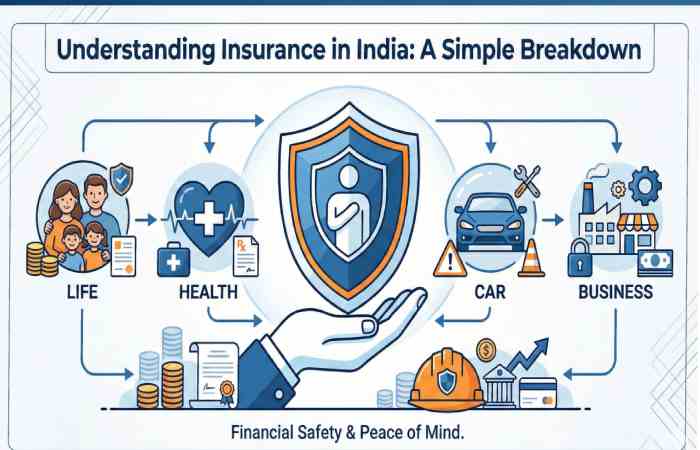
Personal insurance mainly refers to people, families, income, health, cars, houses, and other personal belongings. Business insurance refers to insurance of companies against risks related to property, employees, clients, professional services, machinery, liability, and business interruption.
The guide discusses the main types of insurance, their coverage, the issues that should be considered prior to purchasing insurance, and the mistakes individuals and business people should avoid making.
What Is Insurance?
The insurance is a financial mechanism that protects policy holders from certain losses or risks. The insurer offers the coverage based on the terms, conditions, exclusions, and limits of a particular insurance policy.
Having insurance does not necessarily mean that each and every loss would be covered by insurance. The coverage depends on the policy
Personal Insurance: What Does It Insure?
Personal insurance is tailored based on the financial exposures of individuals and families.
The proper mix will depend on a person’s age, income, dependants, financial standing, health needs, liabilities, living habits, and financial objectives.
1. Health Insurance
Health insurance will offer protection against eligible medical expenses under the terms of the insurance contract.
Medical treatment costs could be high and one hospital stay could put financial pressure on the household.
There are several types of health insurance. As per IRDAI, indemnity-based health insurance is the type that offers reimbursement for eligible actual medical expenses up to the appropriate sum insured, whereas the benefit-based covers a fixed benefit as per terms of the insurance contract.
Things to Look for in a Health Insurance Policy
Before purchasing any health insurance policy, consider more than just the premium.
Check:
- Sum insured
- Hospitalization coverage
- Waiting periods
- Exclusions
- Room-rent limits
- Deductibles
- Co-payments
- Network hospitals
- Claim process
- Renewal conditions
- Coverage for specific treatments
IRDAI’s consumer guidance notes that the Customer Information Sheet provides important information such as coverage, exclusions, sub-limits, deductibles, and waiting periods.
A cheaper policy is not necessarily better if its coverage is inadequate for your actual needs.
2. Life Insurance
Life insurance is primarily designed to provide financial protection to people who depend on the policyholder.
For a family with a single major income source, the loss of that income can create serious financial pressure.
Life insurance can therefore help provide financial support to dependents, subject to the policy’s terms.
When considering life insurance, think about:
- Current income
- Outstanding loans
- Family expenses
- Children’s future needs
- Number of dependents
- Existing savings
- Existing insurance
- Desired policy duration
The purpose should be clear before choosing a product.
3. Personal Accident Insurance
Personal accident insurance can provide financial benefits following specified accidental events.
It can be useful for people whose income or family finances could be seriously affected by accidental death or disability.
Personal accident insurance is different from health insurance. Health insurance generally focuses on eligible medical expenses or defined health benefits, while personal accident policies are designed around specified accidental events and benefits.
4. Motor Insurance
Motor insurance protects against certain risks involving vehicles.
Third party motor liability insurance is compulsory in India for those using the roads. According to IRDAI, third-party motor liability insurance covers only the liability towards third parties in case of damages or injuries, while comprehensive or package policies may have own-damage cover as well.
Comprehensive vs Third-Party Insurance
Third-party insurance focuses on liability toward others.
A broader motor policy can also cover damage to the insured vehicle, subject to its terms.
When choosing motor insurance, consider:
- Vehicle value
- Insured Declared Value
- Third-party liability
- Own-damage coverage
- Deductibles
- Add-on covers
- Claim history
- No-claim benefits
IRDAI notes that the vehicle’s Insured Declared Value should reflect its current market value for relevant own-damage coverage.
5. Home and Property Insurance
A home contains more than the building itself. Furniture, appliances, electronic devices, clothes, and other possessions may be valuable assets financially speaking.
There is home insurance and property insurance, which covers losses arising from fire or specified natural and accidental perils.
Proper insurance of property should always be done after valuing the asset that needs to be insured.
If there is underinsurance, it means the insured value is way below the value of the asset. Underinsurance is explicitly pointed out by the IRDAI, which shows how important it is to have proper property insurance.
How to Choose Insurance
Insurance should be chosen based on risk assessment and not cost comparison.
Step 1: Identify Your Risks
Make a list of the things that could cause serious financial loss.
For an individual, this might include:
- Medical expenses
- Loss of income
- Death
- Vehicle damage
- Property damage
For a business, the list could include:
- Fire
- Theft
- Equipment failure
- Customer injury
- Professional errors
- Cyber incidents
- Employee-related claims
- Supplier disruption
Step 2: Assess the Monetary Effect
All risks do not require the same amount of coverage. A minor loss may be affordable using personal or business savings, while a major liability claim could be financially devastating.
Insurance is particularly valuable for risks that could create losses beyond what you could reasonably handle yourself.
Step 3: Compare Coverage, Not Just Premiums
Two policies may have very different prices because they provide different levels of protection.
When comparing policies, look at:
- Coverage limits
- Exclusions
- Deductibles
- Waiting periods
- Conditions
- Claim procedures
- Renewal terms
- Add-ons
- Network or service providers
The cheapest premium should not automatically be the deciding factor.
Understanding Insurance Exclusions
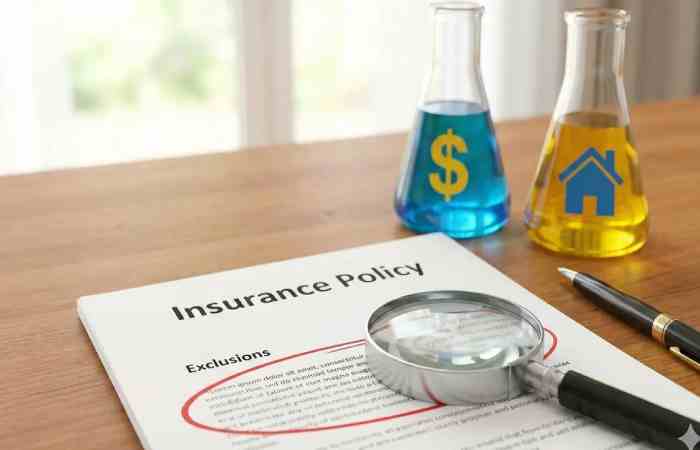
One of the most important parts of an insurance policy is what it does not cover.
The exclusions list circumstances, incidents, losses, or anything that is not covered by the insurance policy.
The policy may seem all-inclusive until one finds out that there is an exception to the event under discussion.
It is important to go through the exclusions before buying the policy.
Why Exclusions Matter
Suppose a business assumes that every type of water damage is covered. However, if the policy excludes any particular type of occurrence, then the cost resulting from this would be borne by the business.
Excluding the particular type of occurrence should be known before making any claim.
Understanding Deductibles and Co-Payments
A deductible is an amount that the policyholder may need to bear before the insurer pays the remaining eligible amount, according to the policy.
A co-payment generally means the policyholder shares a specified portion of eligible expenses.
These features can affect the actual cost of a policy. In some cases, policies with low premiums will have high deductibles or more out-of-pocket costs.
This is the reason why evaluating premiums alone might not be enough.
Insurance for Small Businesses
There are times when small businesses do not buy insurance because they feel that what they are doing does not involve any risk at all.
This is risky since even small businesses could suffer from any disaster.
Small Business Insurance Checklist
For every type of business, it would be good to check your need for insurance in the following things:
- Property
- Stock and inventory
- Equipment
- Vehicles
- Public liability
- Professional liability
- Employee-related risks
- Business interruption
- Cybersecurity
- Key business assets
The appropriate combination depends on the company’s actual activities and applicable requirements.

Insurance for Home-Based Businesses
Working from home does not automatically mean personal insurance will cover business activities.
A home-based business may use computers, inventory, equipment, or customer information.
Other liability issues could also arise.
Existing homeowners or renter’s insurance policies need to be reviewed to see if they cover business operations. If not, additional business coverage may be necessary.
Common Insurance Mistakes
Buying Only Based on Price
A low premium is not useful if the coverage does not protect against the risks that matter most.
Underinsuring Property
Choosing an insured value below the actual replacement or relevant value can create financial problems after a loss.
Ignoring Exclusions
Always understand what the policy does not cover.
Giving Incorrect Information
Information provided during the application process should be complete and accurate. Incorrect or incomplete information can create problems when making a claim.
Forgetting Renewal Dates
Many insurance policies require timely renewal to maintain continuous protection.
Not Updating Policies
Life and business circumstances change. He or she can select to buy a new automobile, move house, take on additional liabilities, or even embark on a new enterprise.
It can elect to buy new machines, grow, recruit additional employees, or move offices. The company may decide to purchase new machines, expand, hire new workers, or move premises. There is need for insurance review in case there have been changes in important aspects.
How to Prepare for an Insurance Claim
In case something occurs, documentation will make things easy. Keep important records such as:
- Policy documents
- Receipts
- Invoices
- Asset records
- Photographs
- Medical records where relevant
- Repair estimates
- Business financial records
- Correspondence with the insurer
Report incidents according to the policy’s requirements and provide accurate information.
Do not assume that every claim will be handled in exactly the same way. Follow the applicable policy process and seek clarification from the insurer when necessary.
Business and Personal Insurance Planning
Insurance should be incorporated into your financial or business planning as well.
As far as individuals are concerned, insurance should be considered alongside emergency savings, investments, debt control, and other financial considerations.
With respect to businesses, insurance should be considered along with risk management, cybersecurity, business continuity planning, contracting, employee considerations, and financial planning.
Insurance is just one way to deal with risks; it shouldn’t displace sound preventive practices.
For instance, you can’t completely rely on cyber insurance and neglect cybersecurity considerations.
When Should You Review Your Insurance?
A yearly review is a useful starting point, but certain events should trigger an earlier review.
Personal Changes
Review your insurance after:
- Marriage
- Having children
- Buying a home
- Taking a major loan
- Changing jobs
- Starting a business
- Purchasing a new vehicle
Business Changes
Businesses should consider a review after:
- Opening a new location
- Hiring more employees
- Buying equipment
- Increasing inventory
- Launching new products
- Entering a new market
- Signing major contracts
- Changing business activities

Conclusion
Planning a successful business and personal insurance scheme requires the analysis of risks.
People should think of what financial consequences their health problems, accidents, deaths, property destruction, and other possible events might bring. Businesses should not rely only on their material property but think about liabilities, personnel, professional activities, interruptions in operations, technologies, and other third-party risks.
There cannot be one universal insurance policy which suits everybody. The appropriate kind of insurance is highly individual and depends on your life situation, financial obligations, assets, business activities, and risks.
Before making a purchase of an insurance policy, read thoroughly the list of what is covered, what is excluded, how high the maximum limit of compensation is, what are the deductibles and waiting periods, and other important information. Do not choose policies by comparing premiums only but think of what protection they offer.
Reviewing your insurance is also very important. An insurance policy which fit you a few years ago may be not enough now.
At the end of this paper, it is necessary to note that the main idea behind insurance is quite simple: it aims to help people cover their financial losses caused by certain risks.