


What is a Cohort? – Definition, Impacts, Analysis and More

0

What is a Cohort?

A cohort is a group of users or customers who share a common characteristic during a specific period of time. In marketing and data analysis, cohort analysis helps businesses understand customer behavior by tracking how different groups interact with a product or service over time.

For example, a company might analyze all users who signed up in January and compare their behavior with users who joined in February. This allows businesses to identify trends, improve retention, and make better marketing decisions.

What are the impacts of Cohort?

In populace science, just birth companions alluded to as “Cohorts”; B. the 2003 vintage.

  • Practical examples
  • Charts or tables explaining cohorts
  • Marketing use cases
  • Real analytics tools (Google Analytics, Mixpanel, Amplitude)
  • An accomplice ought to consistently allude to a comparable social condition. Contrasts that exist between various associates and can hence follow back to the presence of various social and natural impacts allude to as “Cohort impacts.”
  • In the fantastic Cohort, innovation is an experimental examination, are analyzed in the accomplice at repeating interims for specific attributes, (z. B. psychological improvement).
  • A correlation with different partners is likewise conceivable with this technique (for example, the examination of specific qualities of the 1990 vintage accomplice to the 1960 vintage associate).

What is Cohort Strength?

The partner quality, the number of individuals from a companion, is significant. For example, when gotten some information about the flexibility of the intergenerational contract.

As the Cohort of supporters of benefits protection has been losing quality comparable to the accomplice of annuity beneficiaries in late decades.

And also, budgetary issues in financing benefits are getting progressively typical.

Simple Example of a Cohort

Consider a mobile app that tracks users based on the month they joined:

Cohort Group Number of Users Month Joined
January Cohort 500 users January
February Cohort 620 users February
March Cohort 580 users March

By analyzing these groups separately, businesses can see whether new users are becoming more engaged or leaving the platform quickly.

What are the issues of Cohort Analysis?
What is a Cohort? - Definition, Impacts, Analysis and More

Types of Cohorts

There are several types of cohorts used in data analysis and marketing. Each type helps businesses understand different aspects of user behavior.

1. Acquisition Cohorts

Acquisition cohorts group users based on when they first joined or signed up.

For example:

  • Users who signed up in January

  • Users who signed up in February

  • Users who signed up in March

This type of cohort helps businesses measure customer retention and engagement over time.

2. Behavioral Cohorts

Behavioral cohorts group users based on actions they perform within a product or service.

Examples include:

  • Users who watched a specific video

  • Customers who purchased a certain product

  • Users who clicked a specific feature

Behavioral cohorts help businesses understand how users interact with their product.

3. Demographic Cohorts

Demographic cohorts group users based on personal characteristics such as:

  • Age

  • Gender

  • Location

  • Occupation

This type of analysis helps businesses tailor marketing campaigns for different customer groups.

What Is Cohort Analysis?

Cohort analysis is a method used to study how different groups of users behave over time. Instead of analyzing all users together, analysts break them into cohorts and compare their behavior.

This method allows businesses to track metrics such as:

  • Customer retention

  • User engagement

  • Revenue growth

  • Churn rate

Example of Cohort Analysis

A SaaS company tracks users who signed up each month.

Cohort Month 1 Active Month 2 Active Month 3 Active
January 100% 70% 50%
February 100% 75% 60%
March 100% 80% 68%

From this data, the company can see that newer cohorts are retaining more users, indicating improvements in the product or onboarding process.

Why Cohort Analysis Is Important

Cohort analysis provides deeper insights than traditional analytics because it tracks how specific groups behave over time.

Here are the key reasons businesses rely on cohort analysis.

1. Understand Customer Retention

Retention is one of the most important metrics for businesses.

Cohort analysis helps answer questions like:

  • Are customers staying longer?

  • Which groups of users leave quickly?

  • What changes improve retention?

2. Measure Marketing Performance

Businesses can analyze cohorts based on marketing channels, such as:

  • Google Ads

  • Social media campaigns

  • Email marketing

  • Referral traffic

This allows marketers to see which channels bring high-value customers.

3. Improve Product Development

Cohort analysis helps product teams understand how changes impact user behavior.

For example:

  • Did a new feature increase engagement?

  • Did a redesign reduce user retention?

By comparing cohorts before and after changes, businesses can make data-driven decisions.

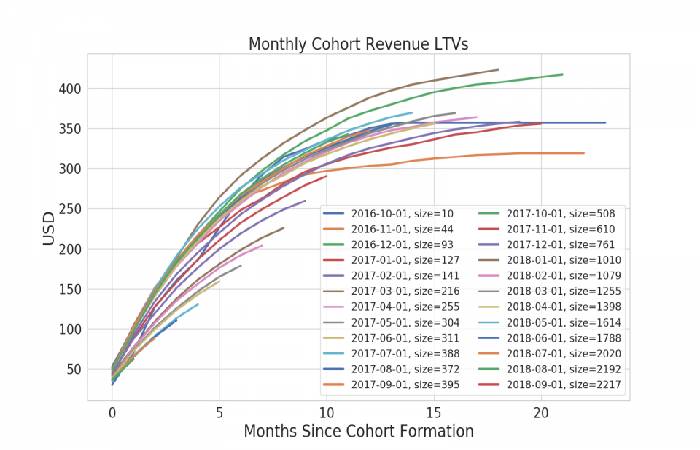
4. Identify Customer Lifetime Value

Different cohorts may generate different amounts of revenue over time.

Tracking cohorts helps businesses calculate customer lifetime value (CLV) and identify their most profitable users.

Examples of Cohorts in Business

Cohort analysis is widely used across many industries.

Here are some real-world examples.

E-Commerce

An online store groups customers based on their first purchase month.

This helps determine:

  • How often customers return

  • Which promotions drive repeat purchases

  • Which products increase retention

Mobile Apps

App developers track users who install the app during the same week or month.

This allows them to analyze:

  • User engagement

  • Feature adoption

  • Retention rates

SaaS Companies

Software companies often group customers based on subscription start dates.

This helps them analyze:

  • Churn rates

  • Upgrade behavior

  • Subscription renewals

Key Metrics Used in Cohort Analysis

Several important metrics are commonly analyzed when studying cohorts.

1. Retention Rate

Retention measures how many users continue using a product after a certain period.

Example:

If 100 users sign up and 60 remain active after one month, the retention rate is 60%.

2. Churn Rate

Churn refers to the percentage of users who stop using a product or service.

High churn indicates problems with product experience or customer satisfaction.

3. Customer Lifetime Value

This metric calculates how much revenue a customer generates during their entire relationship with a business.

4. Conversion Rate

Conversion rate measures how many users complete a desired action such as:

  • Purchasing a product

  • Signing up for a service

  • Subscribing to a newsletter

Tools for Cohort Analysis

Several analytics platforms help businesses perform cohort analysis.

1. Google Analytics

Google Analytics provides built-in cohort analysis reports that track user retention and engagement over time.

2. Mixpanel

Mixpanel is widely used by SaaS companies to track user behavior and create detailed cohort reports.

3. Amplitude

Amplitude is a powerful product analytics platform used to analyze user journeys and retention patterns.

4. Tableau

Tableau allows businesses to create visual dashboards and analyze complex cohort data.

Benefits of Using Cohort Analysis

Cohort analysis offers several advantages for businesses and marketers.

Better Understanding of Customer Behavior

Businesses gain insights into how different groups of customers interact with their product over time.

Improved Marketing Strategies

By identifying which cohorts perform best, marketers can optimize campaigns and allocate budgets more effectively.

Higher Customer Retention

Tracking user behavior helps businesses identify problems and improve customer experience.

Data-Driven Decision Making

Cohort analysis allows companies to make decisions based on real user data rather than assumptions.

Challenges of Cohort Analysis

Although cohort analysis is powerful, it also has some challenges.

Data Complexity

Analyzing large datasets can be difficult without proper analytics tools.

Misinterpreting Data

Incorrect conclusions can be drawn if cohorts are not defined properly.

Time and Resources

Collecting and analyzing cohort data requires dedicated analytics processes.

Despite these challenges, cohort analysis remains one of the most valuable tools for understanding customer behavior.

there is a distinguishing proof issue with each endeavor to precisely dole out an occasion with an impact:

  1. A cross-sectional assessment keeps period impacts steady since all people met simultaneously. In any case, each occasion that happens in a Cohort can be the aftereffect of both age impacts and accomplice impacts. For example, do more established individuals have more trust in others since they are more seasoned or because they have a place with old age.
  2. Longitudinal examinations focus on a specific accomplice that met on various occasions. Anyhow, every occasion that happens in an individual can be an aftereffect of age impacts and period impacts in Cohort. For example, it is the adjustment in an individual’s trust a consequence of maturing or a consequence of general individualization.
  3. Time arrangement examines center around a particular age gathering. For instance, a gathering of multi-year olds analyzed each year. Nonetheless, no away from period and accomplice impacts is conceivable here either.
  4. Each occasion happening in an individual can activate Cohort by both an intermittent impact and a companion impact. For example, the higher evaluations of school leavers the aftereffect of changed instructive open doors for another Cohort.  Are these impacts because of period-explicit impacts and elementary last assessment?

Frequently Asked Questions (FAQ)

What is a cohort in simple terms?

A cohort is a group of people who share a common characteristic or experience during a specific time period.

What is cohort analysis used for?

Cohort analysis is used to track user behavior over time, measure retention, and understand how different groups of customers interact with a product or service.

Why is cohort analysis important for businesses?

It helps businesses identify trends, improve customer retention, and optimize marketing strategies.

What industries use cohort analysis?

Many industries use cohort analysis, including e-commerce, SaaS companies, mobile apps, and digital marketing.

What tools are used for cohort analysis?

Common tools include Google Analytics, Mixpanel, Amplitude, Tableau, and other analytics platforms.

Conclusion

Understanding customer behavior is essential for business growth, and cohort analysis provides one of the most effective ways to achieve this. By grouping users into cohorts based on shared characteristics or time periods, businesses can track engagement, measure retention, and identify valuable trends.

From e-commerce stores to SaaS platforms and mobile apps, companies across industries use cohort analysis to make smarter decisions. With the help of modern analytics tools, businesses can uncover insights that lead to improved products, better marketing strategies, and higher customer satisfaction.

In today’s data-driven world, mastering cohort analysis is an essential skill for marketers, product managers, and business leaders who want to understand their customers and drive long-term success.