


What You Should Know About IRA Taxes
When planning for retirement, Individual Retirement Accounts (IRAs) can be one of the smartest tools you can use to save money. However, before you dive into contributing, withdrawing, or converting funds, it’s crucial to understand how IRA taxes work. Misunderstanding the tax rules can lead to penalties or missed opportunities to maximize your savings.
In this guide, I’ll walk you through everything you should know about IRA taxes — from contribution limits to withdrawals, Roth conversions, and how to avoid tax pitfalls.
What Is an IRA?
Before getting into taxes, let’s clear up what an IRA actually is.
An Individual Retirement Account (IRA) is a personal savings plan designed to help you set aside money for retirement while enjoying certain tax advantages. There are two main types of IRAs you’ll come across:
-
Traditional IRA
-
Roth IRA
Each has unique tax implications, and understanding those differences is key to optimizing your retirement strategy.
2025 IRA Contribution Limits
| Age | Maximum Contribution |
|---|---|
| Under 50 | $7,000 |
| 50 and older | $8,000 (includes $1,000 catch-up) |
The IRS states that total contributions to all IRAs cannot exceed $7,000 in 2025, or $8,000 for individuals age 50+.
Traditional IRA: Tax-Deferred Savings
How Traditional IRA Taxes Work
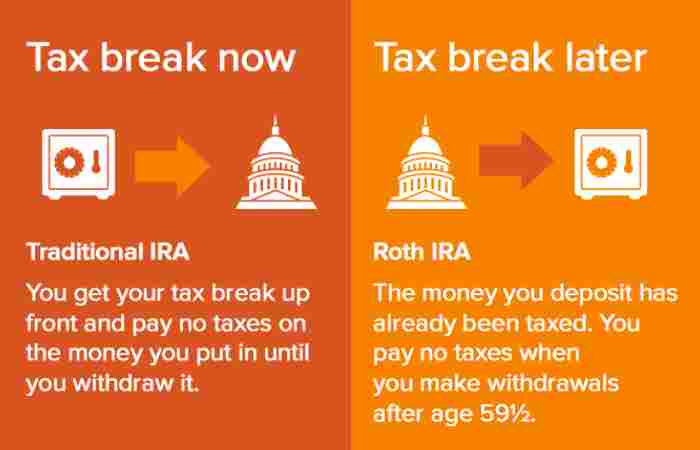
With a Traditional IRA, your contributions may be tax-deductible in the year you make them. This means you can lower your taxable income and possibly reduce your current year’s tax bill.
The money inside your Traditional IRA grows tax-deferred, meaning you don’t pay taxes on earnings (interest, dividends, capital gains) until you withdraw them.
However, once you start taking distributions, those withdrawals are treated as ordinary income and taxed accordingly.
Example:
If you earn $70,000 in a year and contribute $6,000 to your Traditional IRA, your taxable income could drop to $64,000 — lowering your tax bill now. But when you retire and withdraw that money, you’ll pay taxes on it then.
Traditional IRA Taxation
-
Contributions may be tax-deductible depending on income and retirement plan participation.
-
Withdrawals in retirement are taxed as ordinary income.
Roth IRA Taxation
-
Contributions are made with after-tax income.
-
Qualified withdrawals are tax-free in retirement.
This comparison is fundamental for readers deciding between IRA types.
Required Explanation
Generally, withdrawing money from an IRA before age 59½ triggers:
-
regular income tax on the distribution
-
an additional 10% penalty tax
The IRS imposes a 10% additional tax on early distributions unless an exception applies.
There are exceptions such as:
-
first-time home purchase (up to $10,000)
-
qualified education expenses
-
medical expenses
-
disability
Roth IRA: Tax-Free Growth
How Roth IRA Taxes Work
Unlike a Traditional IRA, Roth IRA contributions are made with after-tax dollars. You don’t get an upfront tax break when you contribute. However, your investments grow tax-free, and withdrawals in retirement are also tax-free, as long as you follow the rules.
This makes Roth IRAs a great choice if you expect to be in a higher tax bracket during retirement.
Example:
You contribute $6,000 to a Roth IRA today. You won’t get a tax deduction now, but 20 years later, all the growth and withdrawals could be completely tax-free.
IRA Contribution Limits
Each year, the IRS sets a limit on how much you can contribute to your IRA. For 2025, the contribution limits are:
-
$7,000 for individuals under 50
-
$8,000 for individuals 50 and older (includes a $1,000 “catch-up” contribution)
These limits apply across all your IRAs. So, if you have both a Roth and a Traditional IRA, your combined
Example (2025)
| Filing Status | Full Contribution Allowed |
|---|---|
| Single | Income below $150,000 |
| Married filing jointly | Income below $236,000 |
Income limits determine whether an investor can contribute the full amount or only a partial contribution.
contributions can’t exceed the annual limit.
Income Limits for Roth IRAs
While anyone can open a Traditional IRA, Roth IRAs have income restrictions:
-
For single filers: The ability to contribute starts phasing out at $146,000 and ends at $161,000.
-
For married couples filing jointly: The phase-out starts at $230,000 and ends at $240,000.
If you earn above these limits, you can’t contribute directly to a Roth IRA — though you may be able to do a backdoor Roth conversion (more on that later).
Taxes on IRA Withdrawals
Understanding how withdrawals are taxed is essential to avoid surprises during retirement.
Traditional IRA Withdrawals
When you withdraw money from your Traditional IRA, those funds are taxed as ordinary income, not as capital gains.
You can start taking penalty-free withdrawals at age 59½. If you withdraw before that age, you’ll usually owe:
-
A 10% early withdrawal penalty, plus
-
Income taxes on the amount withdrawn
Roth IRA Withdrawals
Roth IRAs have more flexibility:
-
You can withdraw your contributions (not earnings) at any time, tax- and penalty-free.
-
To withdraw earnings tax-free, you must meet two conditions:
-
The account has been open for at least 5 years, and
-
You’re 59½ or older, disabled, or using the funds for a first-time home purchase (up to $10,000).
-
Required Minimum Distributions (RMDs)
Traditional IRA RMDs
Once you hit age 73, you must start taking Required Minimum Distributions (RMDs) from your Traditional IRA each year. These withdrawals are mandatory and fully taxable.
If you fail to take your RMD, you could face a hefty 25% penalty on the amount you should have withdrawn.
Roth IRA RMDs
One major perk of Roth IRAs is that they don’t have RMDs during your lifetime. That means your money can keep growing tax-free for as long as you want — making Roth IRAs ideal for estate planning.
IRA Conversions: Switching Between Accounts
You might’ve heard about a Roth conversion — this is when you move money from a Traditional IRA to a Roth IRA.
How Roth Conversions Are Taxed
When you convert, you’ll owe income tax on the amount you move (since Traditional IRA funds are pre-tax). But after that, the money grows and can be withdrawn tax-free.
When a Conversion Makes Sense
A Roth conversion can be a smart move if:
-
You expect your tax rate to be higher in retirement.
-
You have enough savings to pay the taxes upfront.
-
You want to eliminate future RMDs.
However, if your current income is high, a conversion could push you into a higher tax bracket — so consult a tax professional before deciding.
Example:
-
Investor withdraws $20,000 from a traditional IRA
-
If in the 22% tax bracket:
Estimated tax:
$20,000 × 22% = $4,400 federal tax
If withdrawn early:
$4,400 + $2,000 penalty (10%)
Total tax impact = $6,400
Examples help readers understand real financial consequences.
Tax Deductions and Credits for IRA Contributions
If you contribute to a Traditional IRA, you might qualify for a tax deduction based on your income and whether you or your spouse are covered by a workplace retirement plan.
Here’s a quick overview:
-
Single filers covered by a retirement plan start losing their deduction at $77,000.
-
Married couples filing jointly start losing it at $123,000.
Additionally, if you’re a low- or moderate-income saver, you may qualify for the Saver’s Credit, which can reduce your tax bill by up to $1,000 ($2,000 for couples).
Early Withdrawals and Exceptions
Sometimes, life happens — and you might need to access your IRA funds early. While generally discouraged, the IRS provides certain exceptions where you can avoid the 10% early withdrawal penalty.
Exceptions Include:
-
First-time home purchase (up to $10,000)
-
Qualified education expenses
-
Unreimbursed medical expenses exceeding 7.5% of your AGI
-
Disability
-
Health insurance premiums while unemployed
-
Substantially equal periodic payments (SEPP)
Even though the penalty might be waived, remember that income tax may still apply on Traditional IRA withdrawals.
Inherited IRAs and Taxes
If you inherit an IRA, the tax treatment depends on the type of IRA and your relationship to the deceased.
Traditional IRA Inheritance
You’ll typically owe income tax on withdrawals. Most non-spouse beneficiaries must deplete the account within 10 years of the original owner’s death.
Roth IRA Inheritance
Withdrawals are tax-free, as long as the account was open for at least five years. However, non-spouse heirs are still required to empty the account within ten years.
Strategies to Minimize IRA Taxes
Here are a few smart strategies to reduce the tax bite on your IRA savings:
-
Diversify between Roth and Traditional IRAs — this gives you tax flexibility in retirement.
-
Convert to a Roth IRA during low-income years to pay lower taxes.
-
Delay RMDs as long as possible to allow your money to grow.
-
Withdraw strategically — avoid bumping yourself into higher tax brackets.
-
Take advantage of deductions and credits for contributions.
Common IRA Tax Mistakes to Avoid
-
Ignoring RMD rules and facing penalties.
-
Withdrawing too early without understanding tax consequences.
-
Assuming Roth IRA withdrawals are always tax-free — they’re not if you break the five-year rule.
-
Failing to track contributions and conversions properly.
Always keep detailed records of every contribution and withdrawal to avoid confusion during tax season.
Final Thoughts: Understanding IRA Taxes Is Key to Smarter Retirement Planning
At the end of the day, knowing how IRA taxes work can make a huge difference in how much you actually keep for retirement. Whether you prefer a Traditional IRA for upfront deductions or a Roth IRA for tax-free withdrawals, it’s all about understanding your financial goals and tax situation.
If you’re unsure which is right for you, talk to a financial advisor or tax professional — they can help you map out the most tax-efficient strategy for your future.
Because when it comes to retirement, the goal isn’t just to save money — it’s to keep more of it in your pocket when you need it most.
This article is for informational purposes only and should not be considered financial or tax advice. Readers should consult a qualified tax professional or financial advisor for personalized guidance.