


What Is a Lead in Marketing? Real Meaning, Examples, and How Lead Generation Actually Works
Introduction
If you search “what is a lead in marketing,” most websites will give you a short definition and move on. Something like: a lead is a person interested in your product.
That’s not wrong—but it’s incomplete.
Because in real business, a lead isn’t just “someone interested.” It’s the starting point of your revenue. It’s where marketing stops being theory and starts becoming measurable.
I’ve seen businesses get thousands of website visitors and still struggle to make money. And I’ve also seen small businesses with very little traffic generate consistent income.
The difference?
They understood leads. More importantly, they understood how to generate and handle them.
This guide isn’t going to repeat textbook definitions. Instead, I’ll break down what a lead really means in real-world marketing, how lead generation actually works, and why most people get it wrong.
What Is a Lead in Marketing (In Simple, Real Terms)
Let’s strip away the complexity.
A lead is someone who has shown interest in what you offer.
That interest can look like:
- Filling out a form
- Signing up for a newsletter
- Clicking on an ad
- Downloading something
- Asking for more information
In simple terms, a lead is not just a visitor—it’s someone who has taken action.
That action is what separates random traffic from potential business.
Because traffic alone doesn’t mean anything.
A website can have thousands of visitors every day. But if none of them convert into leads, the business doesn’t grow.
Why Leads Matter More Than Traffic
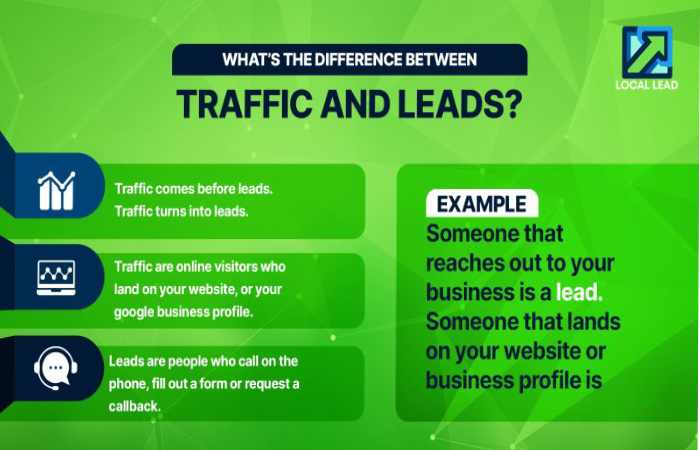
This is where many beginners misunderstand marketing.
They focus on:
- Website traffic
- Social media views
- Likes and followers
But here’s the reality:
Traffic is attention. Leads are opportunity.
You can have:
- 10,000 visitors with zero leads → no revenue
- 500 visitors with strong leads → consistent sales
Lead generation is what turns interest into something measurable and usable for your business.
Without leads:
- There’s no follow-up
- No relationship building
- No predictable income
That’s why serious businesses don’t just track traffic—they track leads.
What Is Lead Generation (And Why It’s the Core of Marketing)
Lead generation is the process of turning strangers into potential customers.
It starts with attention and ends with captured interest.
In simple terms:
- You attract people
- You give them a reason to engage
- You collect their information
- You follow up
That’s the entire system.
At a broader level, lead generation is about attracting and nurturing potential customers until they are ready to buy.
Think of it like this:
Before lead generation:
- Visitors come and leave
After lead generation:
- Visitors stay connected
- You can communicate with them
- You can convert them later
That’s a huge difference.
How Lead Generation Actually Works (Step-by-Step)
Let’s break it down in a way that makes sense.
Step 1: Attract the Right Audience
Everything starts with attention.
People come to your business through:
- Google search
- Social media
- Ads
- Referrals
But not all traffic is equal.
If you attract the wrong audience, you won’t get quality leads.
Step 2: Offer Something Valuable
People don’t give their information for no reason.
You need to offer something:
- Useful
- Relevant
- Worth their time
This could be:
- A guide
- A discount
- A free consultation
- A demo
This is often called a “lead magnet.”
Step 3: Capture Information
This is where a visitor becomes a lead.
It usually happens through:
- Forms
- Sign-ups
- Contact pages
At this point, the person has shown clear interest.
Step 4: Nurture the Lead
Not every lead buys immediately.
You need to:
- Follow up
- Provide value
- Build trust
This is where most businesses fail.
Step 5: Convert Into Customer
Finally, the lead becomes a paying customer.
But this only happens if:
- Timing is right
- Trust is built
- Communication is consistent
Real-Life Example: How Leads Work in Business
Let’s take a simple example.
Example: Real Estate Business
A real estate agent runs ads targeting people looking to buy homes.
Here’s what happens:
- A user clicks the ad
- Visits a landing page
- Fills out a form to see property listings
That person is now a lead.
From there:
- The agent contacts them
- Understands their requirements
- Shows properties
- Closes a deal
Without that lead form, the visitor would just leave.
This is exactly how lead generation connects marketing to sales.
Types of Leads (What Most Articles Don’t Explain Properly)
Not all leads are equal.
This is where things get interesting.
1. Cold Leads
- No real interest yet
- Just basic awareness
2. Warm Leads
- Some level of interest
- Engaged with your content
3. Hot Leads
- Ready to buy
- Actively looking
Businesses often classify leads based on how likely they are to convert, helping sales teams prioritize better opportunities.
Understanding this difference is critical.
Because treating all leads the same is a mistake.
Case Study: Why Some Businesses Get Leads but Still Fail
Let’s compare two scenarios.
Business A
- Generates lots of leads
- No follow-up system
- No segmentation
Business B
- Generates fewer leads
- Tracks behavior
- Follows up consistently
Result:
Business B makes more money.
Why?
Because lead generation is not just about quantity.
It’s about:
- Quality
- Timing
- Follow-up
Where Leads Come From (Channels That Actually Work)
Leads don’t just appear randomly.
They come from specific sources:
1. Search Engines (SEO)
People searching for solutions are high-quality leads.
2. Social Media
Good for awareness and engagement.
3. Paid Ads
Fastest way to generate leads, but requires budget.
4. Email Marketing
Great for nurturing and converting leads.
5. Referrals
Often the highest-quality leads.
Modern lead generation uses multiple channels together to create a steady flow of potential customers.
Common Mistakes in Lead Generation
This is where most businesses lose money.
1. Focusing Only on Traffic
More visitors doesn’t always mean more leads.
2. Weak Offer
If your offer isn’t valuable, people won’t engage.
3. No Follow-Up
Most leads need multiple touchpoints.
4. Poor Targeting
Wrong audience = low-quality leads.
5. Ignoring Data
Without tracking, you can’t improve.
How to Generate High-Quality Leads (Practical Strategy)
Let’s keep this simple and practical.
1. Know Your Audience
Understand:
- Who they are
- What they need
- What problems they face
2. Create Valuable Content
Content should:
- Solve problems
- Answer questions
- Build trust
3. Use Clear Call-to-Actions
Tell people exactly what to do:
- Sign up
- Download
- Contact
4. Optimize Landing Pages
Make it easy to convert:
- Simple forms
- Clear messaging
- Fast loading
5. Follow Up Consistently
This is where conversions happen.
How Lead Generation Connects Marketing and Sales
Many people think marketing and sales are separate.
They’re not.
- Marketing generates leads
- Sales converts them
If there’s no lead generation:
- Sales team has nothing to work with
If leads are poor quality:
- Sales struggles
That’s why alignment matters.
The Role of Technology in Lead Generation
Today, businesses don’t manage leads manually.
They use tools like:
- CRM systems
- Automation tools
- Analytics platforms
These tools help:
- Track leads
- Score them
- Follow up automatically
Technology makes the process scalable.
What Most People Get Wrong About Leads
Let’s clear some misconceptions.
Myth 1: More Leads = More Sales
Reality: Quality matters more than quantity.
Myth 2: Leads Buy Immediately
Reality: Most leads need time.
Myth 3: Lead Generation Is One-Time Work
Reality: It’s an ongoing process.
Myth 4: Any Lead Is a Good Lead
Reality: Poor leads waste time and resources.
The Future of Lead Generation
Lead generation is evolving.
What’s changing:
- More data-driven targeting
- Personalization
- Automation
What’s staying the same:
- Human decision-making
- Trust
- Value
At the end of the day, people still buy from businesses they trust.
Final Thoughts
A lead is not just a definition—it’s the starting point of your business growth.
If you understand leads properly:
- You can build predictable revenue
- You can scale your business
- You can reduce wasted effort
If you don’t:
- You rely on luck
- You struggle with consistency
- You miss opportunities