


How-To Manual Featuring Types, Samples, and Business Insights on Products (2026)
No matter which business it is, it operates in order to provide value to its customers. This value is referred to as the product. When talking about what a product is, many would assume that it refers to something tangible such as a cell phone or a shirt. But the truth is, the concept of a product is far from that.
This manual will help you understand what a product is in business, the types of products, real-life examples of it and much more. For topics that require more detailed explanations, a 1500-word article can provide enough space to cover definitions, examples, classifications, and practical insights.
What Is a Product (Basic Definition)?
Product is not only the object; it is also the benefit that comes along with it.
Characteristics of Product
It solves some problems or fulfills some needs.
It has value for the consumer.
It can be bought, sold, or exchanged.
It can be tangible or intangible.
Example:
The smart phone provides communication and entertainment.
A customer has a need
- A business creates a solution
- That solution becomes the product
What Makes Something a Product
A product is not just about the item itself—it’s about the value it delivers. Products can take many forms, including financial offerings such as mutual funds; for example, ACFOX is a fund identified by its stock symbol and investment structure.
Key Characteristics
- Solves a problem or fulfills a need
- Offers value to the customer
- Can be bought, sold, or exchanged
- Can be tangible or intangible
For example:
- A smartphone provides communication and entertainment
- A food delivery service provides convenience
Though one of them is tangible and the other is intangible, both of them are products. For physical products, customer confidence may also depend on after-sales protections such as a warranty, which can provide coverage for certain defects or product-related issues.
Businesses can use financial measures such as a ratio to compare financial figures and better evaluate business performance.
Products (Important Concept)
Generally, there are two types of products.
1. Tangible Products (Physical Goods)
They are the goods that you can feel or touch.
Examples
- Mobile phones
- Clothing
- Furniture
These are traditionally what people think of as products.
2. Intangible Products (Services & Digital)
These cannot be physically touched but still provide value.
Examples
- Software subscriptions
- Online courses
- Consulting services
Even though they are not physical, they are still considered products because they solve problems.
Other Common Classifications
Consumer Products
Bought for personal use. Understanding the target market helps businesses identify the customers most likely to need and purchase a particular product.
Examples:
- Groceries
- Electronics
Business Products
Bought by companies for operations or production.
Examples:
- Machinery
- Raw materials
Managing these inputs efficiently is an important part of resource management, particularly for businesses that need to control costs while maintaining consistent production.
Definition of Product
From Latin productus; “a product of that which has been made.” The definition of the word is very broad, allowing a very diverse group of items to be referred to as products.
Understanding how related words and concepts appear together can also be useful in content and language analysis, which is the focus of co-occurrence.
A table, a book, and a computer are products
Product
The marketing states that a product is an object that is offered in a market to satisfy what you need or want a consumer. In this sense, the product transcends its physical condition and includes what the consumer perceives at the time of purchase (symbolic, psychological attributes, etc.). The customer decision-making process ultimately leads to a purchase, whether the product is a physical item, digital offering, or service.
The non-material product, meanwhile, is called service. For example, a computer (computer) and a modem are products; Internet connection is a service.
The products have a life cycle. When companies launched their products to the market, companies must make substantial investments in advertising so that people know the outcome. When it reaches success, it experiences a phase of growth.
Marketing and Products
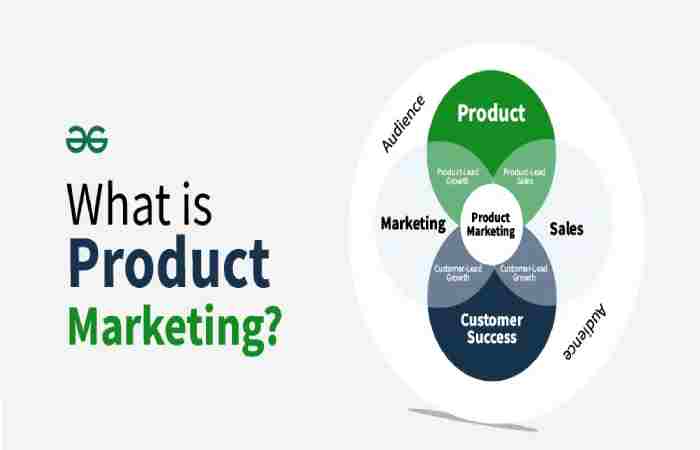
Marketing refers to a product to refer to the set of tangible attributes that are easily identifiable, including color, price, manufacturer, packaging, etc., and that has a name that anyone can understand. For businesses promoting products online, factors such as domain authority can also be useful when evaluating the strength and visibility of a website. Businesses can also explore SEO platforms such as Search Atlas when researching tools for improving online visibility and managing search performance.
The characteristics of each product are those characteristics that motivate the consumer to try it; For example, if you talk about cars, one of the main qualities is the brand, because a Chevrolet enthusiast hardly buys a Toyota. But in count to the brand, the products have other qualities that distinguish them even more, such as their design, color, size, and utility, and at this point it is necessary to point out that although there are few differences between two elements, however minimal they may be, Talk about two different products.
A product isn’t primarily something physical and tangible; providing satisfaction to customer wishes is enough. It can, therefore, be a service, an idea, or even a place. For example, the product of a hotel is to provide benefits when it comes to rest and related services.
A product is said to be innovative when it revolutionizes the way of understanding a specific activity or service that allows, for example, an improvement in the quality of life of consumers; it can be a new cancer treatment as well as products that replace other necessary ones that are not entirely healthy, such as foods rich in soybeans and vegetables as a substitute for those that carry meat.
The products can be classified into three different groups, taking into account their durability and tangibility :
- Non-durable goods: These are tangible products which get used up when in use (drinks, soaps, salts, etc.).
Durable goods: These are tangible products which suffer wear but whose life is not limited (refrigerators, tools, and garments). - Consumer goods: those that final consumers buy for their consumption
- Basic goods: products that consumers buy regularly
- Industrial goods: those are purchased to be used in the management of a company. The difference between these and consumer goods lies in the purpose for which each one is acquired; Therefore, the same product can become an industrial or consumer good: a fryer that is purchased for family use is a good of use, although if it is purchased for use in a restaurant it becomes an industrial good.
When a Product Becomes Successful
A product succeeds when:
- It solves a real problem
- It delivers consistent value
- Customers trust it
- It stands out from competitors
When a product offers a genuinely new invention or technology, protecting that innovation can also become important. In such cases, businesses may seek guidance from a patent attorney to understand the process of protecting intellectual property.
Future of Products (2026 Trends)
Products are evolving rapidly. Digital tools are also becoming part of this evolution, with platforms such as Moovly helping businesses create engaging visual content for modern audiences. Businesses managing product information, projects, and workflows can also consider a Smart Sheet alternative when looking for tools that better fit their operational needs.
Key Trends
- Digital-first products
- Subscription-based models
- AI-powered solutions
- Personalized customer experiences
Modern products are becoming more about experience and value, not just physical goods.
Key Takeaways
- A product is anything offered to satisfy a customer need
- It can be physical, digital, or service-based
- It delivers value and solves problems
- It is the foundation of every business
- Success depends on how well it meets customer expectations
Final Thoughts
A product is not just something you sell—it’s the reason your business exists.
It represents:
- Your idea
- Your solution
- Your value to customers
When businesses focus on creating meaningful products, everything else—marketing, sales, and growth—becomes much easier.