

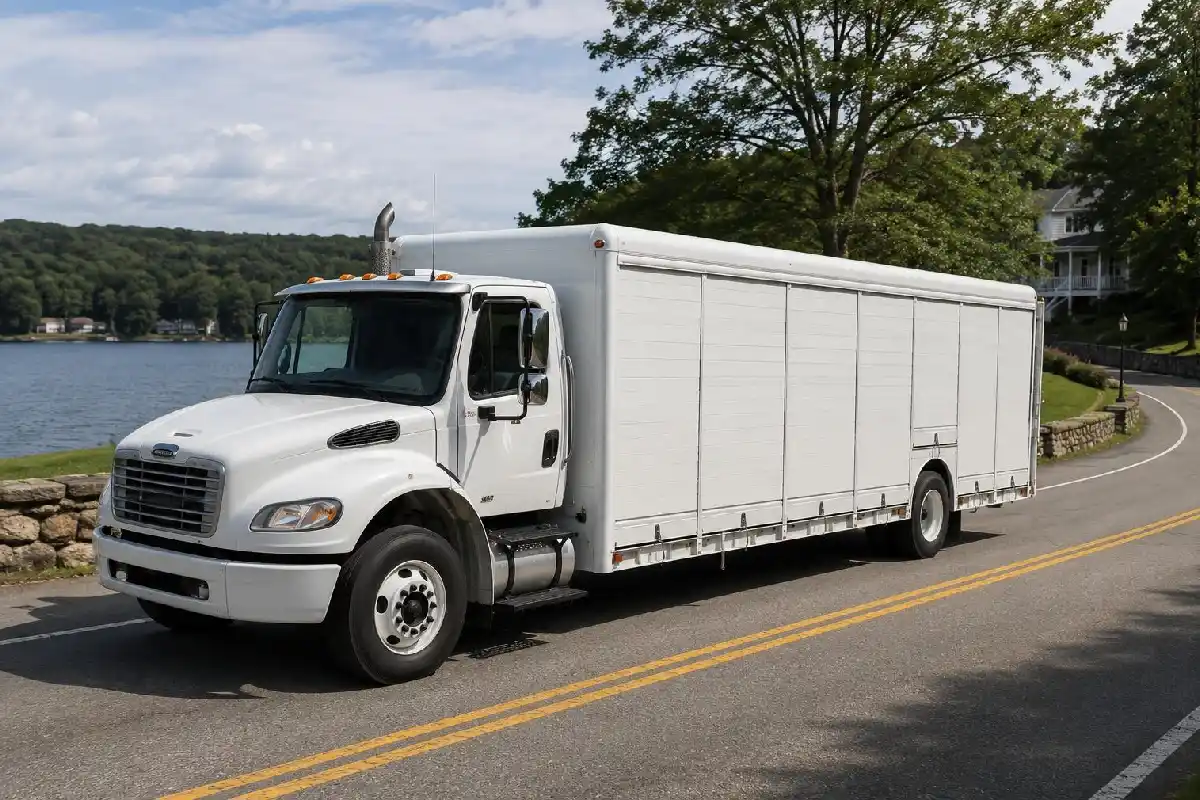
Medium-duty distribution trucks fill the gap between light delivery vans and heavy-duty tractors on regional routes. You gain enough payload capacity for multi-stop delivery while keeping fuel costs and licensing requirements manageable. Beverage, food, and retail operations across North America depend on Class 4 through Class 6 units every day.
Right-sizing your fleet shapes your daily route economics for years to come. Medium-duty options reduce Commercial Driver’s License (CDL) hiring pressure while handling most regional workloads without strain. You gain flexibility, lower operating costs, and a smaller footprint than heavy-duty equipment demands from your operation.
What Are the Operational Benefits of Medium-Duty Distribution Trucks?
Medium-duty distribution trucks deliver payload capacity, fuel savings, and CDL hiring flexibility for regional routes. You match truck size to real route demand while reducing fuel, maintenance, and insurance costs across your fleet. Furthermore, many units fall below CDL thresholds, expanding your driver hiring pool during a tight labor market.
Payload Capacity Sized for Real Route Demands
Distribution trucks in the medium-duty class carry meaningful weight without paying for empty capacity on backhauls. Beverage distributors typically need 10 to 16 bays of product across 25 to 40 stops each day. You match truck size to actual demand rather than overspending on tractors sitting half-empty most miles.
Right-sizing cuts fuel costs, tire wear, and depreciation across every mile your fleet drives. Meanwhile, drivers appreciate maneuvering smaller trucks through tight urban alleys and narrow small-town main streets. You reduce backing accidents, mirror damage, and slow delivery times at cramped customer locations.
Payload sizing also affects your loading dock operations and warehouse workflow patterns each shift. Consider these payload advantages that matter for regional beverage and food distribution operations:
- Bay configurations from 4-bay up to 24-bay match your specific route density needs
- Lower deck heights speed up hand-loading and unloading at every scheduled stop
- Standardized dimensions fit existing dock levelers without expensive facility retrofits
- Reduced tare weight leaves more room for revenue-generating product cases
Payload matching reduces waste on both ends of the operation, from warehouse loading through final delivery. As a result, your cost per case drops while your daily stop count climbs steadily. Explore our current distribution truck inventory to find configurations sized for your specific route profile.
Fuel Efficiency and Lower Total Cost of Ownership
Medium-duty distribution trucks deliver stronger fuel economy than Class 7 or Class 8 tractors on regional routes. Modern diesel engines in the medium-duty range hit 8 to 12 miles per gallon depending on load. You save thousands of dollars each year per truck compared with running oversized equipment on light routes.
Additionally, battery-electric medium-duty vehicle registrations grew 21% in 2025, according to Penske Truck Leasing. Electric options work well for urban routes with predictable mileage and overnight depot charging capacity available. You can pilot alternative fuel units without betting your entire distribution truck fleet on unproven technology.
Total cost of ownership includes insurance, licensing, and fuel taxes alongside the sticker price you negotiate upfront. Our warranty program covers major repair issues on every trade-term truck we sell. You buy refurbished units with documented service histories that reduce unexpected repair surprises later.
Driver Access and CDL Hiring Flexibility
Many medium-duty distribution trucks fall below the 26,001-pound CDL threshold, which changes your hiring math completely. You can recruit from a much larger candidate pool that includes drivers without commercial licenses. Given the national driver shortage of roughly 82,000 professionals in 2026, expanded hiring options carry real weight.
Non-CDL drivers still handle multi-stop routes, hand-truck deliveries, and customer service interactions with full professionalism. Meanwhile, you save on wage premiums that CDL holders command in today’s tight labor markets. Your operating cost per stop drops while your ability to staff every route improves noticeably.
Consider the driver advantages that make medium-duty distribution trucks attractive for growing fleets right now:
- Faster onboarding since non-CDL drivers skip the extensive commercial license testing process
- Lower turnover on routes where drivers work local shifts and return home each night
- Reduced insurance premiums since medium-duty units carry lower liability exposure overall
- Broader access to women, younger workers, and career-changers entering the workforce today
Driver flexibility gives you a competitive edge when staffing regional routes across multiple territories at once. Furthermore, our refurbishment services upgrade older units with modern safety features that new hires expect. Read more about our approach on the Buck’s Trucks company page today.
Ready to Add Medium-Duty Distribution Trucks to Your Fleet?
Medium-duty distribution trucks give you the payload, fuel economy, and driver flexibility that regional routes actually need. Buck’s Trucks has spent 25 years helping beverage and food distributors nationwide find the right units for operations. You gain access to inspected, warranty-backed inventory that keeps your delivery routes running smoothly year-round.
Whether you need one refurbished bay truck or a full fleet refresh, we source configurations matching your requirements. Our team arranges transportation anywhere in the country and backs every trade-term unit with a 30-day warranty. Get in touch with the Buck’s Trucks team today to explore how our inventory strengthens your distribution operation.