

Know About ITSM Tools and Why Businesses Use Them
What Does ITSM Mean?
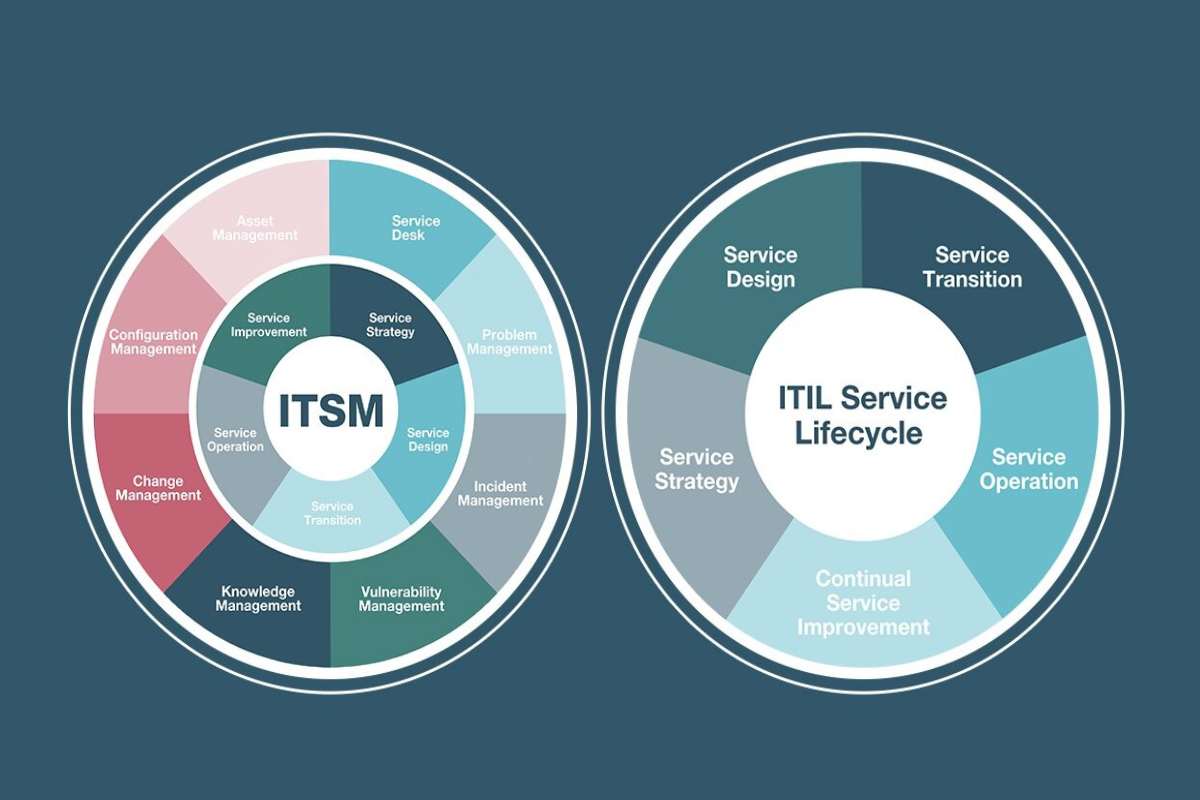
ITSM stands for IT Service Management.
In simple words, ITSM is the process of managing and improving IT services inside an organization.
The goal of ITSM is not just fixing technical problems. It’s about creating organized systems that help businesses deliver better technology support and improve overall efficiency.
Instead of reacting to issues only when something breaks, ITSM focuses on building structured workflows for:
- Technical support
- Incident management
- Service requests
- System monitoring
- IT operations
This helps businesses handle technology in a more organized and reliable way.
What Are ITSM Tools?
ITSM tools are software platforms designed to help businesses manage IT services more efficiently.
These tools allow IT teams to:
- Track support tickets
- Handle incidents
- Manage service requests
- Automate repetitive tasks
- Monitor systems
- Improve communication
Without ITSM tools, IT departments often struggle to manage large numbers of technical requests manually.
As organizations grow, handling support through emails or spreadsheets becomes messy and inefficient.
ITSM platforms solve this problem by centralizing everything into one organized system.
Why ITSM Tools Are Important
Modern businesses depend heavily on technology.
Even a small technical issue can affect:
- Employee productivity
- Customer experience
- Revenue
- Daily operations
For example:
If a company’s email server crashes or employees cannot access important software, work may stop completely until the issue is resolved.
ITSM tools help businesses respond faster and reduce downtime.
Main Benefits of ITSM Tools
| Benefit | Why It Matters |
|---|---|
| Faster problem resolution | Reduces downtime |
| Better organization | Keeps support requests structured |
| Improved productivity | Employees get help faster |
| Workflow automation | Saves time |
| Better communication | Improves coordination |
| Performance tracking | Helps identify recurring problems |
For many companies, ITSM tools improve both efficiency and employee satisfaction.
ITSM Tools Will Require Even More Analytics
The most important component of ITSM implementation is the development of formalized processes of the IT department. For each process, the sequence of work, the necessary resources and time costs, automation, and quality control tools are determined. Also, if a process is clearly defined and documented, including input parameters and execution results, its performance can be measured. This is especially important when the IT department is faced with the task of implementing the service of a given quality at a particular cost. And this will improve the process and make the necessary changes in a proactive mode – even before the failure in the implementation of the service. To support this level of process control, ITSM solutions like JSM often provide advanced analytics and automation tools, helping organizations monitor performance, streamline workflows, and make data-driven improvements to service management. These tools typically enable IT teams to analyze key metrics, allowing for more informed decision-making and continuous improvement.
2020 Will Give More Flexible Opportunities to Implement ISTM
If you are only thinking about implementing ITSM, in 2020, ITSM cloud systems will become even more fully functional solutions that perform all the basic processes for managing IT services. Their main difference from local systems is that you may not pay for those functions and procedures that you do not use yet.
For example, starting to use and paying only for ITSM, you can further purchase the modules ITOM, ITFM, HRSM, and others. This is a convenient opportunity since it is possible to start their integration with basic functions. As the maturity of processes increases, you will be able to expand the system with minimal labor.
For a company of any size, especially large, the time to implement the ITSM system is precious, and spending it on unnecessary actions means creating additional costs for the business. Cloud solutions are sold with pre-configured templates, prescribed parameters, and ready-made processes. All you need to do is customize (fill out the asset database, create a service catalog), and the system will be ready to work after a few days or weeks and not months, as is usually the case with local platforms.
Artificial Intelligence Will Be Everywhere
In 2020, artificial intelligence, machine learning, and ITSM will be unified.
With the support of AI, all requests will be registered through the self-service portal. And for this, the user does not need to know the name of the service or its identifier, the problem can be described in natural language – for example, “the printer does not work.” By the way, if you have difficulty understanding a foreign language, you can always ask The Word Point for help with the translation.
Better Reporting and Insights
Many ITSM platforms provide detailed reports and analytics.
Businesses can track:
- Response times
- Common technical issues
- Team performance
- Recurring problems
This helps organizations improve long-term IT strategies.
Challenges of ITSM Tools
Even though ITSM systems are valuable, implementation can sometimes be challenging.
Complex Setup
Some enterprise ITSM platforms require:
- Technical expertise
- Configuration
- Staff training
- Process planning
Large systems can take time to implement properly.
Cost
Advanced ITSM platforms may become expensive depending on:
- Features
- User count
- Infrastructure requirements
Small businesses sometimes struggle with enterprise-level pricing.
User Adoption
Employees and IT teams may resist switching to new systems initially.
Proper training is important for successful adoption.
ITSM and Automation Trends
Modern ITSM platforms increasingly focus on automation and smarter workflows.
Businesses now use automation to:
- Reduce repetitive tasks
- Improve response speed
- Minimize human errors
- Increase efficiency
Automation is becoming one of the biggest trends shaping the future of IT service management.
ITSM vs Help Desk Software
People often confuse ITSM tools with standard help desk software.
| ITSM Tools | Help Desk Software |
|---|---|
| Full IT service management | Basic ticket support |
| Workflow automation | Simple issue tracking |
| Asset management | Limited features |
| Enterprise processes | Basic support functions |
Final Thoughts
ITSM tools have become an important part of modern business operations because technology now affects almost every area of work. These platforms help businesses organize IT services, resolve technical issues faster, improve productivity, and create more efficient workflows.
Whether it’s ticket management, incident response, automation, or asset tracking, ITSM tools help organizations manage technology in a much more structured and reliable way.
As businesses continue becoming more digital, strong IT service management will only become more important in the future. Companies that invest in efficient IT systems are usually better prepared to improve operations, reduce downtime, and support long-term growth.