

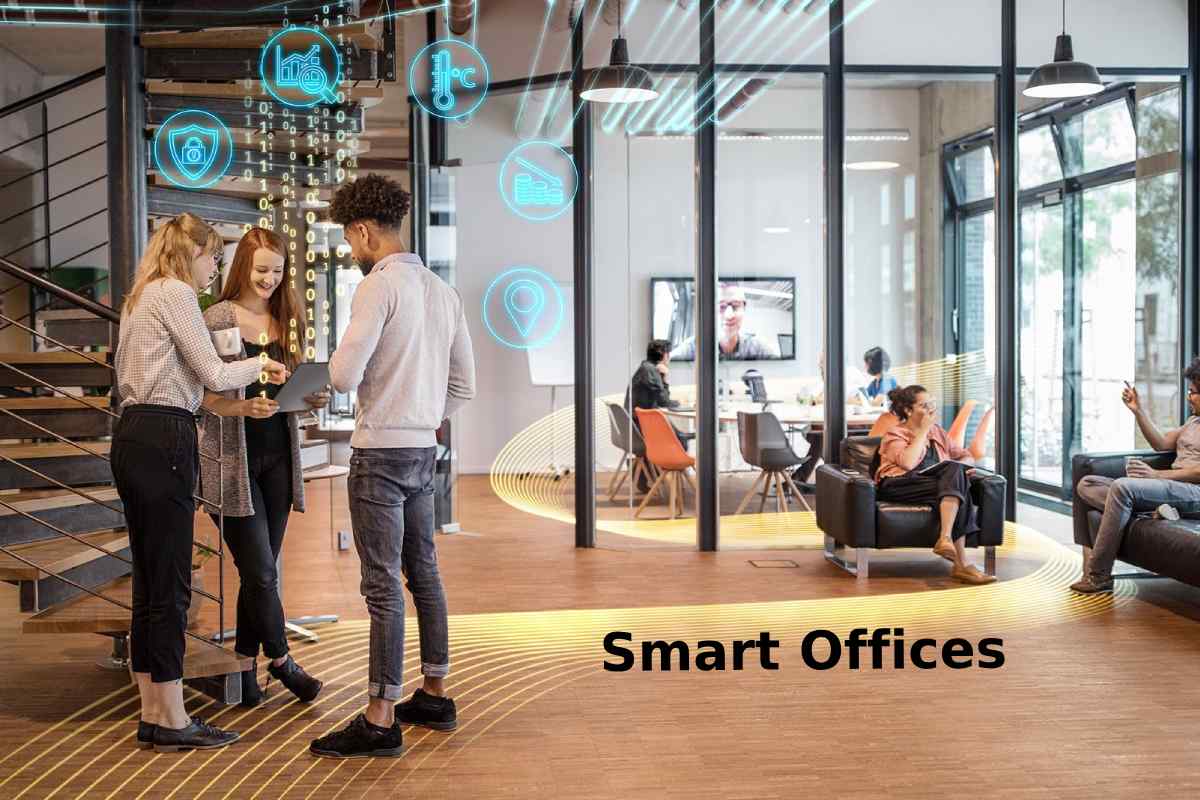
Smart Offices: The modern workplace is undergoing a suggestive transformation, driven by technological promotion and evolving employee expectations. Organizations are progressively recognizing the value of creating dynamic and efficient work environments that foster productivity and well-being.
Smart offices are at the forefront of this transformation, integrating cutting-edge technologies to optimize operations, enhance employee satisfaction, and reduce costs. By leveraging a range of smart solutions, organizations can create more efficient, productive, and comfortable workspaces.
What Is a Smart Office?
A smart office uses connected technologies such as sensors, IoT devices, and automation systems to improve workplace efficiency, comfort, and energy management.
Typical smart office technologies include:
-
smart lighting systems
-
automated climate control
-
occupancy sensors
-
connected meeting room systems
-
workplace analytics platforms
These technologies allow organizations to monitor office usage, reduce energy consumption, and improve employee productivity.
Examples of Smart Office Features
Modern workplaces often integrate the following technologies:
Smart Lighting Systems
Automatically adjust lighting based on occupancy and daylight.
Smart Climate Control
Heating and cooling systems adjust automatically based on room usage.
Meeting Room Automation
Smart scheduling systems detect available rooms and prevent booking conflicts.
Workspace Analytics
Sensors collect data about how office space is used.
These systems help companies improve both operational efficiency and employee comfort.
Building Automation Systems (BAS)
Building Automation Systems (BAS) play a central role in smart offices, providing centralized control and management of various building systems. BAS can automate functions such as HVAC, lighting, security, and access control, optimizing energy efficiency and improving overall building performance.
Internet Of Things (IoT) In Smart Offices
IoT devices, such as sensors, actuators, and gateways, connect to the internet and trade data, enabling real-time monitoring and manage of various aspects of the office environment. IoT applications in smart offices include:
- Smart Sensors
Monitoring temperature, humidity, air quality, and occupancy levels to optimize energy consumption and ensure a comfortable workspace.
- Smart Lighting
Controlling lighting levels based on occupancy, natural light, and time of day to enhance productivity and reduce energy costs.
- Smart HVAC Systems
Optimizing heating, ventilation, and air conditioning systems to maintain a comfortable heat and improve energy efficiency.
- Asset Tracking
You can buy rfid tags and use IoT devices to track the location and usage of office assets, such as laptops, printers, and conference rooms.
Smart Lighting Systems
Smart lighting systems offer significant benefits for smart offices, including:
- Energy Efficiency
Reducing energy consumption by adjusting lighting levels based on occupancy and natural light conditions.
- Improved Productivity
Creating a more comfortable and stimulating work environment through customizable lighting settings.
- Enhanced Aesthetics
Creating different lighting scenes to suit various tasks and moods.
Smart HVAC Systems
Smart HVAC systems can optimize energy consumption and improve employee comfort by:
- Predictive Maintenance
Identifying potential issues ahead of they occur, reducing downtime and maintenance costs.
- Personalized Climate Control
Allowing employees to adjust their individual workspace temperature settings.
- Demand Response
Participating in demand response programs to reduce energy consumption during peak times.
Cost of Implementing Smart Office Systems
Smart office costs vary depending on company size and technology complexity.
| Technology | Typical Cost Range |
|---|---|
| Smart lighting systems | Moderate installation cost |
| IoT sensors and monitoring | Moderate |
| Building automation systems | Higher investment |
| Integrated workplace platforms | Variable subscription costs |
Businesses should evaluate both initial installation costs and long-term energy savings when adopting smart office technology.
Security And Access Control
Modern workplaces demand advanced protection that goes beyond traditional measures. Smart security and access control systems, supported by local alarm solutions for offices, help create safer, more efficient environments. These integrated technologies work together to monitor activity, prevent unauthorized access, and ensure a quick response to potential threats.
- Video Surveillance
Monitoring office areas and identifying potential security threats.
- Access Control Systems
Restricting access to sensitive areas based on user permissions and credentials.
- Intrusion Detection
Detecting and responding to unauthorized access attempts.
Types of Smart Office Solutions
| Solution Type | Purpose |
|---|---|
| Energy management systems | Reduce energy consumption |
| Workplace analytics platforms | Track office space usage |
| Smart security systems | Monitor access and safety |
| Meeting room automation tools | Improve scheduling efficiency |
Comparing different technologies helps businesses choose solutions that match their operational needs.
Employee Productivity And Well-Being
Smart office technology can significantly impact employee productivity and well-being:
- Enhanced Collaboration
Enabling seamless communication and collaboration through integrated technologies.
- Improved Work-Life Balance
Offering flexible work arrangements and remote work capabilities.
- Healthier Work Environment
Promoting employee health and well-being through features such as air quality monitoring and ergonomic workstations.
Challenges And Considerations
While smart offices offer numerous benefits, there are also challenges to consider:
- Cost of Implementation
Implementing smart office technology can involve significant upfront costs.
- Data Security and Privacy
Protecting sensitive data and make sure privacy is a critical concern.
- Technical Complexities
Integrating various smart technologies and ensuring compatibility can be complex.
Future Trends In Smart Offices
Smart office technology is rapidly evolving, with new innovations and advancements emerging regularly. Some of the trends to watch include:
- Artificial Intelligence (AI)
AI-powered systems can optimize building operations, enhance security, and provide personalized experiences for employees.
- Augmented Reality (AR) and Virtual Reality (VR)
AR and VR can be used for training, collaboration, and virtual office tours.
- Integration with Renewable Energy
Smart offices can be integrated with renewable energy sources to reduce their environmental impact.
- Enhanced Cybersecurity
As smart offices become more interrelated, robust cybersecurity measures will be crucial to save sensitive data and prevent unauthorized access.
As technology continues to advance, we can await to see even more innovative and integrated smart office solutions that enhance productivity, comfort, and sustainability.
Additional Considerations For Smart Office Implementation
When implementing smart office technology, it’s crucial to consider the following factors:
- Return on Investment (ROI)
Evaluate the potential cost savings, increased productivity, and other benefits to determine the ROI of your smart office investment.
- Scalability
Ensure your chosen solutions can accommodate future growth and changes in your organization’s needs.
- Employee Training and Adoption
Provide adequate training to employees to make sure they can effectively use and benefit from smart office technologies.
- Data Privacy and Security
Develop robust data security measures to keep safe sensitive information and comply with relevant regulations.
- Maintenance and Support
Consider the ongoing maintenance and support requirements for your smart office systems.
By carefully considering these parts, you can maximize the benefits of smart office technology and create a more efficient, productive, and sustainable workspace.
Conclusion
Smart offices offer a multitude of benefits for organizations, including improved efficiency, enhanced employee satisfaction, and reduced costs. By integrating various smart technologies, businesses can make dynamic and easygoing workspaces that meet the needs of today’s workforce.
Unlock The Potential Of Your Workspace
As technology continues to evolve, we can await to see even more innovative and integrated smart office solutions that enhance productivity, comfort, and sustainability.
Ready to transform your workspace? Visit www.se.com to explore Schneider Electric’s comprehensive smart office solutions and discover how we can help you make more efficient, productive, and employee-centric work environment.